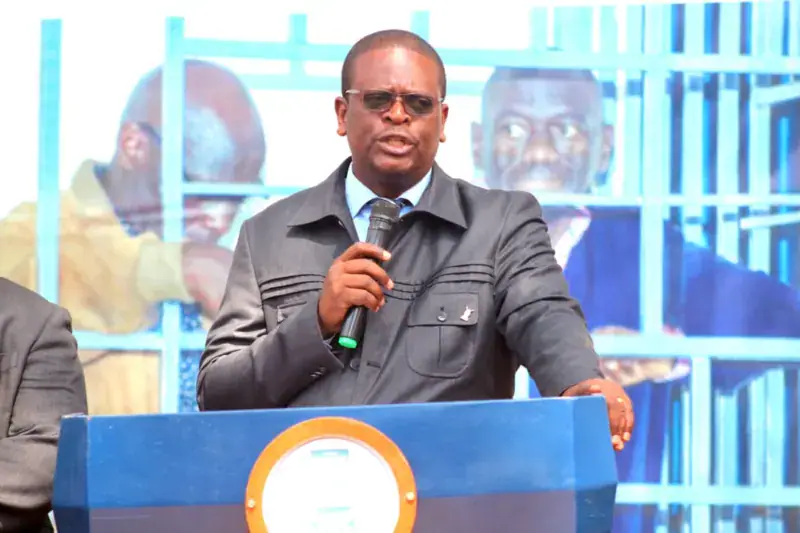
The People’s Front for Freedom, a Ugandan opposition party, has outlined four conditions that must be met before engaging in a structured national dialogue. According to Dr. Lulume Bayiga, the party's Vice President for Buganda Region, the proposed dialogue must establish clear positions on its convener, agenda, participants, and guarantors. This, Bayiga argues, will ensure that the process is properly structured and that resolutions reached are respected and implemented. The party supports dialogue but insists on a well-planned process.
Dr. Bayiga emphasized that agreeing on the venue for the proposed talks is also crucial. He noted that proceeding with dialogue without addressing these foundational issues would render the process meaningless. The PFF fears that without a structured approach, the dialogue might be used to prolong the stay of the National Resistance Movement government in power. Therefore, the party insists that these issues must be resolved before meaningful engagement can begin.
The PFF also demands that any national dialogue must go beyond political engagement and address fundamental governance and electoral reforms. Among the key issues the party wants to be placed on the agenda are transitional leadership and the independence of state institutions. The adoption of a new Constitution and the establishment of an independent electoral body capable of declaring credible winners in elections are also crucial. These reforms, Bayiga argues, are essential for lasting political change.
According to the PFF, the proposed dialogue must lead to tangible reforms rather than simply serving as a platform for political accommodation. The party believes that a well-structured dialogue process will help address Uganda's deep-seated governance issues. Dr. Bayiga's statements indicate that the PFF is committed to ensuring that any dialogue is productive and leads to positive change.
The PFF's conditions for national dialogue have significant implications for Uganda's political landscape. The party's insistence on a structured process and meaningful reforms reflects its commitment to addressing the country's governance challenges. As Uganda prepares for future elections, the PFF's demands for electoral reforms and transitional leadership are likely to be critical issues.
Dr. Bayiga's call for a well-planned dialogue process has resonated with some Ugandans who are seeking meaningful change. The PFF's emphasis on addressing foundational issues before engaging in dialogue has been seen as a positive step towards ensuring that any talks are productive. However, the party's conditions may face resistance from those who prefer a more informal approach to dialogue.
The PFF's proposals for national dialogue and electoral reforms are set to be a major topic of discussion in Uganda's political circles. As the country prepares for future elections, the party's demands for a structured dialogue process and meaningful reforms are likely to be critical issues. The outcome of these discussions will have significant implications for Uganda's governance and political landscape.
Key points
- The PFF demands transitional leadership and electoral reforms as part of any national dialogue.
Reporting sources
- PFF Sets Four Conditions for National Dialogue, Demands Transitional Leadership and Electoral Reforms · Radio Sapientia 94.4 FM