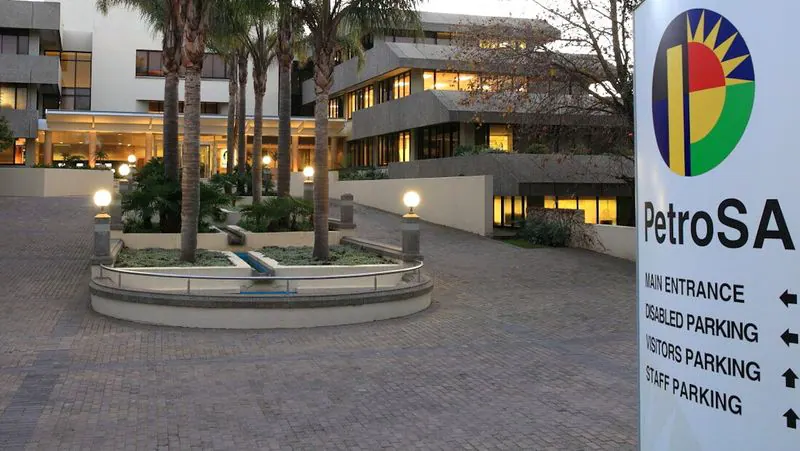
PetroSA, a South African state-owned oil company, is grappling with a substantial unfunded decommissioning liability, estimated to be between R6.6-billion and R7-billion. This liability refers to the cost of safely decommissioning its onshore and offshore oil and gas operations, a process required by law. The company's financial struggles have raised concerns about the environmental risks associated with its defunct or mothballed operations.
In 2020, PetroSA's Auditor-General estimated the company's rehabilitation obligations at R12.4-billion, with only R2.8-billion in cash ringfenced for this purpose. Although the estimated liability has decreased to R10.1-billion as of 2025, the shortfall remains significant. According to the Central Energy Fund's (CEF) 2025 integrated annual report, PetroSA has R3.1-billion in rehabilitation ringfenced funds, but this amount may not be sufficient to cover the liability.
The decommissioning liability has been a longstanding issue for PetroSA, with the company's CEO, Dr. Ishmael Poolo, describing it as a "monster" in 2021. Attempts to repurpose PetroSA's oil infrastructure have been made, but the liability problem persists. The formation of a new state-owned oil company, the South African National Petroleum Corporation (SANPC), has also been impacted by PetroSA's financial struggles.
The SANPC was launched in April 2024, with a board and executive team that included former PetroSA executives. However, the company's financial viability was threatened by PetroSA's rehabilitation liability, leading to a decision to carve up the entity. Only the Trading Supply and Logistics division of PetroSA was deemed financially viable to be merged into the SANPC, while PetroSA's legacy assets, including the decommissioning liability, were ringfenced.
The exclusion of PetroSA's rehabilitation liability from the SANPC has raised concerns about the potential financial risks for the state and the public. Civil society group Green Connection has noted that this approach may lead to the liability falling to the state, a scenario that has been seen in the mining sector. The SANPC's formation has been touted as a solution to PetroSA's financial struggles, but the decommissioning liability remains a significant challenge.
PetroSA had planned to restart its Mossel Bay gas-to-liquids refinery to generate revenue and cover the shortfall, but this plan has been mired in controversy. The company partnered with Gazprombank to restart the refinery, a decision that has raised questions about the project's viability. The delay in implementing updated financial regulations has also contributed to the persistence of PetroSA's decommissioning liability.
The lack of progress in addressing PetroSA's decommissioning liability has significant implications for the environment and the public purse. The company's financial struggles have raised concerns about its ability to safely decommission its operations, posing environmental risks. The public may ultimately be required to foot the bill for PetroSA's rehabilitation obligations, highlighting the need for urgent action to address this issue.
Key points
- PetroSA's unfunded decommissioning liability poses significant environmental and financial risks.
- The company's financial struggles have raised concerns about its ability to safely decommission its operations.
- The public may ultimately be required to foot the bill for PetroSA's rehabilitation obligations.