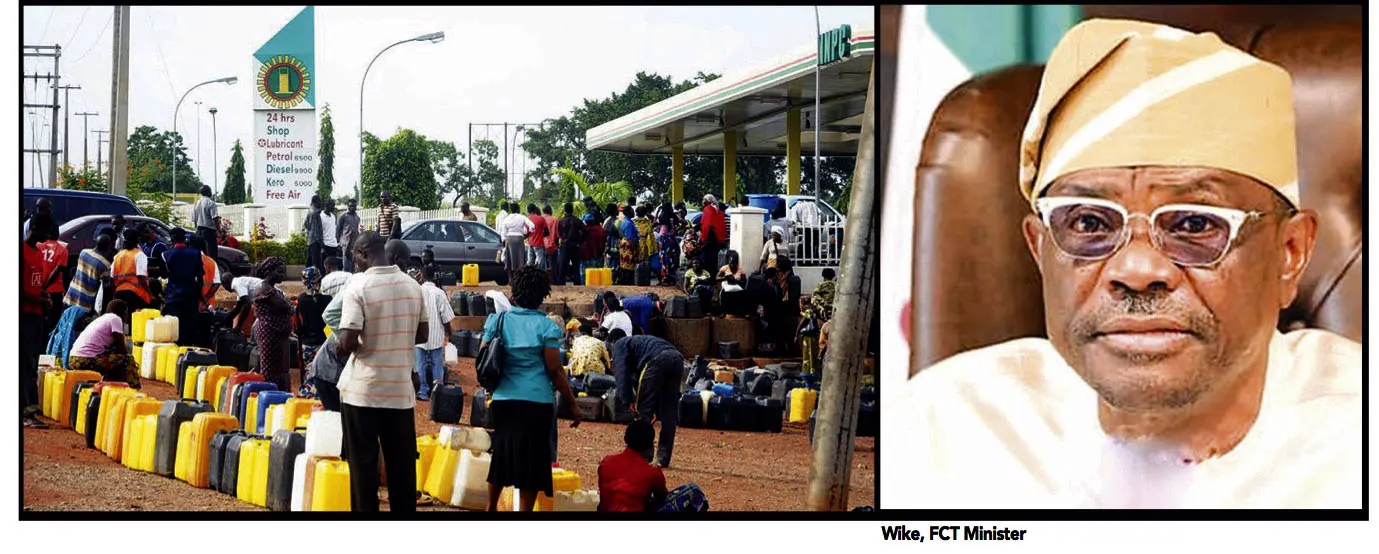
Workers and motorists in Abuja are feeling the pinch as petrol prices skyrocket to as high as N1,450 per litre, exacerbating the cost-of-living crisis in the Federal Capital Territory (FCT). Investigations revealed that petrol is selling between N1,395 and N1,450 per litre at various filling stations, triggering higher transport fares and squeezing household incomes. This has left many residents with a difficult choice: spend more on transportation or divert money meant for food and other household needs.
Motorists and transporters are lamenting the impact of the fuel hike on their livelihoods. Ibrahim Sule, a motorist, said the latest fuel increase has left many struggling to keep their vehicles on the road. "We work from Monday to Friday, some even till Saturday or Sunday, yet we can hardly feed our families. After removing the money for fuel, what is left?" He expressed concern that the situation may force some to abandon their vehicles. Sule's story is echoed by many who are struggling to cope with the rising cost of transportation.
Tricycle operators, who had previously found success in the business, are now facing challenges due to the fuel hike. Clement Ebe, a tricycle operator, was sacked from a bank before venturing into transportation. He said that while the business was initially profitable, the recent fuel increases have made it difficult to make ends meet. "Even feeding has become a problem. Thank God I invested when things were still good. Some people cannot even pay their rent because they can no longer save." Ebe's situation highlights the struggles of those who rely on transportation as a source of income.
The impact of the fuel hike is not limited to motorists and transporters; commuters are also feeling the strain. Kelechukwu Ani said that he finds it difficult to move around for his daily bread due to the increase in transportation costs. In Kubwa, James Adewale noted that the fare from Kubwa to Wuse rose from less than N1,000 to between N1,400 and N1,500, depending on the vehicle and time of travel. As a result, some commuters have resorted to trekking or seeking cheaper means of transportation.
Civil servants are also bearing the brunt of the fuel hike. Terfa Francis, a civil servant, said that her monthly salary cannot buy fuel to and from work. Another worker, Usman Musa, noted that his salary has remained the same while the cost of transportation and other essential items continue to rise. Shim Felix, another civil servant, said that he spends a significant part of his income on transportation, which has affected his ability to afford food, bills, and other basic needs.
In response to the fuel hike, some workers have resorted to carpooling, using staff buses, trains, and other cheaper means of transportation, while cutting other household expenses. Florence Aka said that the hike forced her to divert money meant for food to transportation, adding that it had also affected her ability to report to work regularly. She noted that salaries have not increased at the same pace as the cost of living, leaving workers struggling to cope.
The fuel hike has also had a ripple effect on the economy, with traders complaining that prices of goods are high due to the increase in fuel prices. Sunny Okafor said that the Federal Government needs to stabilise fuel prices to alleviate the suffering of Nigerians. With the current situation, it remains to be seen how residents of Abuja will cope with the rising cost of living.
Key points
- Petrol prices in Abuja have reached as high as N1,450 per litre.
- The fuel hike has led to higher transport fares and reduced household incomes.
- Residents are calling on the Federal Government to stabilise fuel prices to alleviate the suffering of Nigerians.