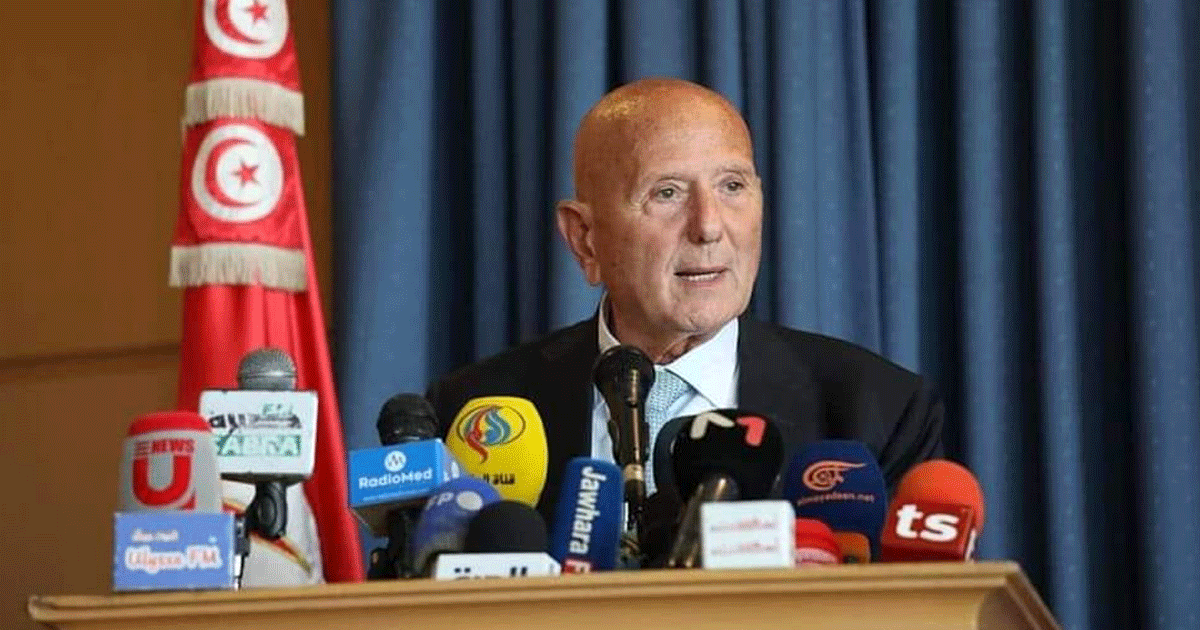
A petition signed by over 150 international personalities, including human rights activists, academics, and politicians, has called for the release of Ahmed Néjib Chebbi, a 82-year-old Tunisian activist, and other political prisoners in Tunisia. Chebbi, a symbol of resistance against oppression in Tunisia, has been on a hunger strike to protest his detention and the suppression of political freedoms in the country. His son, Louay, announced on October 7, 2026, that his father had suspended his hunger strike after the prison administration agreed to provide prisoners with access to reliable information.
Ahmed Néjib Chebbi has a long history of activism, dating back to the 1960s when he was part of a group of students who were imprisoned for protesting against the government. He has continued to be a vocal critic of authoritarianism in Tunisia, and has been arrested and imprisoned several times for his activism. Chebbi's detention has sparked widespread concern among human rights activists and politicians, who see it as part of a broader crackdown on dissent in Tunisia. His case has been highlighted as an example of the erosion of democratic freedoms in the country.
The petition calling for Chebbi's release has been signed by a diverse group of individuals, including academics, human rights activists, and politicians from around the world. Signatories include Fouad Abdelmoumni, an economist and democracy activist from Morocco; Gilbert Achcar, a professor of development studies at SOAS, University of London; and Sophie Bessis, a historian and writer from France. The petition demands the release of Chebbi and other political prisoners, as well as the restoration of democratic freedoms in Tunisia.
The situation in Tunisia has sparked concern among human rights activists and politicians, who see a growing trend of authoritarianism in the country. The petition highlights the case of Chebbi and other political prisoners, who have been detained for exercising their right to free speech and assembly. It also notes that the Tunisian government has been cracking down on dissent, using tactics such as imprisonment and intimidation to silence critics.
The prison administration has agreed to provide prisoners with access to reliable information, which was one of Chebbi's key demands. However, many activists and politicians remain skeptical about the government's commitment to democratic reforms. They argue that the detention of Chebbi and other activists is part of a broader pattern of repression, and that the government needs to take concrete steps to restore democratic freedoms in the country.
The case of Ahmed Néjib Chebbi has sparked a wider debate about the state of democracy in Tunisia. Many activists and politicians see his detention as a test of the government's commitment to democratic values, and are calling for his release and the restoration of democratic freedoms. The petition has also highlighted the need for international pressure on the Tunisian government to respect human rights and democratic norms.
The international community has been urged to take action to support democratic activists in Tunisia. The petition has been seen as an important step in mobilizing international pressure on the Tunisian government to respect human rights and democratic norms. As the situation in Tunisia continues to unfold, many activists and politicians remain vigilant, and are calling for the release of Ahmed Néjib Chebbi and other political prisoners.
Key points
- - Over 150 international personalities have signed a petition calling for the release of Ahmed Néjib Chebbi and other political prisoners in Tunisia. - Ahmed Néjib Chebbi, a 82-year-old Tunisian activist, has been on a hunger strike to protest his detention and the suppression of political freedoms in the country. - The petition demands the release of Chebbi and other political prisoners, as well as the restoration of democratic freedoms in Tunisia.