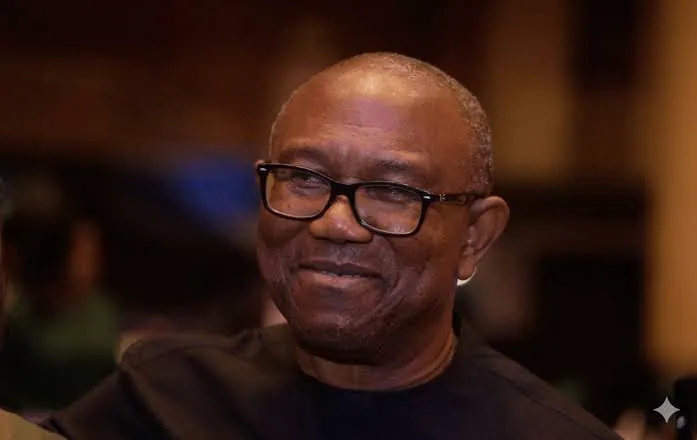
Peter Obi, the presidential candidate of the Nigeria Democratic Congress (NDC), has distanced himself from a 59-member Presidential Campaign Council created by the OK Movement, a support group mobilizing for his 2027 presidential bid. Obi made this statement on Arise News' Prime Time programme, emphasizing that the NDC is the political platform to which he and other members belong. The OK Movement, formed from Obi and his running mate Rabiu Kwankwaso's names, unveiled the council on September 17 to coordinate support for the duo.
The OK Movement's action has created a rift between the support group and the NDC leadership, with the party disowning the council. Obi stressed that groups like the OK Movement, Obedient Group, and Kwankwasiya should operate as support groups, not assume party responsibilities. He cited the OK Movement's use of a nomenclature similar to that of a political party as an example of overstepping boundaries. The NDC remains the political party to which Obi and other members belong.
Obi denied approving the Presidential Campaign Council announced by the OK Movement, describing its formation without his knowledge as wrong. He emphasized that any action by the OK Movement, which is named after him and Kwankwaso, requires express approval from both of them. Obi attributed the disagreement partly to some leaders of support groups acting contrary to directives. The NDC had warned that the development could destabilize the party.
The dispute began after the OK Movement constituted its 59-member campaign council on September 17. The group claimed its council would operate independently of the campaign council to be inaugurated by the NDC. In response, the NDC disowned the support group's action, stating that the party would soon unveil its own Presidential Campaign Council for the 2027 election.
Former Bayelsa State governor Seriake Dickson had previously argued that support groups should not constitute campaign councils like political parties. Obi agreed with Dickson's position, reiterating that support groups should support the party rather than assume party responsibilities. The OK Movement, however, rejected the NDC's position, maintaining that it did not require personal validation or approval from any individual within the party.
The OK Movement's council has sparked controversy within the NDC, with some leaders expressing concerns about the potential for destabilization. The NDC leadership has emphasized that the party will not be dictated to by support groups. The development has raised questions about the relationship between the NDC and its support groups.
The disagreement between the OK Movement and the NDC leadership highlights the challenges of managing support groups within a political party. Obi's rejection of the OK Movement's campaign council has set a precedent for the role of support groups in the NDC. The party is expected to unveil its own Presidential Campaign Council soon.
Key points
- Peter Obi rejects OK Movement's 59-member campaign council for 2027 elections.
- NDC disowns OK Movement's action, citing party boundaries.
- Obi emphasizes NDC as the primary political platform.