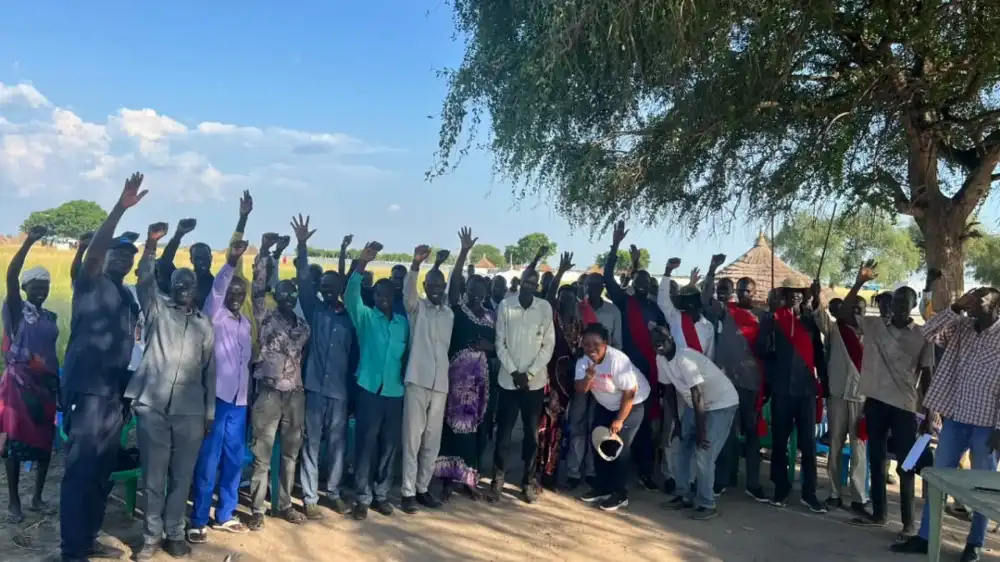
The United Nations Mission in South Sudan (UNMISS) recently organized a peace dialogue in Nyirol County, Jonglei State, bringing together around 50 community members to address persisting tensions and identify peaceful solutions. The dialogue aimed to promote social cohesion and trust-building among community members. Women representative Nyakoang Lam Bath emphasized that sustainable peace requires collective efforts from authorities, traditional leaders, women, youth, and other groups. The initiative seeks to prevent violence and promote peaceful coexistence in the region.
During the dialogue, youth leader Tut Maluok Chop appealed to his fellow youth and elders to reject violence, cattle theft, and road ambushes, and participate in peacebuilding activities. He offered concrete solutions, including establishing early warning systems and protecting civilians, especially children, women, and the elderly. Chop stressed the importance of community involvement in preventing violence and promoting peace. His sentiments were echoed by other participants, who emphasized the need for collective action to achieve sustainable peace.
Matuom Majuet Thoan, a cattle camp youth representative, highlighted the importance of preventing violence before it starts. He stressed that community members should listen to each other's concerns, report them to authorities and security forces, and engage those on the verge of conflict in peaceful conversation. Thoan's remarks underscored the need for proactive measures to prevent conflicts and promote peaceful resolution. The dialogue provided a platform for community members to share their concerns and develop practical solutions.
Paramount Chief Mabil Hoth shared an example of a conflict prevention mechanism, a recently formed peace committee in his Gaatbal community. The committee coordinates peace-building activities, monitors tensions, facilitates dialogue, and follows up on reported incidents. Hoth proposed forming similar committees in neutral locations, where conflict-prone parties could come together in a safe space and benefit from impartial peace mediations. His proposal aimed to promote peace and stability in the region.
UNMISS Civil Affairs Officer Beverly Mac-Ocloo reiterated the mission's commitment to supporting peace initiatives in Nyirol County. She stressed that the primary responsibility for peacebuilding rests with the Government and affected communities, while UNMISS provides a platform for community members to speak, listen to one another, and develop practical ways forward. Mac-Ocloo emphasized that sustainable peace must be owned by the people themselves. The UNMISS role is to facilitate and support community-led peace initiatives.
The peace dialogue in Nyirol County is part of UNMISS efforts to promote peace and stability in South Sudan. The mission has been working with local communities to address conflict drivers and promote social cohesion. The dialogue demonstrated the importance of community-led peace initiatives and the role of women, youth, and traditional leaders in promoting peace. The participants' commitment to peacebuilding is a positive step towards achieving sustainable peace in the region.
The outcome of the peace dialogue in Nyirol County is expected to contribute to the overall peace and stability in South Sudan. The initiative has brought together community members to identify peaceful solutions to persisting tensions. The UNMISS-facilitated dialogue has empowered community members to take ownership of peacebuilding initiatives and develop practical solutions to promote social cohesion. The success of this initiative will depend on continued community engagement and support from stakeholders.
Key points
- UNMISS supports community-led peace initiatives in Nyirol County, South Sudan.
- Community members commit to peacebuilding and social cohesion in Nyirol County.
- Peace dialogues promote sustainable peace and stability in South Sudan.