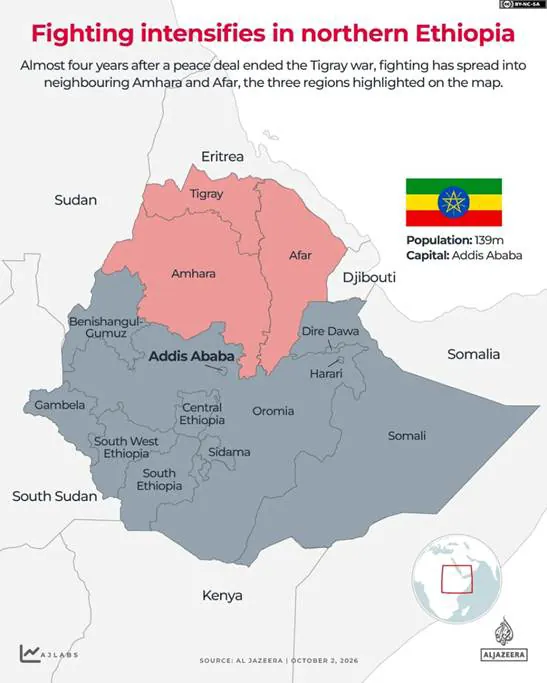
The Pretoria Peace Deal, signed on November 2, 2022, was intended to end the two-year civil war in Ethiopia's Tigray region. The agreement, also known as the Cessation of Hostilities Agreement, was mediated by the African Union (AU) and aimed to bring an end to the conflict between the federal government of Addis Ababa and the Tigray People's Liberation Front (TPLF). The deal allowed for the disarmament of the TPLF and the restoration of federal authority, but its terms were criticized for being ambiguous and lacking clear enforcement mechanisms.
One of the main issues with the Pretoria Peace Deal was its failure to address key questions, including who owns Ethiopia, who controls federalism, and who holds power. The agreement also left unresolved the issue of Western Tigray, which has been occupied by Amhara forces since 2020. Despite promises of unhindered aid, restored services, and territorial integrity, the TPLF has not been able to regain control over the region. Furthermore, Eritrean troops, who fought in the war but did not sign the peace deal, have not fully withdrawn from the area.
The consequences of the failed peace deal have been severe. More than one million Tigrayans remain displaced, and Eritrean troops have not fully withdrawn. The disarmament process was partial, and aid and reconstruction efforts have stalled. The lack of clear enforcement mechanisms has meant that violators of the agreement have not been held accountable. In September 2026, fighting resumed, and Tigrayan forces seized control of several airports. Federal forces later claimed to have retaken them, but the situation remains volatile.
The failure of the Pretoria Peace Deal highlights the importance of addressing the root causes of conflict and ensuring that peace agreements are comprehensive and enforceable. The deal was criticized for being an "elite deal" between generals that traded justice for quiet, without involving the affected people, including women, displaced persons, and Eritrean representatives. The agreement's focus on short-term ceasefire rather than long-term peace has led to renewed violence and instability in the region.
The Pretoria Peace Deal is not an isolated example of a failed peace agreement. Similar deals in other African countries, such as South Sudan, the Democratic Republic of Congo, and Mozambique, have also collapsed due to ambiguity and lack of enforcement. In contrast, peace agreements that have endured, such as those in Mozambique and Liberia, have had key elements, including a neutral armed guarantor, a detailed land-return timeline, and funding for reintegration.
The African Union has been criticized for its role in the Pretoria Peace Deal, with some arguing that it prioritized speed over substance. The AU's lack of sanctions, flight bans, or enforcement mechanisms has meant that violators of the agreement have not been held accountable. The failure of the Pretoria Peace Deal serves as a reminder of the importance of careful planning and inclusive negotiations in peace agreements.
The resumption of fighting in Tigray has had devastating consequences, with hundreds of thousands of people affected. The international community has condemned the violence, and there are concerns about the humanitarian situation in the region. As the situation continues to unfold, it is clear that a new approach to peacebuilding is needed, one that prioritizes inclusivity, accountability, and sustainable peace.
Key points
- The Pretoria Peace Deal failed due to its ambiguous terms and lack of enforcement mechanisms.
- The agreement's focus on short-term ceasefire rather than long-term peace led to renewed violence and instability.
- Peace agreements that prioritize inclusivity, accountability, and sustainable peace are more likely to endure.