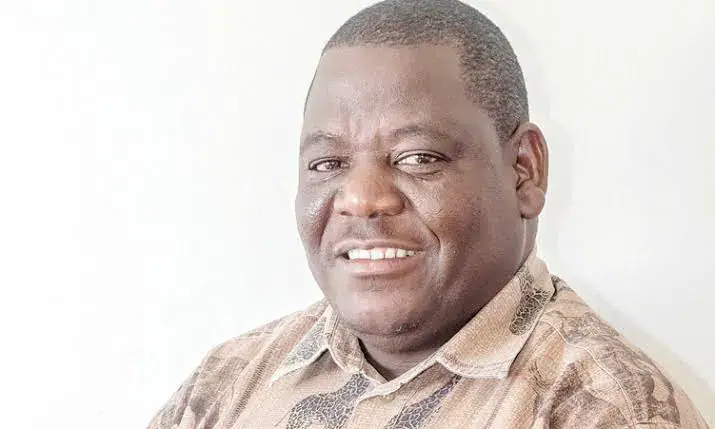
The Popular Democratic Movement (PDM) in Namibia has called on opposition parties, businesses, and civil society organisations to challenge President Netumbo Nandi-Ndaitwah's growing involvement in the petroleum sector in court. PDM secretary-general Manuel Ngaringombe argues that the president should allow the Ministry of Industries, Mines and Energy to exercise its statutory mandate rather than directly overseeing petroleum affairs and major investment projects.
The PDM's concerns come as Parliament considers the Petroleum (Exploration and Production) Amendment Bill, which seeks to transfer significant administrative and regulatory responsibilities in Namibia's upstream petroleum sector from the ministry to a new Upstream Petroleum Unit (UPU) in the Presidency. The proposed legislation provides for the transfer of several powers currently exercised by the minister, including responsibilities relating to petroleum licensing and agreements, to the new unit.
Ngaringombe questioned the legal authority under which the UPU was established and its personnel appointed before Parliament had completed its consideration of the Bill. He also criticised the president's decision to place the Dangote Namibia Tank Farm and Regional Pipeline Project directly under her office, warning that the arrangement could blur institutional responsibilities and create uncertainty about established government procedures.
At the project's launch in Walvis Bay on 4 November, Nandi-Ndaitwah said she had decided to place it under the Office of the President because of previous experiences with investors becoming frustrated by bureaucratic delays. She said she had taken personal responsibility for overseeing the project and directed National Planning Commission director-general Kaire Mbuende to supervise its implementation.
While the president has presented the arrangement as an intervention to accelerate investment and cut bureaucratic delays, Ngaringombe argued that direct presidential involvement could weaken institutional accountability. He questioned who would hold the president accountable if the project encountered serious difficulties, given her direct involvement in consultations, decision-making and implementation.
Ngaringombe further alleged that individuals within State House had interests in companies operating in the oil industry, raising concerns about possible conflicts of interest. He warned that the growing centralisation of petroleum affairs in the Presidency could also create the perception among investors that access to the highest office, rather than established government procedures, is necessary to advance projects.
The National Assembly approved the Petroleum (Exploration and Production) Amendment Bill in principle on 20 October, with 50 members voting in favour. It must still undergo further parliamentary stages and receive presidential assent before becoming law. Until then, the Petroleum (Exploration and Production) remains the operative legal framework, with statutory petroleum responsibilities vested in the minister and petroleum commissioner.
Key points
- PDM party questions legality of president's expanding role in petroleum sector
- Concerns raised about institutional accountability and executive authority
- President's office to oversee Dangote fuel storage and pipeline project at Walvis Bay
Reporting sources
- PDM wants Nandi-Ndaitwah’s oil powers challenged Image - Namibian Sun · namibiansun.com