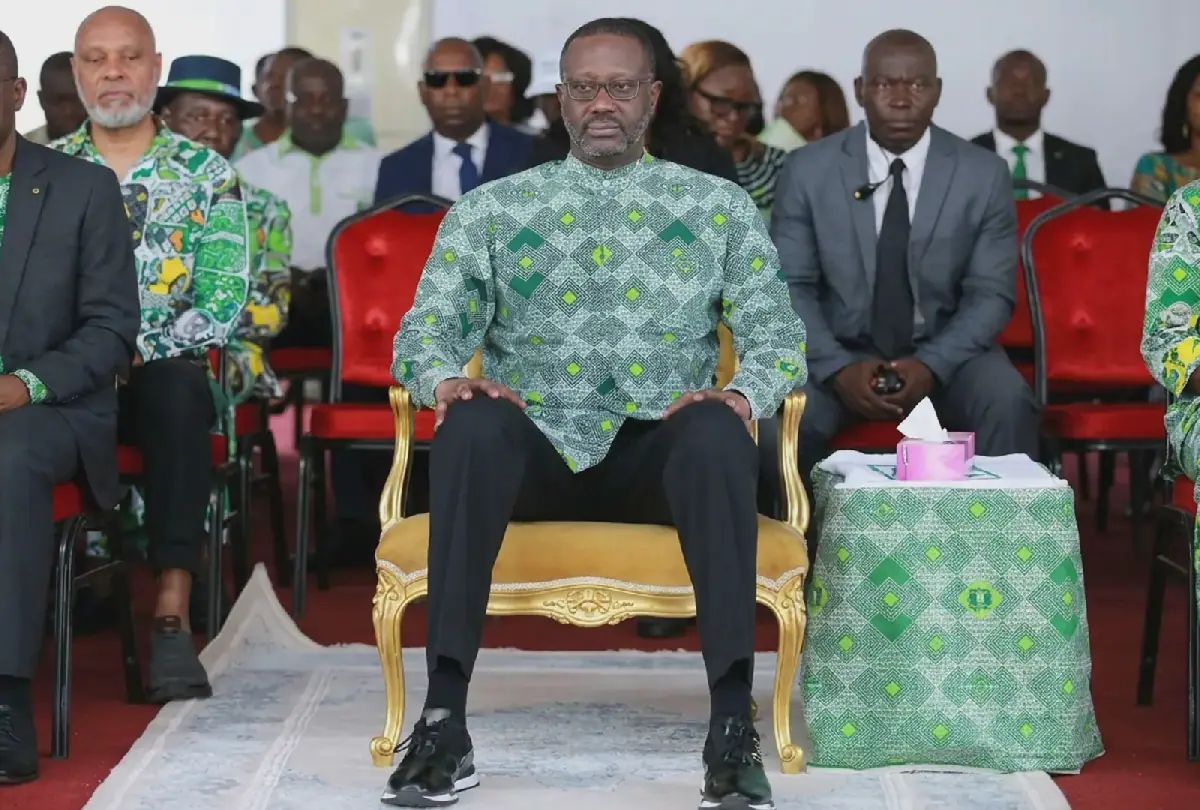
A confidential letter, attributed to Calice Yapo, secretary-general of the Democratic Party of Côte d'Ivoire (PDCI), has sparked controversy within the party. The letter, addressed to vice-president Jules Ahouzi, proposes a neuropsychological evaluation in preparation for a possible interim leadership role. This move has raised questions about the party's leadership and the health of its president, Tidjane Thiam.
The letter, dated November 2026, cites the party's statutes and internal regulations, which provide for an interim leader in case of a vacancy. The evaluation, according to the letter, is voluntary and its results will be kept confidential. However, the timing and motivations behind this move have sparked concerns among party members and supporters.
This development comes amid ongoing tensions within the PDCI, which has faced several crises under Thiam's leadership. Critics accuse him of centralized decision-making, inadequate consultation with party structures, and marginalizing historical figures. The party's poor performance in the 2025 presidential election, where Thiam's candidacy was deemed ineligible, has added to the challenges.
The PDCI has struggled to regain stability since its defeat in the 2025 election. The party's internal divisions and criticisms of Thiam's leadership have raised concerns about its future. The new controversy has added to the list of questions about the party's direction and Thiam's ability to lead.
Thiam's leadership has faced criticism for being opaque and not sufficiently inclusive. The Initiative for Reconciliation and Safeguarding of the PDCI (IRS-PDCI) has denounced the party's management, citing a lack of democracy and distance from its grassroots members. The party's vice-president, Yasmina Ouégnin, has also expressed concerns about the limited consideration given to alternative opinions.
The crisis has raised questions about the party's succession plan and the process of selecting an interim leader. The PDCI's statutes provide for an interim leader, but the conditions and criteria for selecting such a person are unclear. Thiam must now address these concerns and provide clarity on the party's future.
The situation has sparked concerns among party members and supporters about the PDCI's stability and future. The party must now navigate this crisis and find a way to address its internal divisions and leadership challenges. The developments have also raised questions about the party's ability to present a united front ahead of future elections.
Key points
- The PDCI is facing a new crisis over a letter proposing a psychological evaluation for a vice-president, potentially paving the way for an interim leader.
- The party has struggled with internal divisions and criticisms of Thiam's leadership, including accusations of centralized decision-making and marginalizing historical figures.
- The crisis has raised questions about the party's succession plan and the process of selecting an interim leader.