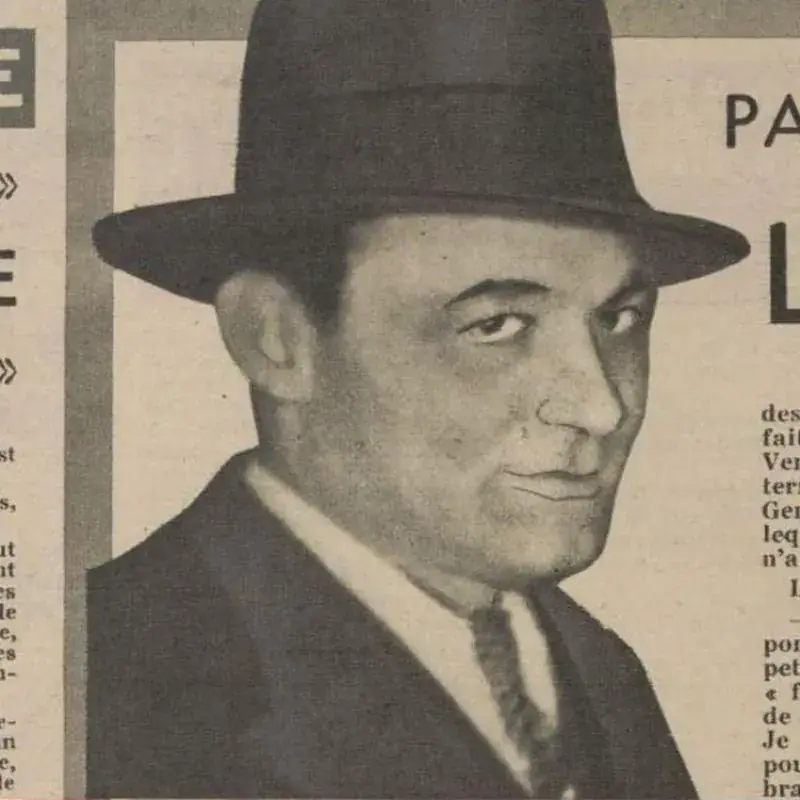
Paul Carbone was a key figure in Marseille's criminal underworld during the 1930s. He, along with François Spirito, dominated the city's crime scene, with ties to local politicians and law enforcement. Their influence extended to international drug trafficking, with Marseille becoming a major hub for the trade. The duo's connections to the political world were public, with many major parties, except the Communist Party, utilizing their services as "electoral agents" or enforcers.
Carbone's rise to power began with his navigation career, during which he established a network of contacts and business ventures. He would send money to his mother in Marseille and occasionally bring in associates, like his brother Jeannot, to join him in his endeavors. One of their ventures involved smuggling opiated perfumes, which proved lucrative but ultimately led to Jeannot's expulsion by the police. Following this, the Carbone name became closely tied to the drug trade.
By the 1930s, Marseille had become a global hub for the drug trade, with Paul Carbone at its center. He had established a vast network of suppliers and distributors, with connections to ports and cities worldwide. The city's strategic location made it an ideal hub for shipping drugs from Asia and the Middle East to consumers in Egypt and America. Carbone's operation made the drug trade more accessible and affordable, with prices in Marseille often lower than in the countries of origin.
Carbone's influence extended far beyond Marseille, with his organization involved in the global drug trade. His network spanned multiple continents, with connections to various ports, cities, and underworld figures. The infamous writer-adventurer Henry de Monfreid speculated that Carbone's operation involved smuggling opium from state-controlled warehouses using falsified documents. While the exact details of his operation remained a mystery, Carbone's reputation as a cunning and ruthless operator was well-known.
The scope of Carbone's operation was vast, with his organization involved in various aspects of the drug trade, from importation to distribution. His influence reached as far as Paris, which served as a major center for consuming and distributing cocaine, morphine, and heroin. The city's connections to other European cities, such as Brussels and Hamburg, made it an ideal hub for supplying the continent.
Carbone's connections to the French authorities and politicians were complex and multifaceted. His association with Simon Sabiani, a local politician, was particularly notable. During the Stavisky affair in 1934, Sabiani publicly supported Carbone and Spirito, who were accused of assassinating a local councilor. This public display of support highlighted the deep-seated connections between the underworld and the world of politics.
By the late 1940s, Carbone's network had begun to disintegrate, with many of his associates either imprisoned or killed. In 1949, the scandal magazine V published a series of articles detailing Carbone's life and operations. These articles, written by Jean Bazal, provided a detailed look into the inner workings of Carbone's organization and the extent of his influence during the 1930s.
Key points
- Paul Carbone's operation made Marseille a global hub for the drug trade, with connections to suppliers and consumers worldwide.