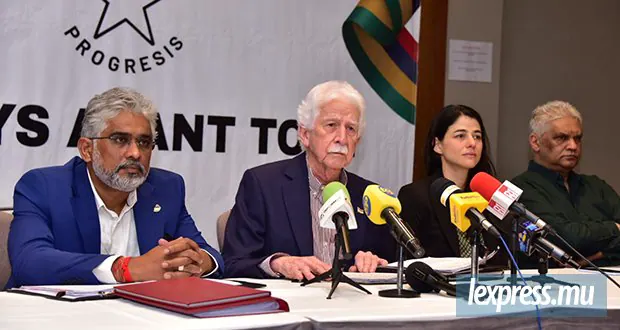
Mauritian opposition leader Paul Bérenger held a press conference at Ebène on October 10, 2026, where he expressed sympathy to families affected by the water shortage and the recent shooting incident in Camp-Levieux. He stated that the water crisis has led to widespread anger and urged for a resolution to the issue before it escalates further. Bérenger attributed the crisis to the Minister of Energy and Public Services, Patrick Assirvaden, citing inconsistencies in the government's response.
Bérenger questioned the effectiveness of the government's plan to address the water shortage, pointing out that over 90% of rainfall is lost to the sea and the Rivière-des-Anguilles dam project has made little progress. He also expressed skepticism about the proposed desalination of seawater, citing environmental concerns and high costs. Instead, he suggested that citizens should be encouraged to harvest rainwater. Bérenger emphasized that solutions to the crisis require hard work and competence, stating that "miracles do not exist."
The opposition leader also addressed the National Crime Agency (NCA) Bill, which aims to replace the Financial Crimes Commission. Bérenger expressed concerns about the bill's potential impact on the country's law enforcement and proposed that a select committee, chaired by the Attorney General, should review the bill before its passage. He emphasized that the FMP is not opposed to the creation of a new agency but wants to ensure that it is "better, not worse" than the existing commission.
Bérenger was joined at the press conference by other FMP members, including Joanna Bérenger and Rama Valayden. Joanna Bérenger expressed concerns about the environmental impact of desalination and suggested that the government should focus on repairing the 1,500 km of leaking pipes. Rama Valayden, a lawyer, also raised concerns about the NCA Bill, citing potential risks to the country's justice system.
The press conference was attended by several prominent figures, including Chetan Baboolall, the leader of the opposition. Baboolall also expressed concerns about the NCA Bill, stating that it could lead to a situation where the director general of the NCA has unchecked power over the police. The Bar Council has also voted unanimously to freeze the bill, citing concerns about its potential impact.
Bérenger also touched on other issues, including the Chagos dispute and recent statements by the MSM party regarding the IMF's assessment of the country's economy. He denied claims that the government had falsified economic data and attributed the IMF's comments to a technical exercise on the calculation of GDP.
The FMP's proposals for addressing the water crisis and the NCA Bill are set to be debated in the coming weeks. Bérenger's call for a calm and measured approach to addressing the water crisis and for careful consideration of the NCA Bill reflects the opposition's concerns about the government's handling of key issues.
Key points
- The Mauritian government faces criticism over its handling of the water crisis and the proposed National Crime Agency Bill.
- Opposition leader Paul Bérenger has expressed concerns about the government's response to the water shortage and the potential impact of the NCA Bill.
- The FMP has proposed alternative solutions to the water crisis, including rainwater harvesting and repair of leaking pipes.