Ghana's Fourth Republic is viewed by the international community as a democratic success story, characterized by smooth transitions of power. However, for those observing from the diaspora, the situation is more troubling. The country's democracy is suffering from a chronic political pathology where the state machinery has been captured by a hyper-partisan duopoly. This has resulted in the rights of citizenship being turned into a conditional privilege.
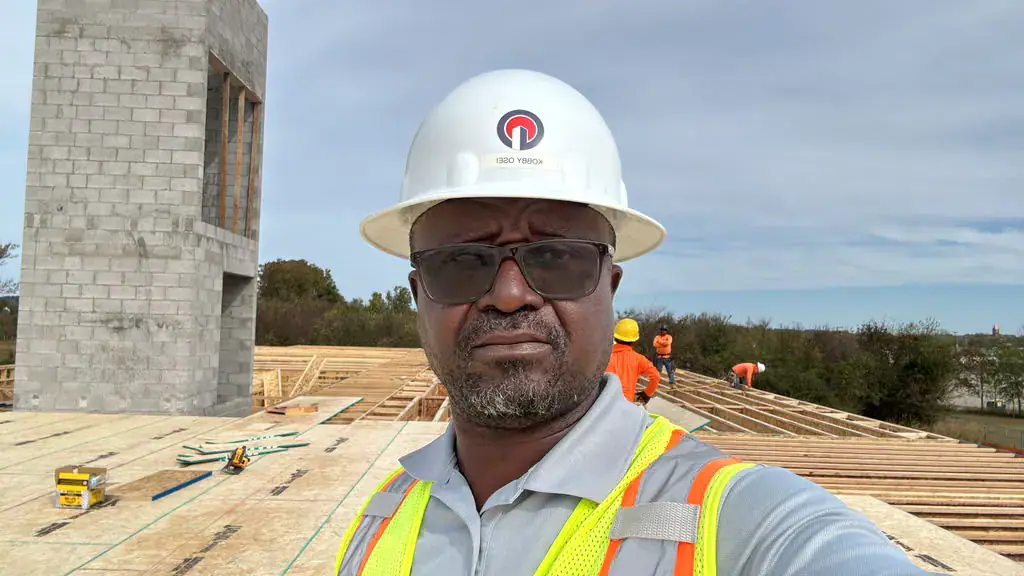
The author, Kwabena Kyere, a Project Management Professional (PMP), examines Ghana's politics through the lens of his professional background in construction. With a foundation in Building Technology from KNUST and a Master's in Quantity Surveying from the University College of Estate Management (UCEM), Kyere looks at the country through the objective metrics of cost, value for money, structural integrity, and project viability. He notes that the way Ghana's built environment and national resources are managed is deeply alarming.
The current state of Ghanaian politics is rooted in the country's post-independence history. The fierce rivalry between the New Patriotic Party (NPP) and the National Democratic Congress (NDC) is a modern mutation of the existential rifts that fractured the nation immediately after independence in 1957. The ideological divide between the Danquah-Busia-Dombo tradition and the Nkrumaist camp became an all-or-nothing struggle over the identity of the state.
The Preventive Detention Act (PDA) of 1958, which allowed the government to lock up political opponents without trial, set a dangerous precedent. State power was not a tool to serve the collective public, but a shield to protect allies and a sword to destroy rivals. Decades of military interventions reinforced this survivalist mindset. By the time the Fourth Republic was established in 1993, Ghana's political parties had evolved from policy-oriented civil associations into militarized patronage machines designed to capture the executive branch at all costs.
A fundamental shift in the purpose of governance has occurred, with governments now being run on short-term infrastructure projects rather than long-term sustainable policies. In an ideal framework, capital projects are born out of holistic national policies designed to solve institutional problems. However, in Ghana's pathological landscape, this project lifecycle has been completely inverted. Sound policies are abandoned because they require rigorous, transparent planning.
The project-driven extraction loop operates as a criminal, unwritten convention, understood, executed, and relied upon by actors across the partisan divide. This unlawful convention serves three destructive functions: rewarding financiers, enriching party insiders, and extraction rackets. Public contracts are routinely distributed via non-competitive single-sourcing directly to party loyalists who often possess no technical capacity, machinery, or engineering background.
The Kufuor Affordable Housing Project and the Saglemi Housing Project are examples of this project-driven extraction loop. Both parties have mastered this art, and the history of Ghana's housing and road sectors tells the full story. The projects were initiated with noble intentions but were systematically abandoned or mutated into hyper-extraction, resulting in monumental sickness and massive financial losses.
Key points
- Independent citizens face systematic economic, institutional, and civic marginalization.
- The project-driven extraction loop serves three destructive functions: rewarding financiers, enriching party insiders, and extraction rackets.
- Ghana's democracy is suffering from a chronic political pathology where the state machinery has been captured by a hyper-partisan duopoly.