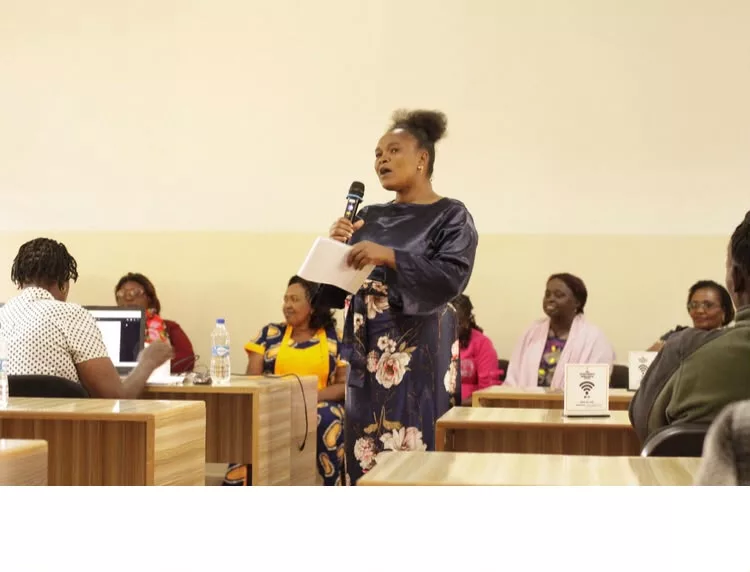
Pastoral women in Kenya are advocating for a greater role in decision-making processes that affect their livelihoods and wellbeing. They claim that their exclusion from these processes has limited their access to land, leadership, and economic opportunities. This was a key discussion point at a recent two-day workshop on the National Policy on Women's Economic Empowerment, convened by UN Women in Nanyuki, Laikipia county.
The workshop heard that women in pastoral communities remain underrepresented in decisions that affect their livelihoods and wellbeing. Participants identified land ownership and control, leadership, and access to economic opportunities as areas where women and girls continue to face barriers. They urged women to take a greater role in decision-making, with stakeholders warning that their exclusion continues to limit access to land, leadership, and economic opportunities.
Mary Masain-Naitum, chairperson of Naitum Women Group, said that increased participation by Maasai women in community land governance had enabled them to gain greater control over property and take up leadership positions. She cited examples of women serving on community land boards and holding positions such as treasurer, while others had acquired shares in grazing and rangeland resources.
Masain-Naitum noted that cultural practices continue to discourage many women from asserting their rights to property and participating in leadership. She urged women to educate each other on land rights and ensure their names are included in community land registers and jointly acquired property. UN Women has identified access to productive resources, income, leadership, and decision-making as crucial elements of gender equality.
UN Women has noted that secure access to land and natural resources can strengthen women's agency, household productivity, income, and participation in decision-making. The organisation's work in Laikipia and other arid and semi-arid counties has included climate-smart agriculture, entrepreneurship, leadership training, and improved access to markets. Vivian Wanjala, a livelihoods official at Habitat for Humanity Kenya, said economic empowerment programmes were helping women build livelihoods while addressing environmental challenges.
Wanjala said the programme had supported women with financial literacy to enable them to save, access loans, and invest through self-help groups. Boreholes had also been drilled in Solio to improve access to water. Participants at the workshop called for the National Policy on Women's Economic Empowerment to be implemented at the grassroots level, and for communities and leaders to create an environment where women can participate equally in decisions on land, livelihoods, leadership, and economic development.
Linet Auma, a participant, said the policy should also address the needs of women living with disabilities, particularly at the grassroots, where they often face additional barriers to participation. She cited the United Disabled Persons of Laikipia (UDPL) as an example of how organised disability groups can improve livelihoods and advocate for inclusion. The participants said greater inclusion would not only strengthen women's rights but also enable them to contribute more effectively to household incomes, community development, and local economic growth.
Key points
- Pastoral women in Kenya are pushing for greater inclusion in decision-making processes to address barriers to land ownership and economic opportunities.
- Women in pastoral communities remain underrepresented in decisions that affect their livelihoods and wellbeing.
- Secure access to land and natural resources can strengthen women's agency, household productivity, income, and participation in decision-making.