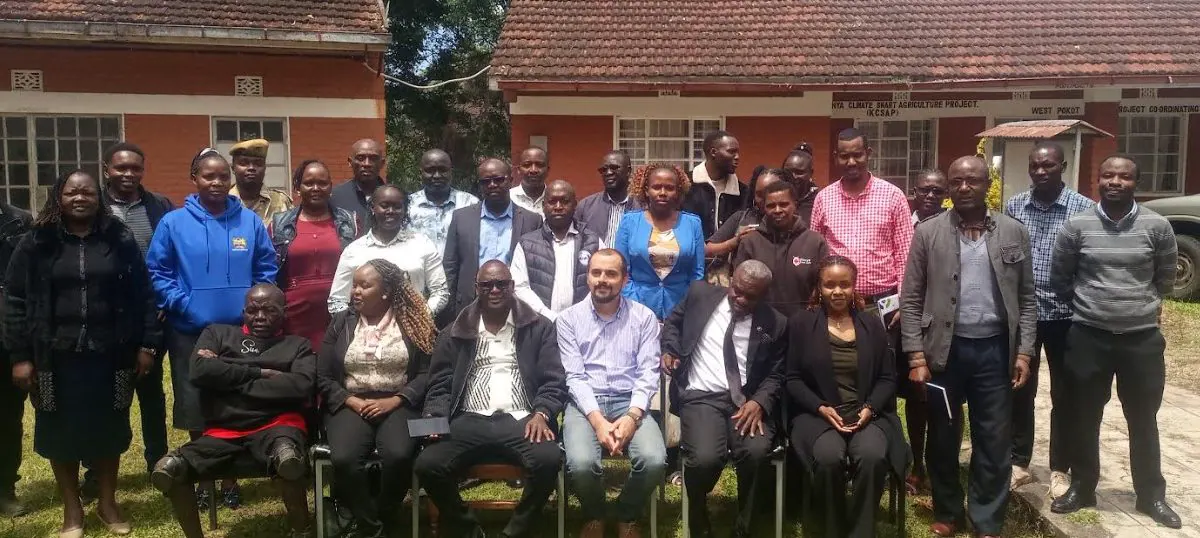
Residents of Alale Ward in West Pokot County, Kenya, are set to benefit from a restoration initiative aimed at reviving the degraded Kalapata Community Forest. The project, a partnership between Rural Initiatives for Agricultural Development and Social Networking (RIAD – SN) and the Food and Agriculture Organization (FAO), targets 100 acres of the forest. Human activities have put pressure on the forest, threatening the ecosystem and livelihoods of local communities that rely on livestock keeping and agriculture.
The 10-month project involves mapping 100 acres for restoration, establishing three tree nurseries, and producing and distributing indigenous and fruit tree seedlings. This effort aims to support the rehabilitation of the forest and promote sustainable livelihoods among local communities. Dr. Linet Makena from RIAD – SN presented the project proposal during a County Steering Group (CSG) meeting in Kapenguria. She highlighted that the initiative would leverage the anticipated El Nino rains to improve tree seedling germination and establishment.
The restoration of the Kalapata Community Forest is crucial to the economic and environmental wellbeing of the predominantly pastoralist and agro-pastoralist communities in the area. These communities depend heavily on livestock and crop production, making forest ecosystem restoration vital. Dr. Makena emphasized that the project would not only enhance environmental conservation but also contribute to sustainable pasture production and better nutrition among local communities.
The project also seeks to strengthen community participation in forest management, improve monitoring, accountability, and learning throughout its implementation. West Pokot County Chief Officer for Special Programmes, Humanitarian Coordination and Disaster Management, Daniel Lopale, urged the County Steering Group to remain engaged in supporting community welfare projects. He welcomed partnerships between the county government, development organizations, and non-state actors in addressing marginalization and humanitarian challenges.
Lopale emphasized the importance of continued collaboration among stakeholders to ensure that development and humanitarian interventions reach communities facing environmental and livelihood challenges. The partnership between RIAD – SN and FAO has been instrumental in addressing these challenges in the region. The county government's collaboration with non-state actors has played a significant role in promoting sustainable development and humanitarian initiatives.
The Kalapata Community Forest restoration project is a significant step towards promoting environmental conservation and sustainable livelihoods in West Pokot County. The initiative is expected to have a positive impact on the lives of residents in Alale Ward and surrounding areas. By restoring the degraded forest ecosystem, the project aims to improve the overall wellbeing of local communities and promote sustainable development.
The project's success will depend on the continued engagement and support of stakeholders, including the county government, development organizations, and local communities. With the anticipated El Nino rains, the project is poised to make a significant impact in the region. The partnership between RIAD – SN and FAO has demonstrated a commitment to promoting sustainable development and environmental conservation in West Pokot County.
Key points
- The project aims to restore 100 acres of the degraded Kalapata Community Forest.
- The initiative will promote sustainable livelihoods and environmental conservation among local communities.
- The project is a partnership between RIAD – SN and the Food and Agriculture Organization (FAO).