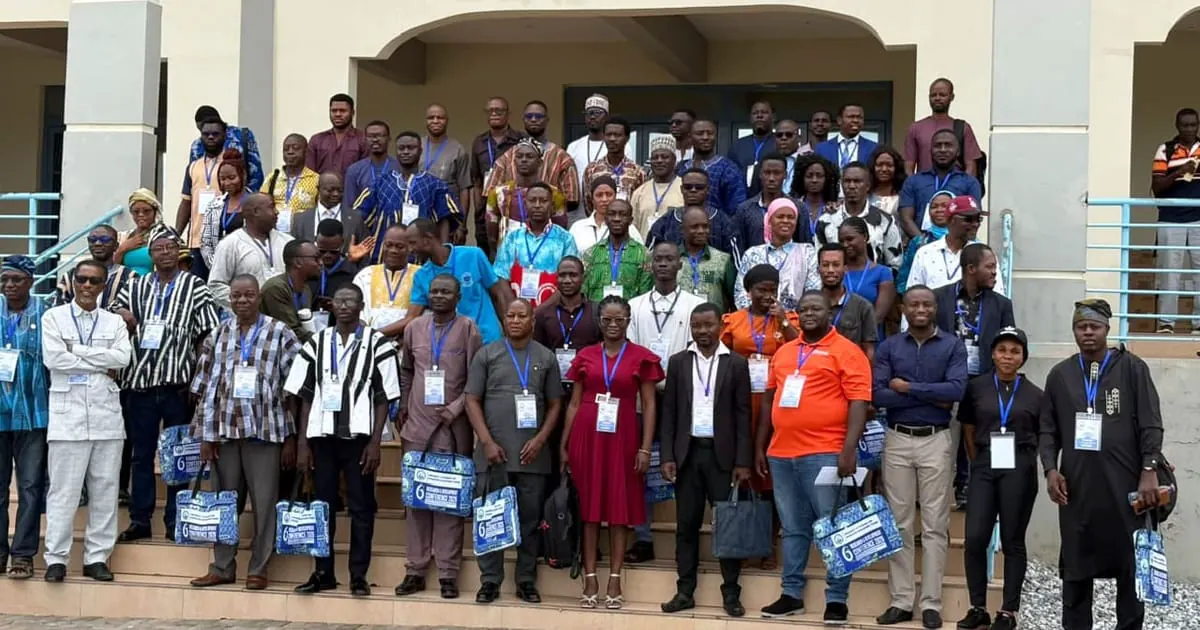
The University of Business and Integrated Development Studies (UBIDS) recently hosted the 6th UBIDS Research and Development Conference in Wa, Ghana. The conference, themed "Research for Policy: Strengthening Evidence-Informed Policymaking for Ghana's Development," aimed to bridge the gap between research and policy. Participants emphasized the need for a stronger connection between research and policymaking to address Ghana's development challenges. The conference brought together researchers, policymakers, and development practitioners to share knowledge and explore ways to translate research findings into practical solutions.
Upper West Regional Minister, Charles Lwanga Puozuing, read a speech highlighting the importance of research in addressing practical challenges confronting communities and the country. He mentioned issues such as youth unemployment, agricultural productivity, and climate change, which require evidence-based interventions. Puozuing urged researchers to focus on socially relevant issues and encouraged policymakers to involve researchers early in the policy process. He also called for stronger collaboration among universities, government, the private sector, and civil society organizations to bridge the gap between research and policy.
The Vice-Chancellor of UBIDS, Prof. Emmanuel Kanchebe Derbile, noted that the conference theme was timely and stressed that research would achieve its full value when it informed decisions that shape Ghana's development. He mentioned that the University is committed to building a vibrant research and development ecosystem and is advancing plans to establish a robust Grants Management System. This system will help researchers source, win, and manage competitive research and development grants.
According to Prof. Frederick Dayour, Director of Research at UBIDS, this year's conference received 165 abstracts, out of which 140 were selected following a rigorous review process. He mentioned that 119 participants had registered to present papers, while six others had registered to participate without presenting papers. The conference also attracted participants from institutions in Ghana and beyond, including the University of New York and Societe Generale de Surveillance in South Africa.
Prof. Dayour also announced that the conference had introduced policy briefs and poster presentations for postgraduate students for the first time. The Directorate received 32 policy briefs, of which 22 were considered suitable for publication. These briefs cover areas such as health systems, agriculture and food security, and governance. He also mentioned that UBIDS had been ranked 11th out of 70 institutions in Ghana on the H-Index in the AD Scientific Index Global University Rankings 2027.
The three-day conference provided a platform for researchers, policymakers, development practitioners, and other stakeholders to share knowledge, strengthen collaborations, and explore ways of translating research findings into policies and interventions that improve lives. The conference featured parallel presentation sessions, networking opportunities, and discussions aimed at strengthening evidence-informed policymaking in Ghana.
The conference concluded with a call to action for researchers, policymakers, and stakeholders to work together to address Ghana's development challenges. Participants emphasized the need for a stronger connection between research and policymaking to ensure that evidence generated by researchers translates into practical solutions. The conference outcomes are expected to contribute to the development of evidence-based policies and interventions that improve lives in Ghana.
Key points
- The conference aimed to strengthen the link between research and policy in Ghana.
- Participants called for stronger collaboration among universities, government, the private sector, and civil society organizations.
- The conference featured parallel presentation sessions, networking opportunities, and discussions on evidence-informed policymaking.