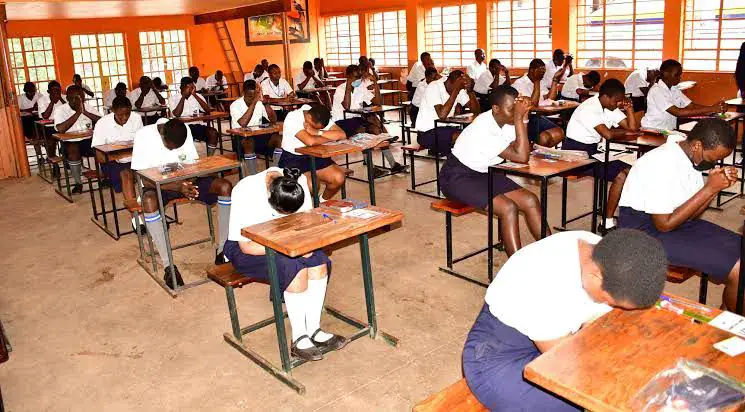
The Speaker of Parliament, Jacob Oboth-Oboth, has criticised the Uganda National Examinations Board (UNEB) for ruling out emergency exams for candidates who miss national examinations. This decision has sparked debate, particularly after concerns were raised about the number of candidates who missed their exams due to circumstances beyond their control. According to UNEB's 2025 reports, approximately 13,200 candidates across Primary Leaving Examination (PLE), S4 and S6 failed to sit their examinations.
The reasons for missing exams include illness, accidents, childbirth, domestic violence, and natural disasters. Despite having registered, paid examination fees, and prepared for the assessments, these candidates are not eligible for a second sitting. State Minister for Primary Education Phyllis Chemutai told Parliament that UNEB considers a second sitting impractical and unsustainable, citing the law governing the examinations, which does not provide for such an arrangement.
However, Oboth-Oboth challenged the rigid application of the law, questioning the Attorney General's office over the absence of provisions that would allow authorities to consider exceptional circumstances. He argued that the current legal framework leaves little room for fairness and equity. Deputy Attorney General Jackson Kafuuzi acknowledged that the law could be amended to accommodate affected candidates, proposing a possible window of "let's say a month" for candidates who miss their examinations.
Kafuuzi emphasised that any such arrangement would require legislative changes, noting that Parliament also controls the national budget. The Uganda National Examinations Board Act governs the administration of PLE, UCE, and UACE examinations but does not provide for a routine second or special sitting for candidates who miss their papers after registration. UNEB has traditionally maintained that candidates who fail to sit examinations must wait for the next examination cycle.
The board has cited logistical demands, such as setting, printing, distributing, and securing examination papers across thousands of centres, as well as the need to safeguard the integrity and comparability of results. However, there have been exceptional interventions, such as in 2022, when UNEB administered a special Mathematics examination to 23 candidates from a school in Kakumiro District who arrived late due to transport issues.
UNEB already provides special examination arrangements for candidates with approved educational needs, including extra time, large-print papers, Braille, sign-language interpreters, and other forms of support. However, candidates who are completely absent from the examination period due to temporary medical conditions or other unforeseen circumstances are not covered by these arrangements.
The consequences of the current policy are significant, with thousands of registered candidates potentially losing an entire academic year due to circumstances beyond their control. Education advocates and some legislators argue that a narrowly defined mechanism for special examinations, supported by clear eligibility criteria and evidence of the circumstances leading to absence, could promote fairness without compromising academic standards.
Key points
- UNEB's decision to deny emergency exams to candidates who miss national exams has sparked debate in Uganda's parliament.
- The current law governing examinations does not provide for a second sitting, but some argue that it could be amended to accommodate exceptional circumstances.
- Thousands of candidates may lose an entire academic year due to circumstances beyond their control, sparking calls for a more flexible examination policy.