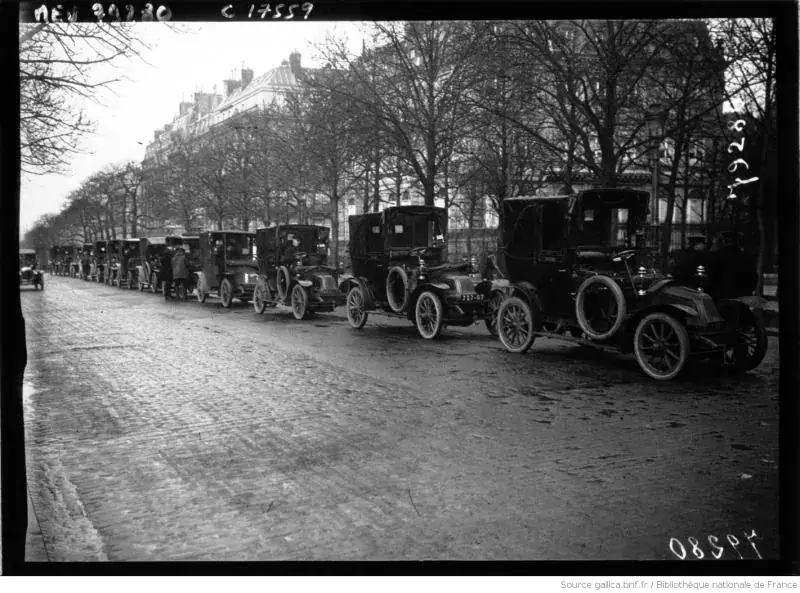
In the summer of 1917, Parisian taxi drivers decided to go on strike to protest new regulations imposed on their profession. The strike, which began in June, saw drivers refusing to work at night, causing significant disruptions to the city's transportation system. The drivers were unhappy with the new rules and decided to take a stand, despite the challenges faced by residents and the ongoing World War I.
The strike gained significant attention from the press, with many publications poking fun at the drivers' actions. Le Journal described the strike as a "guéguerre" or a petty war, noting that it seemed trivial compared to the sacrifices made by soldiers on the front lines. The newspaper also highlighted the drivers' clever tactics, including politely dropping off passengers and inviting non-striking drivers to return to their garages.
The strike had a significant impact on the daily lives of Parisians. With taxis off the streets, residents had to rely on other forms of transportation, such as trams, buses, and metro lines, which were extended to accommodate the demand. The préfet de police took steps to mitigate the effects of the strike, including requiring taxi drivers to display a black cover on their taximeters when returning to their depots.
The press continued to comment on the strike, with some publications suggesting that the drivers' actions were unreasonable. La Presse proposed that taxi drivers be required to display signs indicating their reasons for not picking up passengers, such as "I'm going to eat" or "I'm out of fuel". This idea was seen as a potential solution to the problem.
This was not the first time Parisian taxi drivers had gone on strike. In 1911, they had protested against the taxation of benzol, a fuel used by taxis at the time. The drivers had been subjected to difficult working conditions and saw the tax as an unfair burden.
The strike eventually came to an end, but not before it had caused significant disruptions to the city's transportation system. The drivers had made their point, and the authorities had taken steps to address their concerns. The strike remained a notable event in the history of Parisian transportation.
The strike of 1917 was reported by various newspapers, including L'Humanité, Le Journal, and Le Petit Parisien. These publications provided different perspectives on the strike, from the drivers' concerns to the impact on residents. The strike was also covered by satirical publications, such as Le Rire, which used humor to comment on the situation.
Key points
- Taxi drivers in Paris went on strike in July 1917 to protest new regulations imposed on their profession.
- The strike caused significant disruptions to the city's transportation system, with residents having to rely on other forms of transportation.
- This was not the first time Parisian taxi drivers had gone on strike, with a previous strike occurring in 1911 over taxation.