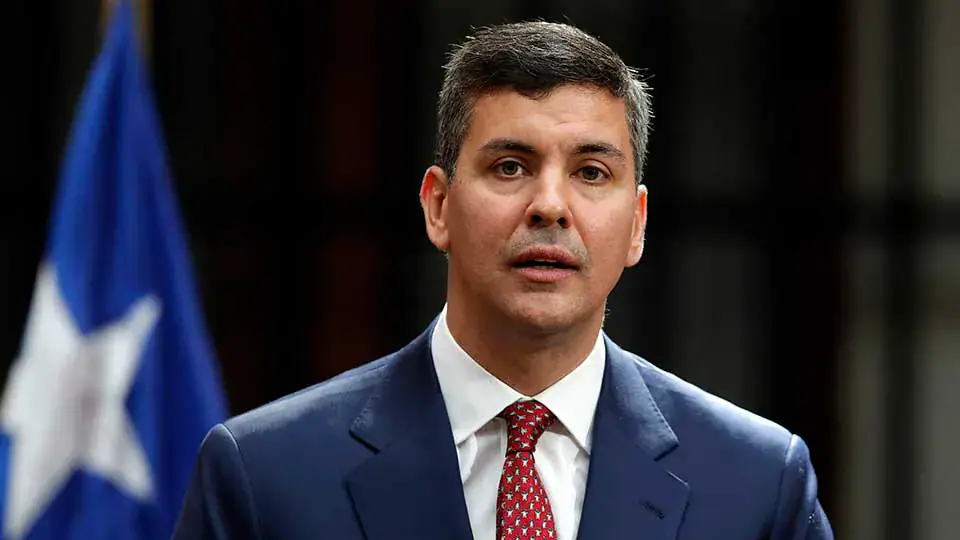
Paraguayan President Santiago Peña has been impeached and placed under house arrest following the sudden collapse of Ueno Bank, which triggered a historic political and financial crisis. The Paraguayan Senate voted 44 to 1 to remove Peña from office, with one lawmaker absent. This move came after Peña offered a video resignation in an effort to stabilize the country, but Congress instead pursued formal removal proceedings.
The impeachment prevents Peña from assuming a lifetime Senate seat reserved for former presidents, which would have granted him legislative immunity. By stripping Peña of executive immunity, lawmakers opened him to immediate criminal prosecution. Vice President Pedro Alliana was sworn in as president soon after the vote and will complete the remaining term through August 2028. Peña becomes only the second Paraguayan president removed through impeachment since the end of General Alfredo Stroessner’s 35-year dictatorship in 1989.
The sudden closure of Ueno Bank overnight sparked widespread panic across the nation, with the digital institution serving 2.9 million customers in a nation of 6.1 million people. An inspection by the Central Bank of Paraguay revealed severe capital depletion, with Ueno Bank’s solvency ratio falling below 50 percent of the required minimum following balance sheet adjustments. Regulators discovered systemic violations regarding loan caps to affiliated businesses and uncollateralized insider lending to companies tied to bank owners.
The resolution process froze accounts across the country, leaving millions of depositors without access to their personal savings and daily funds. The institution holds significant public capital, including allocations from the Social Security Institute, which manages healthcare and pensions for most Paraguayan workers. Lawmakers noted that up to $380 million in state pension and public funds were concentrated at Ueno Bank under Peña’s tenure.
The central bank began processing guarantee payments in stages, but vast crowds gathered at physical branches for two straight days. Public anger boiled over into street demonstrations in Asunción, with protesters clashing with security personnel, who deployed water cannons and tear gas to control the crowds. The crisis has led to a significant backlash against Peña’s administration.
Lawmakers in the lower chamber initiated impeachment by citing “serious and systematic dereliction of duty”, with a coalition of 35 opposition members and ruling-party dissidents structuring the charges. The legislative filing alleged conflict of interest, pension fund diversion, regulatory manipulation, and institutional cover-up, underscoring Peña’s former financial stake in holding company Grupo Vázquez and his appointment of former Ueno executive Carlos Carvallo to head the Central Bank of Paraguay.
The Chamber of Deputies voted unanimously to approve the trial, and Peña did not appear in person during the Senate trial. With his impeachment, Peña faces an uncertain future as he mounts a legal defense against the charges brought against him. The country will be closely watching the developments in the coming weeks as President Alliana begins his term and works to stabilize the nation.
Key points
- Peña's impeachment prevents him from assuming a lifetime Senate seat and grants lawmakers the ability to prosecute him immediately.
- The sudden collapse of Ueno Bank left millions without access to their savings and funds.
- President Alliana will complete the remaining term through August 2028.
Reporting sources
- Paraguay’s president impeached and under house arrest after bank collapse · Ghana Broadcasting Corporation