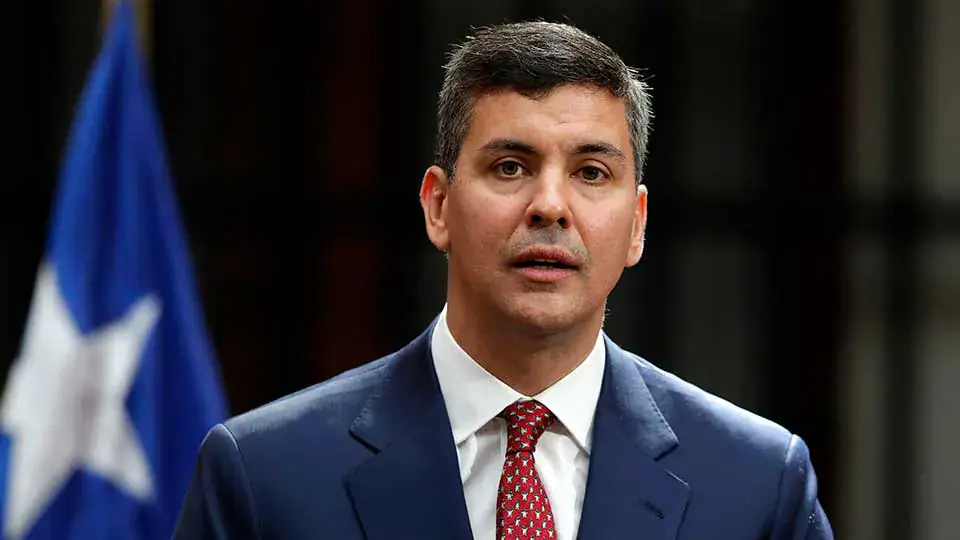
The President of Paraguay, Santiago Peña, announced his resignation on November 5, 2026, amid a grave financial and institutional crisis in the country. The crisis was triggered by the difficulties of Ueno Bank, a bank whose solvency issues have deprived nearly 3 million clients of access to their deposits. This situation has significant political ramifications and threatens the stability of the country's institutions.
The crisis began with the decision of the Central Bank of Paraguay, announced on November 3, 2026, to initiate a resolution procedure against Ueno Bank. This measure was taken following the discovery of serious financial shortcomings, including a solvency ratio that had fallen to less than 50% of the required minimum. The bank had approximately 2.9 million clients, accounting for nearly 60% of the country's adult population.
The intervention has caused a shockwave in the country, with millions of clients uncertain about accessing their accounts and savings. There is also concern about the $850 million in public funds entrusted to the institution, including resources related to pensions and social protection. The situation has sparked a scandal with significant political consequences, with the opposition criticizing Santiago Peña for possible conflicts of interest.
Peña had business ties with the group that owned the bank before selling his shares in 2025. The opposition demands explanations on the management and placement of public resources in this private institution. The crisis has led to the departure of the Central Bank president and the pursuit of several bank officials, with arrests reported as investigations into alleged irregularities continue.
As popular discontent grew and parliamentary pressure mounted, Peña progressively lost support within his own political camp. The prospect of impeachment significantly weakened his power, leading him to announce his resignation. In a video statement, Peña explained that his decision was motivated by the need to preserve the country's stability, social peace, and democratic institutions.
Peña also expressed his wish for depositors to recover their money and for public funds to be protected. His resignation must follow the constitutional and parliamentary procedures provided for in Paraguay. Financial authorities have announced the start of a compensation mechanism for eligible depositors, which will be implemented progressively.
The fate of sums exceeding the guarantee thresholds remains a major concern. The country's authorities will need to address this issue while navigating the complex process of resolving the Ueno Bank crisis and its aftermath. The scandal has raised questions about the regulation and oversight of the financial sector in Paraguay.
Key points
- The President of Paraguay, Santiago Peña, has resigned due to a financial scandal involving Ueno Bank.
- The crisis has affected nearly 3 million clients who have lost access to their deposits.
- The situation has significant political ramifications and threatens the stability of Paraguay's institutions.