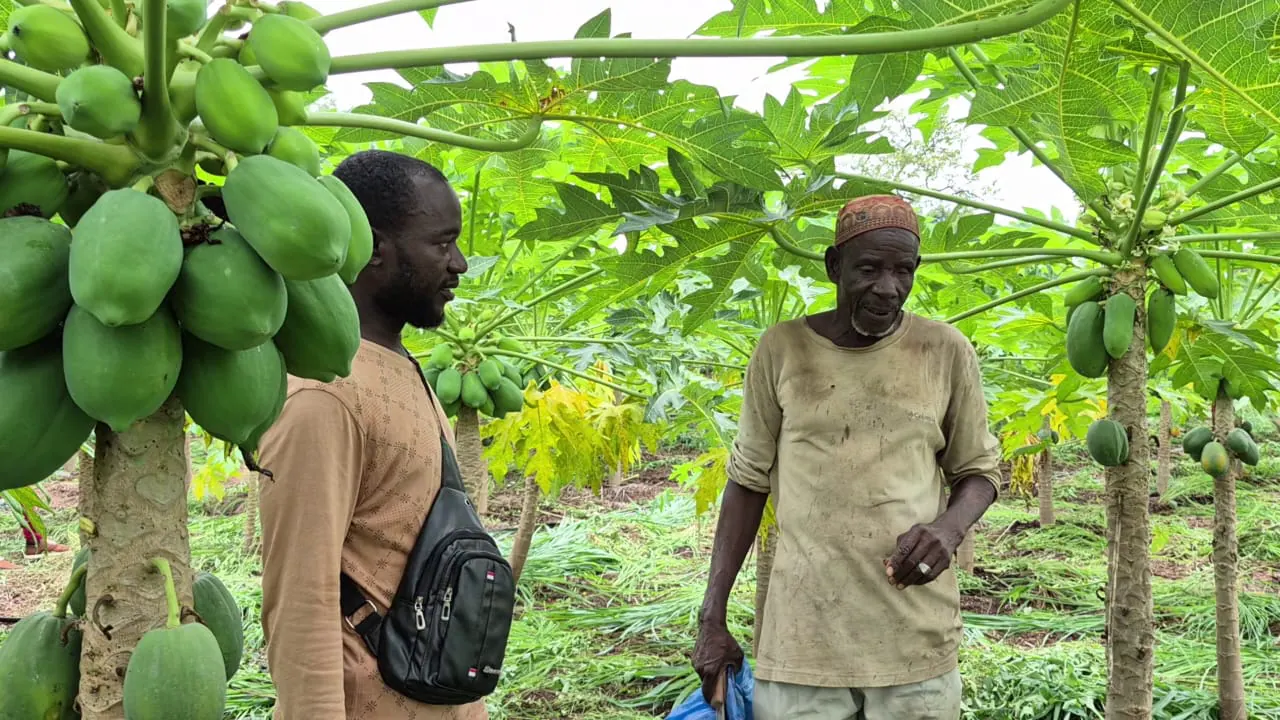
In Guinea, agriculture continues to attract a new generation of diploma holders seeking to transform land into development drivers. Sékou Diakité, a chemistry graduate, has chosen to leave the laboratory for the fields, focusing on papaya cultivation in Batè Diankana, Kankan prefecture. His passion for the land and ambition for food self-sufficiency drive this entrepreneurial venture. Diakité's farm showcases rows of thriving papaya trees with promising fruit, highlighting the potential for agricultural growth in the region.
Diakité explains the process of cultivating papayas, from seed selection to transplantation, irrigation, and fertilization. He notes that with optimal conditions, the first harvest can occur within seven months. The farm's impact extends beyond economic profitability, contributing to regular market supplies of quality fruits and creating jobs and income opportunities for local communities. With 2,500 papaya trees per hectare, this investment significantly enhances food security.
The benefits of papaya cultivation are multifaceted. Diakité highlights that a single tree can yield up to 100 fruits if conditions are favorable. This abundance can support weekly harvests, making it a highly advantageous venture. However, despite the success of this papaya plantation, many women in the region face challenges accessing affordable fruits, often traveling to Mali for supplies.
Fanta Nabé, a local fruit vendor, shares her struggles with sourcing fruits, particularly bananas, from Mali. She notes that high transportation costs and spoilage issues exacerbate the difficulties. Other farmers, like Moussa Sangaré, have chosen papaya cultivation due to Guinea's fertile land and favorable climate. Sangaré emphasizes the importance of developing the agricultural sector to achieve food self-sufficiency.
While papaya cultivation offers promise, it is not without challenges. Disease, pests, climate change, lack of inputs, and water access issues can compromise yields and quality. Diakité stresses the need for proper care, including irrigation, phytosanitary treatments, and regular weeding. He calls on the government, NGOs, and partners to provide support, particularly in mechanization, to overcome labor shortages and boost productivity.
Diakité's appeal for assistance highlights the broader potential for agricultural growth in Guinea. He suggests that with necessary resources, remarkable achievements are possible. A partnership or support from the government, NGOs, or individuals could facilitate progress in the sector. Currently, many young people in Haute-Guinée are launching agricultural projects to combat famine and promote food self-sufficiency.
The growth of papaya cultivation in Kankan reflects a larger trend of young entrepreneurs driving agricultural innovation in Guinea. As the sector continues to evolve, it is likely to play a crucial role in the country's economic development and food security. With the right support and investments, papaya cultivation and other agricultural ventures can contribute significantly to Guinea's growth and prosperity.
Key points
- Young entrepreneurs in Guinea's Kankan region are driving agricultural growth through papaya cultivation.
- Papaya cultivation offers economic benefits, job opportunities, and contributes to food self-sufficiency.
- Despite challenges, the sector has potential for growth with proper support and investments.