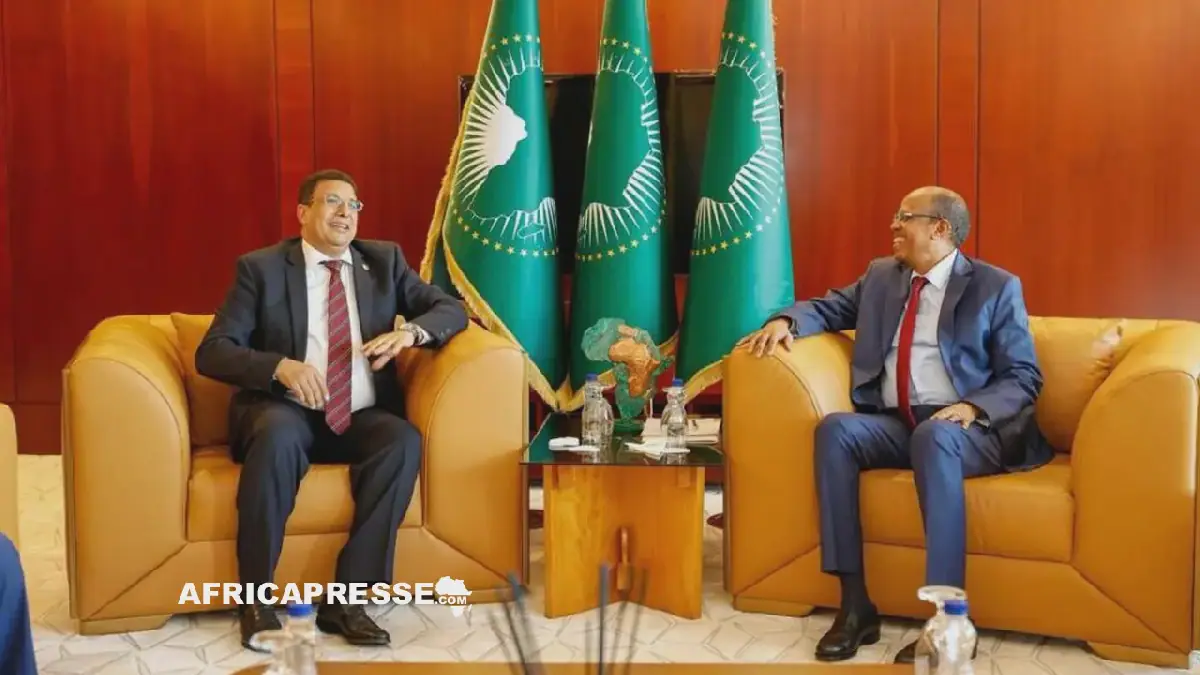
The Pan-African Parliament (PAP) has initiated a comprehensive reform program to enhance its institutional capacity and influence in African democratic governance. PAP President Fateh Boutbig presented the program to African Union Commission Chairperson Mahmoud Ali Youssouf. The reforms aim to make the PAP a central actor in continental political dialogue, capable of representing the aspirations of African populations and consolidating democratic institutions.
The reform program includes revising the PAP's internal rules to address institutional and operational challenges and align with African Union priorities. A parliamentary research center will be established to provide lawmakers with legislative analysis and expertise. Additionally, a training program for parliamentarians will be implemented. Strengthening relations with the African Union's Peace and Security Council, particularly in conflict prevention and early warning mechanisms, is another key aspect of the reforms.
The PAP's next ordinary session will take place from December 1 to 17, 2026, and several initiatives are planned for 2027. These include continental conferences on women's leadership, youth participation, political parties, and democratic governance. This reform effort is part of a long-standing quest for legitimacy by the PAP, which was established in 2004 as a consultative body with members appointed by national parliaments rather than elected by universal suffrage.
The PAP's limited political weight has been attributed to its consultative status and appointed membership. The reforms aim to address this weakness by equipping the institution with expertise, training, and cooperation with other African Union bodies. The context is marked by security crises and democratic setbacks in several African countries, making a credible and effective parliamentary body more pressing.
However, the implementation of these reforms depends on securing sustainable financing, which was emphasized by both Boutbig and Youssouf. The PAP must also obtain support from African Union member states, some of which are hesitant to see a continental parliamentary body gain more authority. The 2026 and 2027 calendar will be a test of credibility for the PAP, which must demonstrate its ability to translate announcements into tangible achievements.
Mahmoud Ali Youssouf welcomed the reform dynamic, stressing the PAP's role in continental dialogue and democratic participation. He emphasized promoting political pluralism, freedom of expression, and opposition party rights, considering democratic dialogue and institutional solidity as essential factors for peace and stability. This stance is seen as a call to vigilance in Africa, where several recent elections have been contested and civic space is shrinking in some states.
The PAP has been tasked with a democratic watchdog role, the effectiveness of which depends on its independence from governments. Both leaders highlighted the importance of institutional solidarity, capacity building, and sustainable financing for the PAP to contribute fully to the African Union's Agenda 2063, a strategic framework aimed at building an integrated, prosperous, and peaceful Africa by 2063.
Key points
- The Pan-African Parliament's reform program aims to strengthen its role in democratic governance across the continent.
- The implementation of the reforms depends on securing sustainable financing and support from African Union member states.
- The PAP's success will be measured by its ability to translate announcements into tangible achievements, particularly in promoting democratic dialogue and institutional solidity.