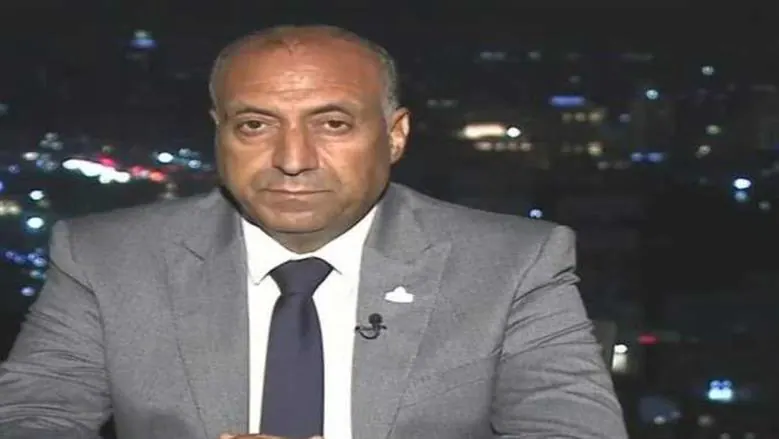
Palestinian political analyst Ayman Ragab stated that the 1973 October War marked a significant turning point in the Israeli-Palestinian conflict. He noted that Israel's victory in the war led to a shift in its approach, as it began to reconsider its claims to Palestinian land. Ragab argued that Israel's philosophy of "Greater Israel" was shattered by the war, which demonstrated that military strength does not guarantee security.
Ragab explained that Israel had previously believed that simply having a military presence on Palestinian land was enough to claim ownership. However, the 1973 war showed that this approach was flawed. He added that Israel's continued reliance on military power has led to a state of arrogance, which has prevented it from learning from past experiences. According to Ragab, this arrogance has contributed to Israel's repeated failure to anticipate and prepare for surprise attacks.
The analyst noted that the 1973 war led to a significant shift in the Palestinian national movement. He stated that after the war, Palestinian leader Yasser Arafat traveled to the United Nations and began to advocate for the establishment of a Palestinian state. This marked a new phase in the Palestinian struggle for self-determination. Ragab emphasized that this development was a direct result of the 1973 war and Israel's subsequent reorientation of its policies.
Ragab highlighted the importance of the 1974 UN General Assembly session, where Arafat presented the Palestinian case for statehood. He noted that this event marked the beginning of a new era of Palestinian diplomacy, which ultimately led to the Camp David negotiations. These talks resulted in the return of Egyptian territory to Egypt without bloodshed. Ragab sees this as a significant turning point in the conflict, demonstrating that diplomacy and negotiation can be effective tools for achieving Palestinian goals.
The analyst also emphasized that Israel's continued reliance on military power has not provided it with lasting security. He pointed out that despite its military strength, Israel remains vulnerable to surprise attacks. Ragab argued that this vulnerability is a direct result of Israel's failure to address the underlying issues driving the conflict. He believes that a lasting solution can only be achieved through a comprehensive and inclusive peace process.
Ragab's comments come at a time of heightened tensions in the region. Recent developments, including clashes between Palestinian militants and Israeli forces, have raised concerns about the stability of the situation. The analyst's assessment of the October War's significance serves as a reminder of the complex and deeply ingrained nature of the Israeli-Palestinian conflict. He emphasized that a deeper understanding of the conflict's history is essential for developing effective solutions.
In conclusion, Ayman Ragab's analysis highlights the importance of understanding the historical context of the Israeli-Palestinian conflict. He believes that the 1973 October War marked a significant turning point in the conflict, one that has had lasting implications for both Israel and Palestine. Ragab's comments serve as a reminder of the need for a comprehensive and inclusive approach to resolving the conflict, one that takes into account the complex and deeply ingrained nature of the issues at play.
Key points
- The 1973 October War shattered Israel's "Greater Israel" philosophy, demonstrating that military strength does not guarantee security.