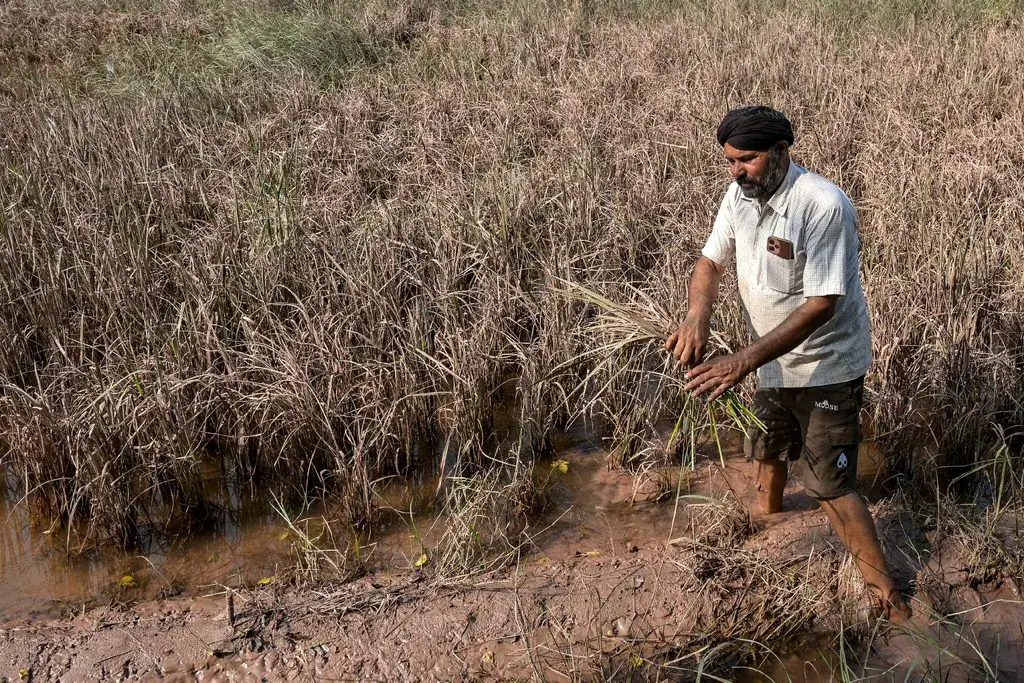
In a groundbreaking case, 39 Pakistani farmers from the province of Sindh are suing German companies RWE and Heidelberg Materials for damages caused by the 2022 floods. The farmers, including Abdul Hafeez Khoso, 43, claim that the companies' emissions contributed to the devastating floods that destroyed their crops, livestock, and homes. The case is one of the first attempts worldwide to hold polluting companies accountable for climate change-related damages.
The floods, described as "apocalyptic" by the farmers, hit the region in 2022, causing widespread destruction. The farmers claim that the emissions from RWE and Heidelberg Materials, evaluated at 0.68% and 0.12% of historical industrial emissions, respectively, contributed to the extreme weather event. The companies reject the civil lawsuit, arguing that their activities are legal. However, the farmers' lawyer, Roda Verheyen, argues that the companies' behavior was faulty, and they should have taken steps to reduce their emissions.
The case is supported by Pakistani and German NGOs, who argue that the companies' emissions have contributed to climate change, which is exacerbating extreme weather events. The farmers are seeking compensation for their losses, including $14,000 in damages to Abdul Khalique Laghari's property, crops, and livestock. The case is expected to take several years to resolve and could set a precedent for similar lawsuits against polluting companies.
The lawsuit is part of a growing trend of cases against companies for climate change-related damages. In 2025, a German court ruled in favor of a Peruvian farmer, Saúl Luciano Lliuya, who sued RWE for damages caused by climate change. The court found that German civil law allows for compensation for climate-related damages caused by companies.
The Pakistani farmers are not only seeking compensation but also hoping to raise awareness about the impact of climate change on their communities. Munawar Khatoon, a 43-year-old woman who owns land in the region, recalls the devastating floods that destroyed her family's crops and livestock. "We are worried about how the next generation will live if this continues," she said.
The companies involved in the lawsuit, RWE and Heidelberg Materials, are among the largest historical emitters of greenhouse gases in Europe. RWE has stated that it cannot be held retroactively responsible for emissions that were previously allowed by law. Heidelberg Materials has also rejected the lawsuit, stating that it is a "new attempt to transfer climate policy claims to German courts."
The case will now be heard by German judges, who will interpret existing law to determine whether the companies can be held liable for climate change-related damages. The outcome of the case could have significant implications for the accountability of polluting companies and the rights of communities affected by climate change.
Key points
- The lawsuit is one of the first attempts worldwide to hold polluting companies accountable for climate change-related damages.