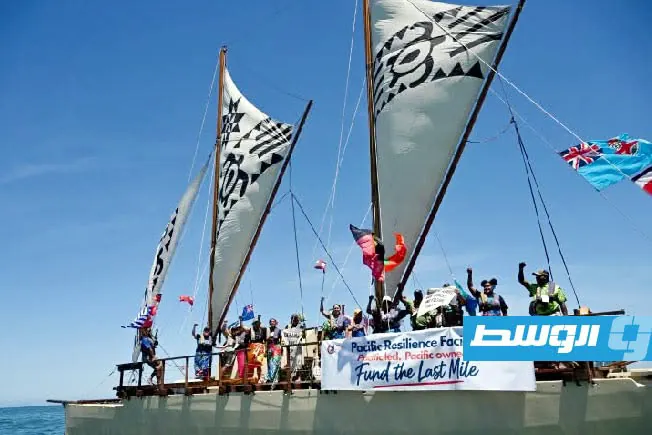
Leaders of Pacific Island countries gathered at a pre-COP31 summit in Nadi, Fiji, have issued a strong call to wealthy nations to provide more climate finance to help them mitigate and adapt to the devastating effects of climate change. The meeting, which took place on October 7, 2026, is a precursor to the 31st Conference of the Parties (COP31) to be held in Turkey next month. The Pacific region is on the frontlines of climate change, with rising sea levels, increased temperatures, and extreme weather events posing an existential threat to its inhabitants.
The Pacific leaders emphasized the moral and humanitarian imperative of providing climate finance to support their countries' efforts to build resilience and adapt to the changing climate. Papua New Guinea's Prime Minister, James Marape, warned that his country and others like it risk losing their sovereignty if they are not able to adapt to the impacts of climate change. The leaders also highlighted the significant funding gap that exists, with estimates suggesting that developing countries will need between $310 billion and $365 billion to adapt to the changing climate.
Despite the urgent need for climate finance, only $26 billion was available to developing countries as of 2023. In response, Fiji announced that it will provide an additional $10 million to the Pacific Resilience Partnership, which aims to raise $500 million to support climate resilience efforts in the region. Australia also pledged to invest $2 million in coastal infrastructure projects in the Pacific.
The pre-COP31 summit also saw a strong push to keep the global temperature increase below 1.5 degrees Celsius, which is seen as a critical threshold for avoiding catastrophic climate change impacts. However, some countries, including Australia, which is currently chairing the negotiations, have faced criticism for their continued reliance on coal and other fossil fuels.
The Pacific leaders' call for climate finance is part of a broader effort to raise awareness about the disproportionate impacts of climate change on vulnerable countries. The region has already experienced some of the most devastating effects of climate change, including the destruction of coral reefs, sea-level rise, and extreme weather events. Tuvalu, for example, has seen nearly 99.9% of its coral reefs destroyed due to rising sea temperatures.
In addition to the financial support, Pacific leaders are also seeking to raise awareness about the human impacts of climate change. They argue that the climate crisis is not just an environmental issue but also a human rights and economic development issue. The leaders are urging wealthy countries to take more ambitious action to reduce their greenhouse gas emissions and provide support to vulnerable countries.
The outcome of the pre-COP31 summit is expected to inform the discussions at the main COP31 conference, which will bring together countries from around the world to address the global climate crisis. The Pacific leaders' call for urgent climate finance and action is likely to be a key theme of the conference, which will be closely watched by observers around the world.
Key points
- Pacific leaders urge wealthy nations to provide more climate finance to support their countries' efforts to mitigate and adapt to climate change.
- The Pacific region is on the frontlines of climate change, with rising sea levels, increased temperatures, and extreme weather events posing an existential threat to its inhabitants.
- The pre-COP31 summit in Fiji called for urgent action to keep the global temperature increase below 1.5 degrees Celsius and to provide support to vulnerable countries.