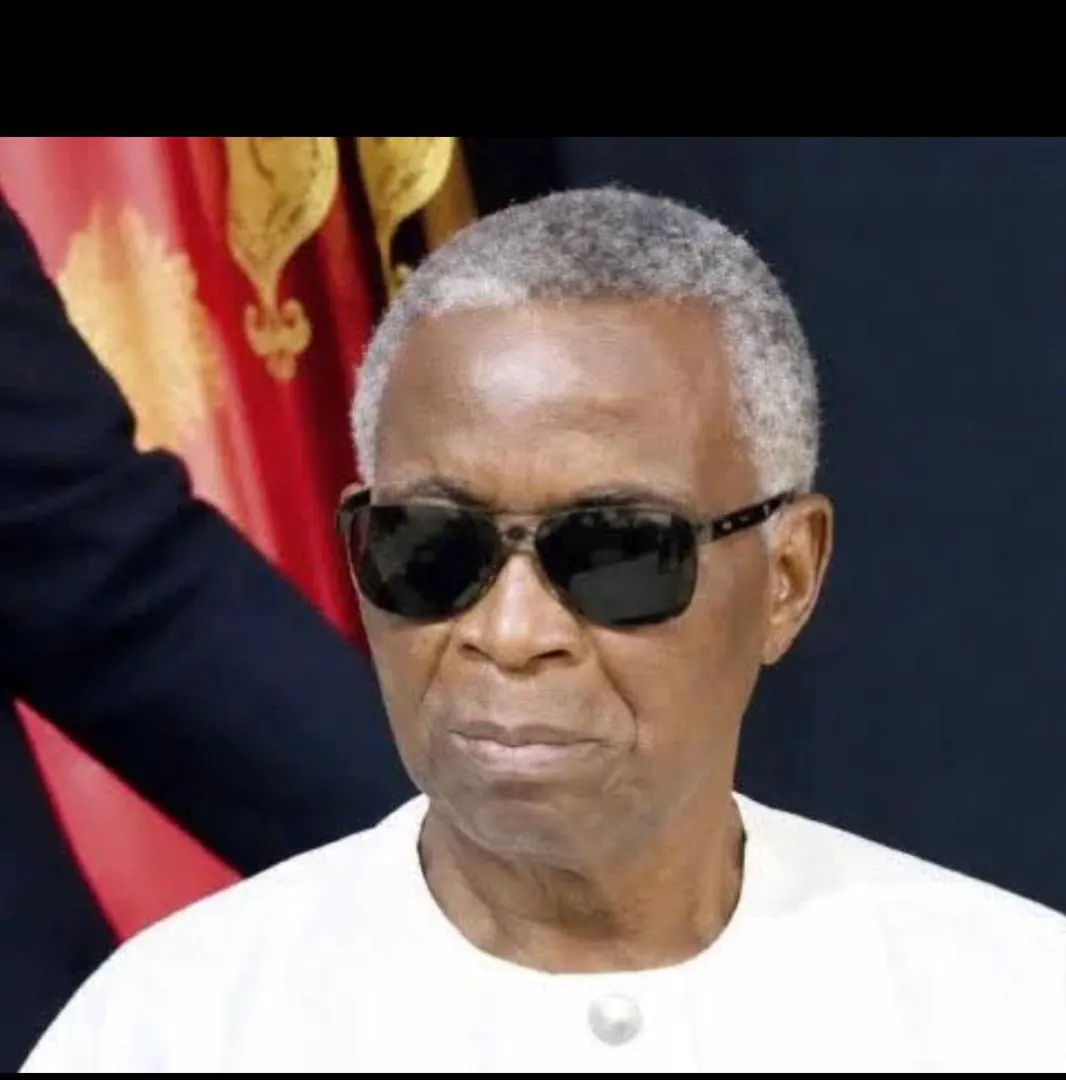
Professor Joseph Okwuabudike Ojukwu was born on September 26, 1926, at Akamili, Umudim, Nnewi, Anambra state, to Sir Louis Philip Odumegwu Ojukwu and Ogbenyeanu Janet Malize of Ukpor. As the eldest son, he carried significant family responsibilities and maintained a longstanding connection with the family’s business interests. His life has spanned some of Nigeria’s most defining historical periods, from the colonial era and independence to the Nigerian Civil War and the development of post-war medical institutions.
Ojukwu’s early years were shaped partly by Lagos, where his family lived before he proceeded to King’s College, Lagos, one of Nigeria’s foremost secondary schools. He distinguished himself not only academically but also in leadership, serving as Head Boy while still a student. His younger brother, Emeka, later attended the same institution. Following his secondary education, Joseph travelled to Britain for medical training, obtaining M.R.C.S. England and L.R.C.P. London in 1951, and the M.B., B.Chir. qualification from the University of Cambridge in 1952.
On returning to Nigeria, Ojukwu joined the University College Hospital, Ibadan, where he began building his reputation as a medical practitioner. He later moved to Lagos and became a Consultant Surgeon at the General Hospital, where he continued to develop his expertise in surgery. The political crisis that engulfed Nigeria in the 1960s, culminating in the Civil War, altered the circumstances of the Ojukwu family, and Joseph moved to the East but remained committed to his medical calling.
Ojukwu worked in several hospitals in the former Eastern Region, including the Specialist Hospital, Enugu, Queen Elizabeth Hospital, Umuahia, and Emekuku Catholic Hospital. His professional journey eventually brought him back to Enugu, where he continued his career at the Specialist Hospital, which later became the University of Nigeria Teaching Hospital, UNTH. It was there that he further established himself as one of the respected medical figures of his generation, earning the affectionate name “Pa Ojukwu” from colleagues, patients and associates.
Ojukwu’s contribution to medicine went beyond treating patients, as he became a Clinical Professor of Surgery, enabling him to contribute to the training and development of younger medical professionals. He eventually retired from active medical service in 1987, after decades of professional practice. In 1983, the Federal Government under President Shehu Shagari conferred on him the national honour of Member of the Order of the Federal Republic, MFR, representing official recognition of a career that had already spanned decades of medical service.
At 100, Joseph Okwuabudike Ojukwu’s life provides a unique window into the evolution of Nigeria itself. He came of age during the colonial period, received his education at one of the country’s leading schools, travelled to Britain for professional training, and built a distinguished medical career in Nigeria. He married Maria Ukamaka Aghaji in 1957, and the couple had six children, who went on to pursue professional careers in various fields.
Key points
- Professor Joseph Okwuabudike Ojukwu has marked his 100th birthday, celebrating a life defined by medicine, surgery, public service, family responsibility, business and community life.
- Ojukwu built a distinguished medical career in Nigeria, becoming a Clinical Professor of Surgery and contributing to the training and development of younger medical professionals.
- He received the national honour of Member of the Order of the Federal Republic, MFR, in 1983, representing official recognition of a career that had already spanned decades of medical service.