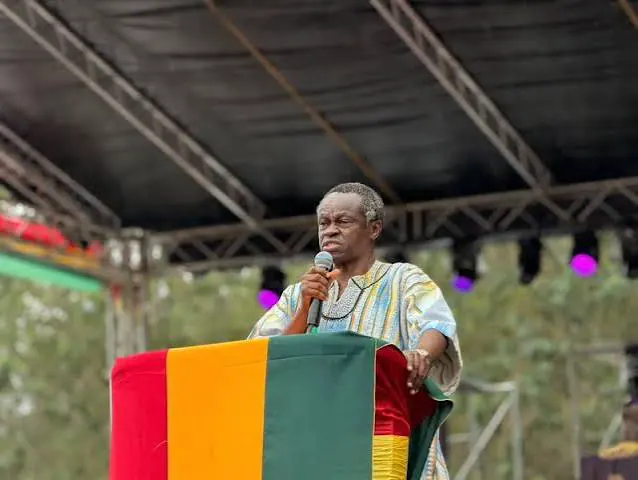
Renowned Kenyan Pan-Africanist and anti-corruption advocate Professor Patrick Loch Otieno Lumumba has praised Ghana's first President, Osagyefo Dr Kwame Nkrumah, as a selfless statesman. Nkrumah's vision for African unity, independence, and human dignity continues to command relevance decades after his death. Professor Lumumba made these remarks after visiting Nkroful, Nkrumah's birthplace in Ghana's Western Region. The visit deepened his understanding of the circumstances that shaped Nkrumah's life and his continental vision.
Professor Lumumba's visit to Nkrumah's birthplace offered a profound appreciation of the former President's humble origins and remarkable transformation. Nkrumah emerged from modest beginnings, yet developed the intellectual and political conviction to question colonial domination in Africa. According to Professor Lumumba, Nkrumah's significance extends beyond Ghana's attainment of independence in 1957. His political thought was rooted in the proposition that African countries needed collective strength and continental solidarity to overcome historical constraints.
Professor Lumumba drew attention to one of Nkrumah's most enduring elements: the responsibility to preserve African liberation, unity, and dignity beyond individual leaders. He recalled Nkrumah's famous declaration concerning the light of African liberation, which remains relevant today. This sentiment expresses an idea that transcends the personality of the man who articulated it. The light of African liberation continues to inspire, even decades after Nkrumah's death.
For Professor Lumumba, Nkrumah's legacy represents an enduring appeal for Africans to recognise their shared interests and assume greater responsibility for the continent's future. Nkrumah's political philosophy emphasised African unity and continental independence. His vision extended beyond individual territories' independence to stronger forms of African cooperation capable of safeguarding sovereignty and advancing economic transformation.
Professor Lumumba's reflections highlight the connection between Nkrumah's personal origins and his continental outlook. Despite humble beginnings, Nkrumah imagined a political future extending far beyond his immediate environment. The visit to Nkroful provided an opportunity to reflect on Nkrumah's historical journey, from modest beginnings to the forefront of Africa's independence movement.
Nkrumah became Ghana's first Prime Minister in 1952 and subsequently, the country's first President in 1960. He remained a central figure in the Pan-African movement until his overthrow in a military coup in February 1966. Professor Lumumba's comments come amid discussions in Ghana and across Africa about the relevance of Nkrumah's political thought to contemporary questions surrounding African unity, economic sovereignty, and development.
Professor Lumumba's assessment presents Nkrumah as a statesman whose central ideas about African solidarity and self-determination continue to form part of the continent's ongoing conversation. The visit to Nkroful has reinforced Professor Lumumba's appreciation of a leader whose journey from modest beginnings to the forefront of Africa's independence movement became closely associated with the pursuit of continental unity and the restoration of African dignity.
Key points
- Professor Lumumba praises Nkrumah as a selfless statesman whose vision for African unity and dignity remains relevant today.
- Nkrumah's legacy represents an enduring appeal for Africans to recognise their shared interests and assume greater responsibility for the continent's future.
- Professor Lumumba's visit to Nkroful deepened his understanding of Nkrumah's life and continental vision.