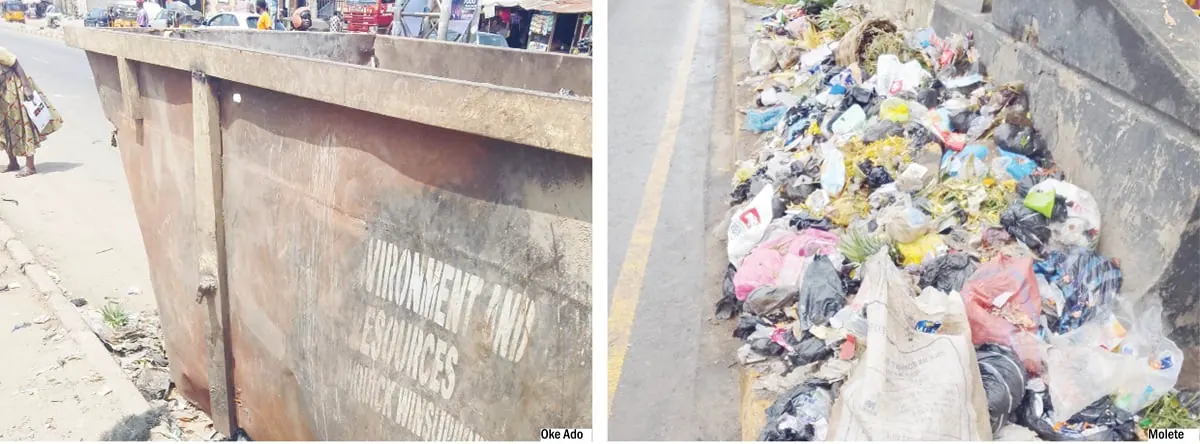
The Oyo State Government has reiterated its commitment to tackling the state's refuse problem, with the Commissioner for Environment and Natural Resources, Ademola Aderinto, stating that scavengers are legally integrated into the state's waste-management system but are forbidden from roaming neighborhoods or sorting waste indiscriminately. Aderinto emphasized that scavengers can only operate at designated dump sites, and that the government has registered them to ensure they comply with the regulations. This move is part of the government's efforts to address the persistent sanitation problem in Ibadan, the capital of Oyo State.
Ibadan, one of Nigeria's most historic cities, has been struggling with refuse disposal, with waste piles accumulating on medians, inside drainage channels, and at street corners. Despite the government's investments in infrastructure, including roads, dual carriageways, street lighting, and bridges, the city remains plagued by poor sanitation. The Oyo State Solid Waste Management Authority estimates that the state generates approximately 3,000 tonnes of solid waste daily, with Ibadan generating about 635,000 tonnes of waste in 2012. The authority collected only about 40% of the waste generated daily as of 2023.
Aderinto warned that residents who dispose of their waste outside approved channels are breaking state law, and that many offenders have been arrested and sanctioned. The ministry has about 400 plainclothes officers, known as vanguards, who help to apprehend violators. He stressed that public waste bins were installed for designated purposes and must not be used indiscriminately by households. Residents are required to have their waste picked up from the source, and households without direct road access must still wait for an authorized agency to collect their waste.
The government has introduced a mandatory waste-bin policy, requiring all residential and commercial buildings to have waste bins that correspond to their size, number of occupants, and volume of waste generated. Residents and businesses are also required to engage only government-accredited private waste contractors. Anyone patronizing an unapproved collector risks facing the full weight of the law. The policy aims to address the challenge of managing the enormous volume of waste generated in the state.
The Oyo State Government has long campaigned against illegal dumping, and waste bins have been placed in markets and other open spaces. However, the areas around many of the bins remain littered with refuse. Residents who spoke with the Nigerian Tribune expressed differing views about the causes of the problem and how it could be addressed. Some residents welcomed the provision of waste bins in markets but complained about the offensive odor produced when they were not emptied promptly.
The improper disposal of waste poses significant health risks, with the Nigeria Centre for Disease Control and Prevention recording over 65,000 suspected cholera cases in 2026 across 35 states and approximately 195 local government areas. The center identifies unsafe water, open defecation, and inadequate sanitation in schools, markets, and other public institutions as drivers of the disease. The Oyo State Government's efforts to address the sanitation problem are crucial in preventing the spread of diseases.
The government is working with the Community Development Council (CDC) to sensitize residents on proper waste-disposal practices. The ministry is also warning waste collectors to comply with the law and perform their responsibilities properly. With the cooperation of residents and stakeholders, the government aims to address the persistent sanitation problem in Ibadan and improve the overall well-being of its citizens.
Key points
- Scavengers are restricted to designated dumpsites and forbidden from roaming neighborhoods.
- The Oyo State Government has introduced a mandatory waste-bin policy to address the state's sanitation problem.
- The improper disposal of waste poses significant health risks, including the spread of diseases like cholera.