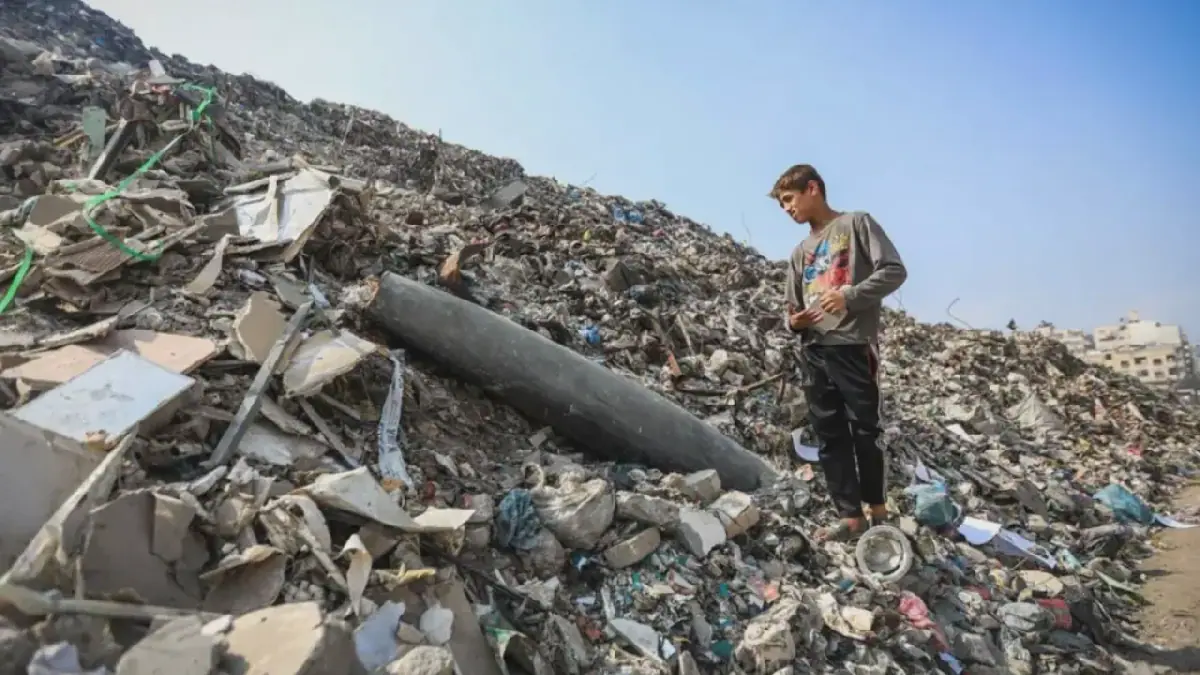
A recent report by Oxfam has revealed that Israeli attacks have transformed Gaza into a toxic wasteland, with severe environmental contamination affecting over 99% of the territory. The report highlights the presence of heavy metals, explosive residues, asbestos, dioxins, and biological contaminants in the air, soil, and water, posing significant threats to the health and well-being of Palestinians. These pollutants have the potential to cause long-term health effects, including respiratory diseases, cancer, and birth defects.
The report's author, Lama Abdul Samad, has stated that the environmental damage will have chronic effects on the health of Gaza's residents, both currently and in the future. The destruction of Gaza's infrastructure and the resulting debris have generated over 61 million tons of waste, with around 15% posing a high risk of contamination by hazardous materials. Furthermore, the report notes that the six wastewater treatment plants in Gaza are currently out of service, leading to the release of untreated wastewater into the groundwater and the Mediterranean Sea.
The Israeli government has rejected Oxfam's accusations of environmental crimes, claiming that its military campaign in Gaza is a legitimate defense against Hamas. However, Oxfam's findings are supported by other organizations, including the United Nations Environment Programme (UNEP), which has estimated that the destruction of homes and infrastructure has generated significant amounts of debris. The UNEP has also expressed concerns about the safety of its experts, who have been unable to access Gaza due to security concerns.
The situation in Gaza has been exacerbated by recent winter storms, which have caused flooding and the mixing of wastewater and rainwater, leading to the spread of diseases. Medical professionals in Gaza have reported an increase in respiratory infections, gastro-intestinal diseases, and skin conditions, which they attribute to the environmental pollution and poor living conditions. Dermatologist Dr. Alaa Abu Hajar has reported a five-fold increase in chronic skin diseases since the start of the war.
The impact of the environmental contamination is not limited to human health; it also affects the livelihoods of farmers and fishermen. They report that the pollution of the soil and sea makes it difficult to produce safe food. Fisherman Abu al-Abed Sultan has expressed concerns about the release of untreated wastewater into the sea, which is causing significant harm to the marine environment and the fishing industry.
The Oxfam report calls for a comprehensive and independent environmental assessment of Gaza to identify the risks of contamination before any cleanup operations can begin. It also emphasizes the need to protect workers involved in the cleanup process. The report's findings have been supported by the international community, with the UN calling for an end to the violence and the reconstruction of Gaza.
The conflict in Gaza has resulted in significant human suffering, with at least 74,746 Palestinians killed since the start of the war, according to the Hamas-led Ministry of Health. The situation remains catastrophic, with the UN calling for urgent action to address the humanitarian crisis. The Israeli government's condition for large-scale reconstruction - the complete disarmament of Hamas and other Palestinian armed groups - remains a major obstacle to progress.
Key points
- Israeli attacks have caused severe environmental contamination in Gaza, affecting over 99% of the territory.
- The contamination poses significant threats to the health and well-being of Palestinians, with potential long-term effects including respiratory diseases, cancer, and birth defects.
- The situation in Gaza remains catastrophic, with urgent action needed to address the humanitarian crisis and prevent further environmental damage.