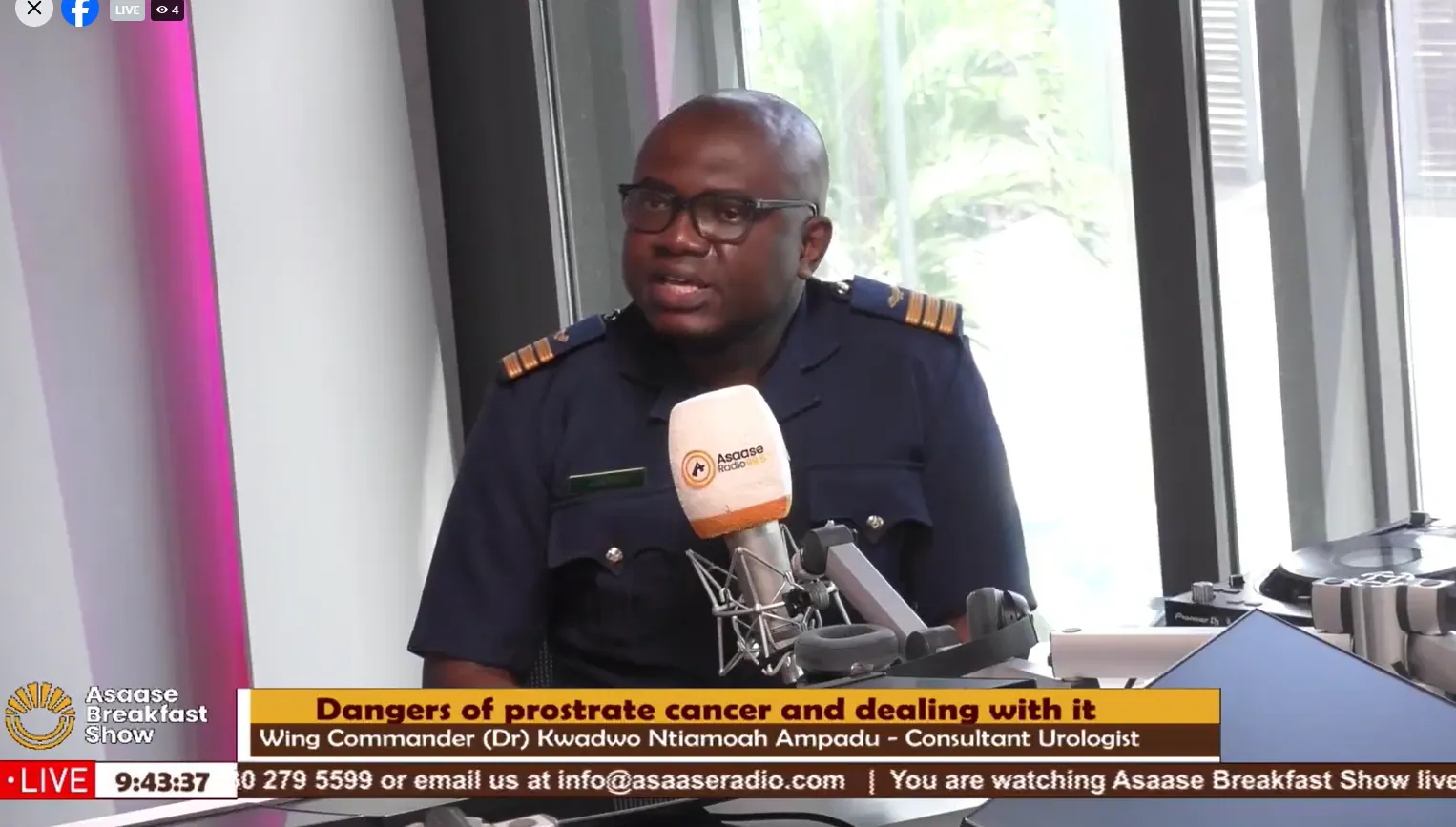
Consultant urologist Dr Kwadwo Ntiamoah Ampadu has revealed that over 80% of prostate cancer patients in Ghana present at an advanced stage of the disease. He made this statement on the Asaase Breakfast Show on Thursday, September 24. According to Dr Ampadu, many Ghanaian men delay seeking medical attention until they develop symptoms, by which time the disease may have progressed beyond the stage where it can be cured.
Studies have shown that men in Ghana and other parts of Africa often present for treatment at around 70 to 72 years, with many already experiencing complications. Dr Ampadu stated that at this stage, doctors can only offer palliative care, as the disease has advanced beyond the stage where a cure is possible. He also noted that some patients arrive with severely low blood levels, requiring multiple blood transfusions.
Prostate cancer can be difficult to detect in its early stages because it may not produce noticeable symptoms. Dr Ampadu explained that most prostate cancers develop in the outer zone of the prostate, meaning the disease can grow without initially affecting urination. This differs from benign prostate enlargement, which commonly affects the inner zone of the prostate and can cause urinary symptoms.
Dr Ampadu cautioned men against assuming that urinary symptoms are simply the result of normal prostate enlargement. He advised men to see a doctor or a urologist who can help make an appropriate diagnosis. Dr Ampadu warned that by the time prostate cancer begins producing some urinary symptoms, the disease may already have advanced and spread to other parts of the body.
As the cancer spreads, it can affect other parts of the body, including the bones and spine. Dr Ampadu explained that spread to the bones can contribute to persistently low blood levels, while cancer affecting the spine can compress the spinal cord and potentially result in paralysis. He urged men not to wait for symptoms before getting their prostate checked.
Dr Ampadu recommended that men of African origin begin prostate checks earlier than the general worldwide recommendation because of their higher risk. He suggested that men should generally begin discussing prostate checks with their doctors from around age 40, particularly where risk factors are present. Family history, age, and African ancestry are important risk factors for prostate cancer.
Dr Ampadu encouraged men to find out about their family's medical history and discuss their individual risk with a doctor. He also noted that awareness of prostate cancer among Ghanaian men appears to be higher than the number of men actually undergoing checks. Dr Ampadu urged men to undergo screening so that prostate cancer can be detected at a stage when treatment can potentially be curative.
Key points
- More than 80% of Ghanaian prostate cancer patients present at an advanced stage of the disease.
- Prostate cancer can be difficult to detect in its early stages because it may not produce noticeable symptoms.
- Men of African origin should begin prostate checks earlier than the general worldwide recommendation due to their higher risk.