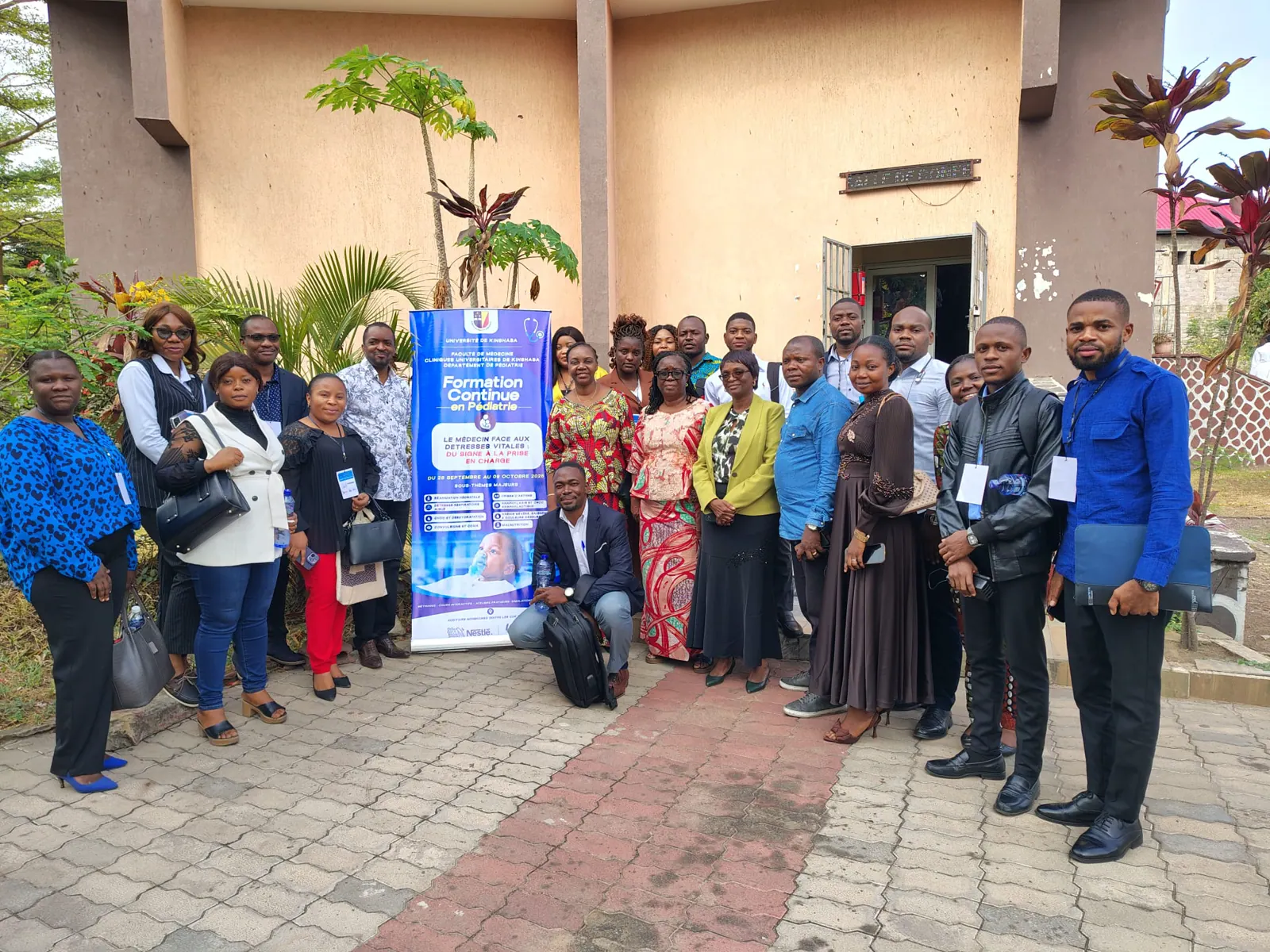
The training, which took place from September 29 to October 9, focused on equipping general practitioners with the skills to handle pediatric emergencies. A total of 82 medical professionals, including 42 from public institutions, participated in the program. The training covered various topics, including the management of newborn and infant emergencies. According to Dr. Thérèse Biselele, head of the Department of Pediatrics at the Cliniques Universitaires de Kinshasa, the primary objective was to enhance the capacity of these medical practitioners in handling emergencies among children and infants.
The Democratic Republic of Congo is among countries with high infant mortality rates, making such training crucial. The program included both theoretical and practical sessions, addressing sub-themes such as newborn coma, nutritional pathologies, hematological pathologies, and neurological pathologies. Participants underwent a pre-test, which showed a knowledge level of 40%, and a post-test, which revealed a significant improvement to an average of 80%. This positive outcome indicates that the training was effective in enhancing the participants' knowledge and skills.
The training program was organized by the Department of Pediatrics at the Cliniques Universitaires de Kinshasa, under the auspices of the Faculty of Medicine at the University of Kinshasa. Participants expressed satisfaction with the quality of the training and the relevance of the teachings. They appreciated the comprehensive coverage of pediatric emergencies and the practical approaches discussed during the sessions.
Dr. Thérèse Biselele highlighted that this first edition of the training was held in Kinshasa, with plans to extend similar programs to different provinces across the country. The initiative aims to improve the quality of healthcare services for children and infants nationwide. By enhancing the capacity of general practitioners, the program contributes to reducing infant mortality rates and improving healthcare outcomes.
The training program covered a range of critical topics, including the management of pediatric emergencies, such as severe malnutrition, diarrhea, and respiratory infections. Participants learned about the importance of timely interventions and the role of general practitioners in providing emergency care. The program also emphasized the need for collaboration between healthcare providers to ensure comprehensive care for children and infants.
The success of the training program is evident in the positive feedback from participants and the significant improvement in their knowledge and skills. The program's impact will be further evaluated through follow-up assessments to ensure that the trained medical practitioners are applying their new skills in their daily practice. This will help to sustain the program's objectives and contribute to improving healthcare outcomes for children and infants in the Democratic Republic of Congo.
The Cliniques Universitaires de Kinshasa and the Faculty of Medicine at the University of Kinshasa are committed to continuing education and training programs for healthcare professionals. The institution recognizes the importance of ongoing education in enhancing the quality of healthcare services and addressing the healthcare needs of the population. Future training programs will build on the success of this initiative, targeting other healthcare professionals and exploring new areas of focus.
Key points
- 82 general practitioners in Kinshasa have completed a 10-day training on pediatric emergencies.
- The training program aimed to enhance the capacity of medical practitioners in handling emergencies among children and infants.
- The program's impact will be further evaluated through follow-up assessments to ensure that the trained medical practitioners are applying their new skills in their daily practice.