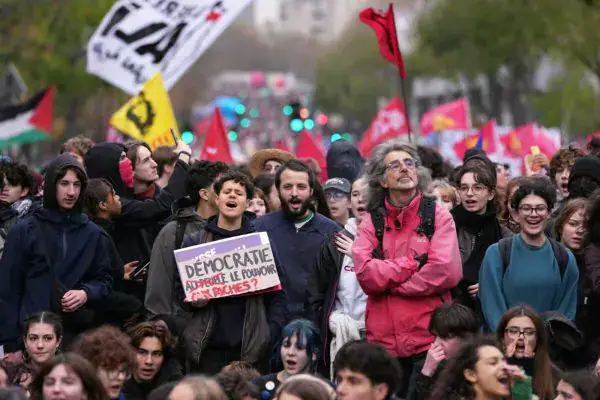
On Tuesday, November 17, 2026, a significant wave of protests swept across France, with over 500,000 people participating in demonstrations. The protests, which were organized by various unions, student groups, and the yellow vest movement, drew large crowds in major cities including Paris, Marseille, Lyon, and Strasbourg. The protests aimed to address a range of issues, including demands for higher salaries, improved working conditions, and better education.
According to the unions, the protests drew 500,000 participants nationwide, with 175,000 people taking part in Paris alone. In other major cities, 80,000 people protested in Marseille, while 20,000 participated in Toulouse. Thousands more protested in cities such as Lille, Lyon, Bordeaux, Strasbourg, La Rochelle, and Metz. The protests were generally peaceful, with no major incidents reported.
The protests were organized by a coalition of unions, student groups, and the yellow vest movement, which has been active in France since 2018. The movement has been calling for improved economic conditions, including higher salaries and better working conditions. The protests also drew support from various sectors, including high school and university students, who blocked several schools and universities in Paris and other cities.
The French government reported a turnout of 2.59% of public sector workers participating in a strike on Tuesday, according to partial figures. The protests put pressure on law enforcement, with several hundred police officers from the Compagnies républicaines de sécurité (CRS) unit reportedly unable to participate in maintaining order due to medical consultations.
The CRS unit is specialized in managing urban violence, and the absence of several hundred officers put additional strain on the police force. According to Le Monde, some police officers may have used medical consultations as a way to circumvent the ban on striking. The protests also led to disruptions in several cities, with traffic and public transportation affected.
In response to the protests, the yellow vest movement has called for three consecutive days of action from November 20 to 22, marking the eighth anniversary of the movement's launch. The movement's leaders have vowed to continue pressing for improved economic conditions and social justice. The French government has not yet responded to the protests, but officials have promised to engage in dialogue with union leaders and other stakeholders.
The protests in France reflect growing concerns about social unrest and economic inequality in the country. With the yellow vest movement and other groups continuing to push for change, the government faces increasing pressure to address these issues. As the situation continues to unfold, it remains to be seen how the government will respond to the protests and whether it will be able to address the underlying concerns driving the unrest.
Key points
- The protests drew 500,000 participants across France, with 175,000 people taking part in Paris alone.
- The protests were organized by a coalition of unions, student groups, and the yellow vest movement.
- The yellow vest movement has called for three consecutive days of action from November 20 to 22.
Reporting sources
- Plus de 500 000 manifestants en France contre le marasme social · Le Jeune Indépendant