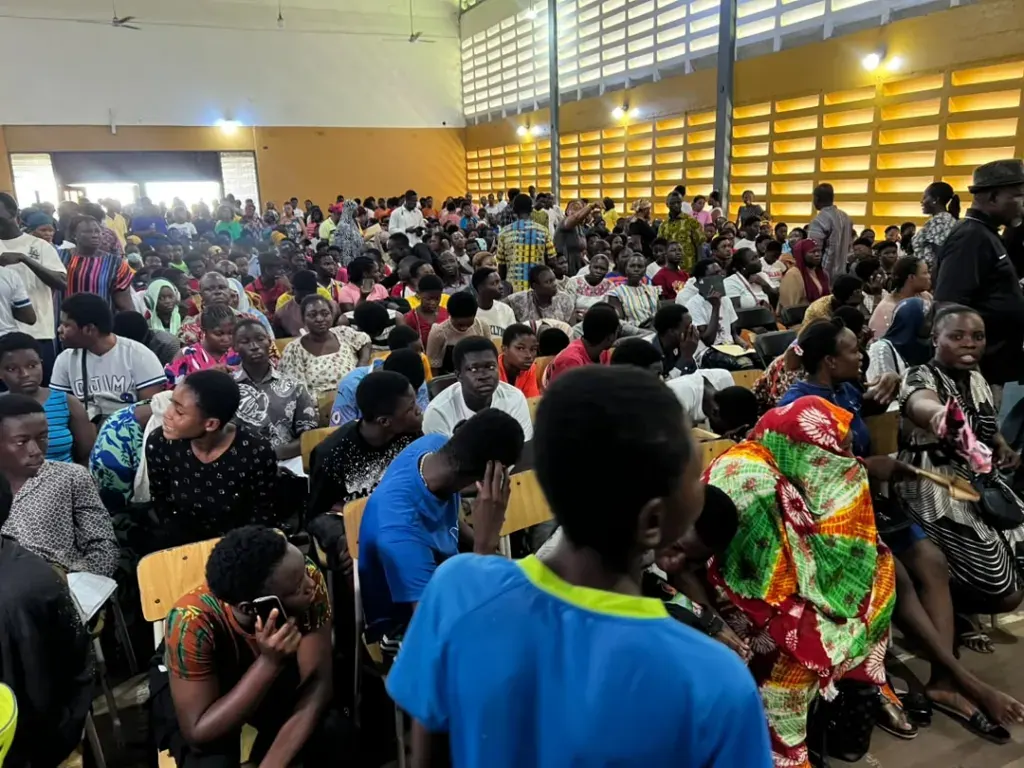
The Ghana Education Ministry has announced that more than half of the 53,000 students initially left without automatic placement have completed the self-placement process. This development has significantly reduced the number of parents and students reporting to the ministry's resolution centres for assistance. According to Press Secretary to Education Minister Haruna Iddrisu, Hashmin Mohammed, the self-placement option has allowed students to select schools with available vacancies.
Mohammed stated that the figure of students who have secured admission through both automatic placement and self-placement has reached about 97,000. He noted that this indicates that the ministry has given more Ghanaian students the opportunity to access secondary education. The pressure on Ghana's secondary school placement resolution centres is easing, with several regions experiencing a considerable improvement in the situation.
The Northern, Savannah, and North East regions are among those where the resolution centres are no longer experiencing a heavy influx of parents and students. However, Mohammed identified the Greater Accra and Ashanti regions as areas where placement-related concerns remain more pronounced. In the Ashanti region, the official high school coordinator reported that they are not receiving the peak numbers of students that used to visit the resolution centre.
The self-placement option was introduced for students who could not secure automatic placement, allowing them to select schools with available vacancies. Mohammed noted that the ministry is yet to establish the exact number of students who have completed the self-placement process. The development has brought relief to parents and students who were struggling to secure placement in secondary schools.
In an effort to address the concerns of parents and students, the ministry has been working to ensure that all students have access to secondary education. The situation has improved considerably, with many students now having secured admission through both automatic placement and self-placement. The ministry's efforts have helped to reduce the pressure on resolution centres across the country.
Despite the progress made, some regions continue to experience challenges with placement. The Greater Accra region, in particular, is still experiencing a significant number of students and parents reporting to the resolution centre. However, the overall situation has improved, and the ministry is working to ensure that all students have access to secondary education.
The Education Ministry's Press Secretary, Hashmin Mohammed, emphasized that the self-placement option has provided an opportunity for more Ghanaian students to access secondary education. With over 50% of the 53,000 unplaced students completing self-placement, the ministry is optimistic that the situation will continue to improve. The ministry will continue to work to ensure that all students have access to quality education.
Key points
- Over 50% of 53,000 unplaced JHS graduates have completed self-placement.
- The self-placement option has allowed students to select schools with available vacancies.
- The situation has improved considerably in several regions, with resolution centres in the Northern, Savannah, and North East regions no longer experiencing a heavy influx of parents and students.