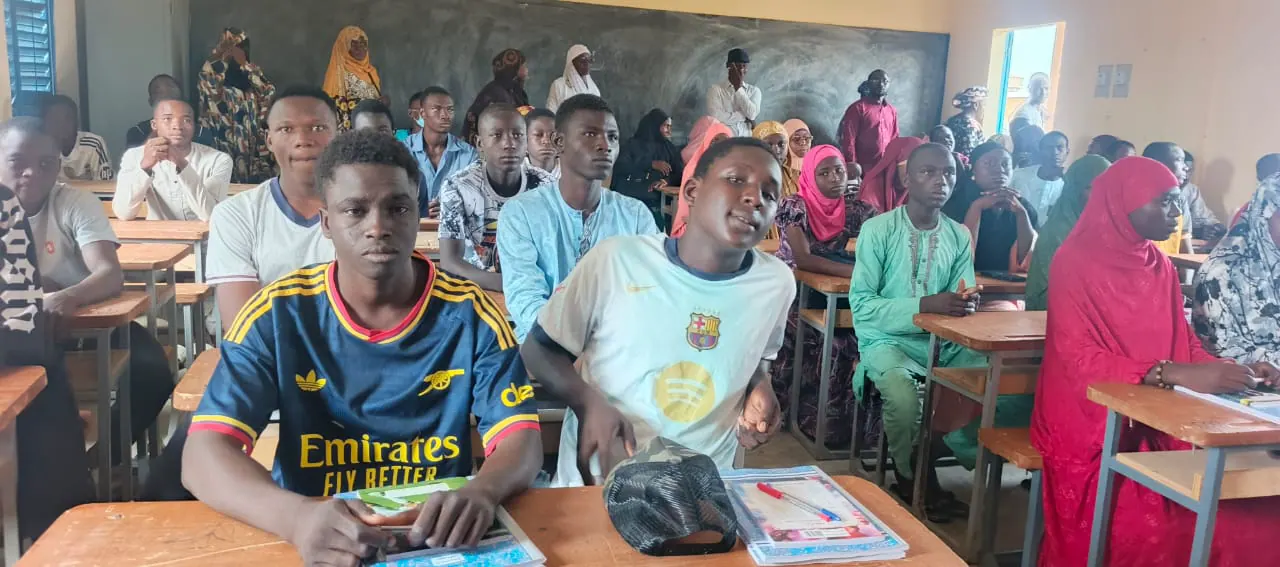
The Governor of Dosso Region, Colonel-major Bana Alhassane, launched the 2026-2027 academic year on October 1st, in the presence of administrative authorities, education officials, defense and security forces, teachers, students, and education partners. This high-level attendance underscores the importance placed on education and academic success in the region. During the event, Colonel-major Bana Alhassane emphasized the need for students to work consistently, advising them to avoid distractions, particularly excessive mobile phone use and social media, to focus on their studies.
The Governor visited several schools, including CEG1, the Garantché school group, CSP Hayyat, and the CFPT for vocational and technical education. At each stop, he offered words of encouragement, stressing the importance of discipline, listening to parents and teachers, a competitive spirit, and constant effort. His stated goal is to achieve a 100% admission rate by the end of the year. The region has made significant investments in education, with 490,223 students, including 233,959 girls, and 12,023 teachers, of whom 5,909 are women.
These numbers highlight the scope of the educational mission and the shared responsibility between students and teachers. Colonel-major Bana Alhassane reminded teachers of their crucial role in guiding children to success, urging them to demonstrate courage, dedication, and a strong sense of duty to ensure tangible results by the end of the academic year. The Governor's emphasis on education reflects the region's commitment to improving academic outcomes.
To support this effort, the outgoing Administrator of Dosso Urban Commune, Ibrahim Moussa Kouré, handed over 167 desks and 167 chalkboards to the Governor for distribution to primary schools in the commune. He described this donation as a small but meaningful contribution to the start of the new academic year. Colonel-major Bana Alhassane welcomed the gesture, assuring that the equipment would be put to good use for the benefit of students.
Regional Director of National Education, Issa Maidanda, confirmed that all conditions are in place for a successful academic year. He reported that staff deployments and preparatory meetings had been completed, and schools were ready to receive students. The framework for this academic year focuses on five key areas: monitoring student enrollment, pedagogical support, result-driven management, accountability, and monitoring and evaluation.
Maidanda noted that previous years have seen significant improvements in academic results, and this momentum must be sustained. The regional education authorities are optimistic about the prospects for the new academic year, with a clear plan in place to support students and teachers. The Governor's visit and the donations from local authorities reflect a collaborative approach to education in the Dosso region.
As the academic year progresses, the focus will be on implementing the outlined priorities and achieving the set goals. With the support of all stakeholders, including students, teachers, and local authorities, the Dosso region aims to make significant strides in education, building on past successes and addressing challenges. The commitment to education is evident, and the region is poised to make a positive impact on the academic outcomes of its students.
Key points
- The Dosso region in Niger has started the 2026-2027 academic year with 490,223 students, including 233,959 girls, and 12,023 teachers.
- The regional authorities have outlined a framework for the academic year focusing on monitoring student enrollment, pedagogical support, and result-driven management.
- Local authorities have made donations, including 167 desks and 167 chalkboards, to support primary schools in the region.