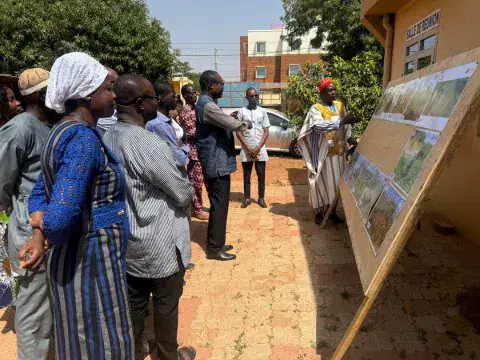
The "Les Communautés reverdissent le Sahel" (CRS) project, implemented in Burkina Faso since 2018, has concluded after eight years, achieving significant results in land restoration. The project's national closure workshop was held on October 29, 2026, in Ouagadougou, where stakeholders reviewed the project's impacts and discussed prospects for sustaining the gains. The project covered four regions in Burkina Faso: Oubri, Yaadga, Nando, and Koulsé, and was implemented by four partner organizations: APEDR, APIL, ASMADE, and TIIPAALGA.
The project's primary interventions focused on assisted natural regeneration (RNA), restoration of degraded lands, promotion of value chains, and capacity building for rural communities. The Institut de l'environnement et de recherches agricoles (INERA) provided scientific expertise, particularly in data management. Over 38,000 hectares of land have been restored, benefiting 26,000 farmers trained in RNA techniques and sustainable land management practices. The project's results also indicate improved agricultural productivity in restored fields, with over 94% of participants reporting increased incomes and 91% improving their food security.
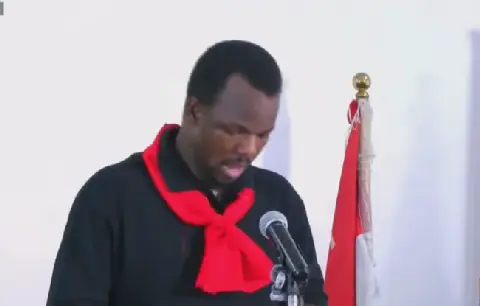
According to Bruce Emmanuel Sawadogo, national coordinator of the Secrétariat permanent des organisations non gouvernementales (SPONG), the project's closure offers an opportunity to assess the transformations in communities and reflect on their sustainability. Sawadogo emphasized that the challenge goes beyond presenting achievements, as it is crucial to ensure that populations can maintain acquired practices after partner organizations withdraw. He stressed the need to value impact studies and scientific research conducted within the project framework to understand observed changes and identify reproducible approaches.
Tagnabou Danbatia Lazare, national focal point for the United Nations Convention to Combat Desertification (UNCCD), highlighted the importance of land restoration in a Sahelian country like Burkina Faso. Land degradation is a significant challenge affecting agricultural production, livelihoods, and resilience to climate change. Lazare praised the project's participatory approach, which directly involved populations in restoration activities, as a key factor in the sustainability of results.
The project's impacts are also reflected in the daily lives of beneficiaries. Bacoin Boubié from the Sanguié province testified to the transformations brought about by the project in his community. Before the interventions, soil degradation had significantly reduced agricultural yields, compromising households' ability to meet their food needs and cope with certain expenses. Through training and accompaniment, community members mobilized around RNA and degraded land recovery, gradually making formerly arid areas cultivable again.
The project's success is attributed to its collaborative approach, involving local communities, government agencies, research institutions, and technical and financial partners. The project's results demonstrate that land restoration can be achieved through a combination of assisted natural regeneration and value chain promotion, improving both ecosystem health and rural livelihoods. As the project concludes, stakeholders are focusing on ensuring the long-term sustainability of the achievements.
Moving forward, the emphasis will be on consolidating gains and exploring opportunities for scaling up successful approaches. The project's findings and recommendations are expected to inform policy decisions and guide future initiatives aimed at addressing land degradation and promoting sustainable development in Burkina Faso and the Sahel region.
Key points
- Over 38,000 hectares of land restored in Burkina Faso through the "Les Communautés reverdissent le Sahel" project.
- The project improved agricultural productivity, increased incomes, and enhanced food security for 26,000 farmers.
- The project's participatory approach and emphasis on community engagement were key factors in its success.