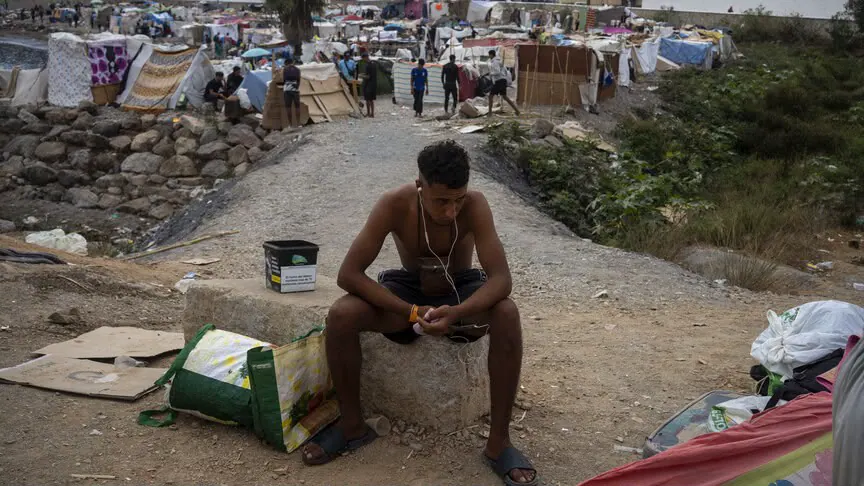
The Spanish government is working to relocate over 3,000 migrants, including several hundred minors, who are currently living on the streets of Ceuta, an enclave in northern Africa. According to Angel Victor Torres, the minister of territorial policy, the transfers to designated accommodation centers will continue in the coming days. The government has also considered opening another site if necessary.
Minister Torres expressed hope that within a few weeks, all migrants will be rehoused and their repatriation cases will begin to be processed. He stated that between 150 and 200 migrants are voluntarily returning to Morocco daily. In the past 24 hours, 160 people have returned to the neighboring country. The minister emphasized that only those eligible for international protection and unaccompanied minors who cannot be reunited with their families should remain in Spain.
The majority of recent arrivals from Morocco are not expected to meet the conditions for international protection. As a result, the Spanish authorities plan to transfer unaccompanied minors to the continental territory to avoid overcrowding in Ceuta. This move aims to provide a more suitable environment for the minors.
In addition to the relocation efforts, Minister Torres condemned an attack on a member of Ceuta's Assembly, whose car was targeted with stone-throwing. The incident has been deemed "inacceptable" by the minister. The authorities in Ceuta are continuing to transfer migrants from the streets to government-designated accommodations.
The government has put in place a system to transfer migrants to designated accommodation centers, as well as facilitate voluntary returns to Morocco. Unaccompanied minors will be transferred to the continental Spanish territory. The goal is to provide a more organized and humane approach to addressing the migrant situation in Ceuta.
According to the Spanish government, the situation in Ceuta requires a multi-faceted approach. The authorities are working to balance the need to provide assistance to those in need with the need to manage the flow of migrants. The government has reiterated its commitment to finding a solution to the situation.
The efforts to address the migrant situation in Ceuta are ongoing, with the government working to ensure that all migrants are provided with suitable accommodations and that their cases are processed in a timely manner. The situation remains a priority for the Spanish authorities, who are working to find a long-term solution.
Key points
- Over 3,000 migrants remain on Ceuta's streets.
- Spanish government working to relocate migrants to designated accommodation centers.
- Unaccompanied minors to be transferred to continental Spain.