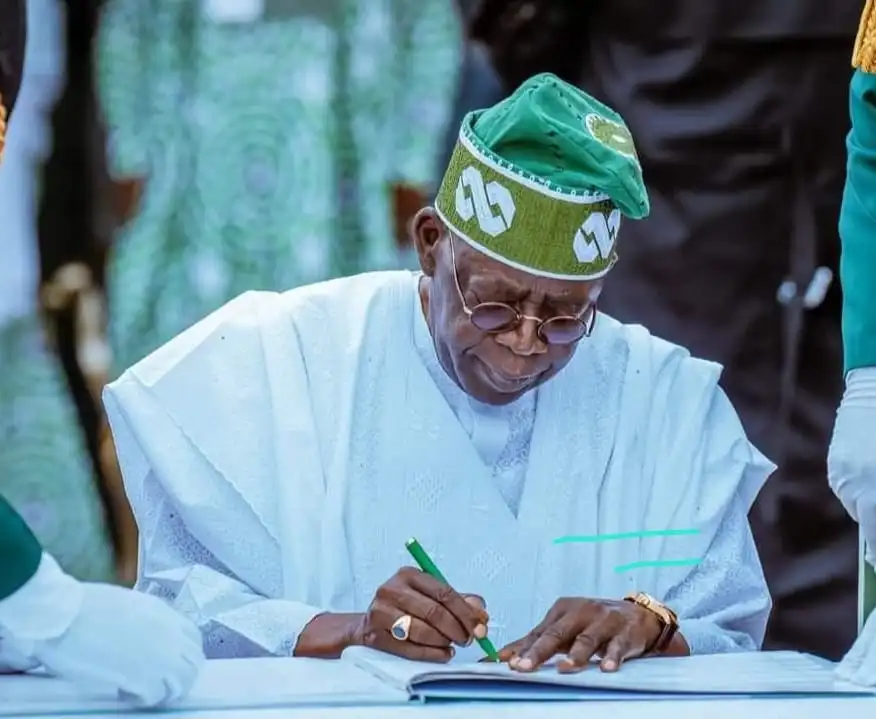
More than 1,000 Islamic clerics gathered in Kano State for a national conference titled 'An Assessment of the State of the Nation under President Tinubu and the 2027 General Elections.' They expressed dissatisfaction with the current administration's policies, citing economic hardship, insecurity, and the exodus of skilled professionals. The clerics, under the platform 'Ko Da Naka – For the Struggle to Promote Good Governance and Community Development,' collaborated with AFAQ Educational Foundation to issue a communique.
The communique criticized the government's policies, including the removal of fuel subsidy, changes to the naira exchange-rate system, increases in electricity tariffs, and tax reforms. These measures, according to the clerics, have worsened the burden of hardship on ordinary Nigerians. They accused the government of prioritizing revenue generation over citizens' welfare, amid rising living costs and unemployment.
The Islamic clerics resolved that it would be inappropriate for Nigerians to re-elect the Tinubu administration in 2027 if the government failed to change its economic policies. They urged President Tinubu to reconsider his decision to contest the 2027 election, suggesting that citizens should reject his candidacy if he refused to change course. The conference also raised concerns over continued killings, kidnappings, banditry, and other acts of terrorism across the country.
The clerics called for urgent government action to tackle insecurity, particularly in the North-West and other areas affected by violent attacks. They expressed concern over the growing departure of Nigerian doctors, teachers, engineers, and other skilled professionals, attributing the trend to unemployment, inadequate facilities, poor working conditions, and economic difficulties. The government was urged to improve salaries, working conditions, and professional development opportunities.
The conference featured presentations from notable scholars, including Dr. Abdulmuɗɗalib Ahmad Giɗaɗo, Prof. Muhd Muslim Ibrahim, and Sheikh Kabir Bashir Abdulhamid. The clerics further urged Islamic scholars and other religious leaders to speak truth to power, defend justice, and resist attempts to turn them into political instruments. They emphasized the importance of commending good governance and criticizing wrongdoing, regardless of the political party or ethnic group in power.
Ahead of the 2027 elections, the conference urged Nigerians to place national interest above partisan, ethnic, and regional considerations. Voters were called upon to assess candidates based on experience, integrity, competence, and policy proposals, rather than party, ethnic, or regional affiliations. The clerics emphasized that Nigerians should use the 2027 elections to choose leaders capable of addressing economic hardship, insecurity, unemployment, injustice, and underdevelopment.
The Islamic clerics' call for President Tinubu to drop his re-election bid reflects growing concerns over the country's economic and security challenges. With over 84% of Nigerians willing to vote in the 2027 polls, the clerics' statement is likely to add to the growing pressure on the government to address the nation's pressing issues. The government's response to these concerns remains to be seen.
Key points
- Over 1000 Islamic clerics urge President Tinubu to drop his 2027 re-election bid due to worsening economic hardship and insecurity.