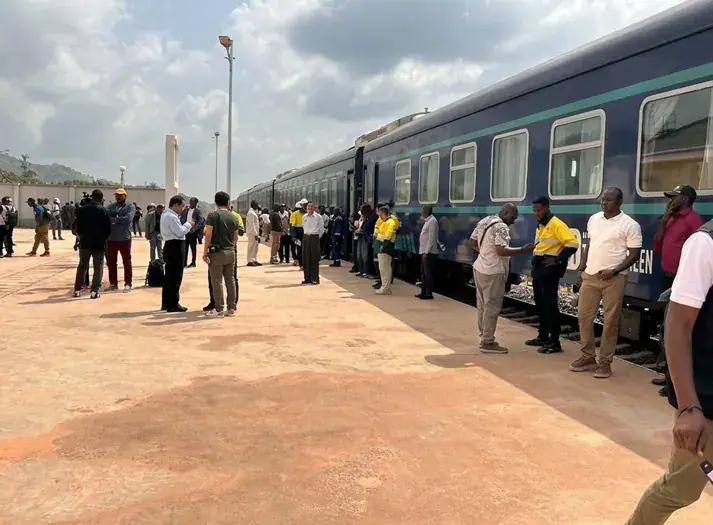
On November 9, 2026, over 100 journalists and content creators from Guinea and abroad participated in a guided tour of the Morébaya port facilities in the Séguélén district, Forécariah prefecture. The visit was organized by the Compagnie du TransGuinéen (CTG) to showcase the port's infrastructure, operational equipment, and logistical arrangements for the Simandou project. This initiative aimed to provide media professionals and content creators with a better understanding of the project's stakes and the strategic importance of Morébaya port in transporting and exporting Guinean iron ore.
The visit began at 6:00 AM at the General Lansana Conté stadium in Nongo, where participants boarded three buses for the trip to Morébaya. Upon arrival at 9:30 AM, the group started their tour with a visit to the railway corridor. They boarded a CTG passenger train for a 50-minute journey between Morébaya port and Moussaya station. CTG officials presented the train's features, including four cars with a total capacity of 335 passengers. The VIP car, reserved for the President and his guests, has 35 seats.
After the train ride, the delegation visited various port infrastructures, including sports facilities such as a gym, basketball court, handball court, and synthetic football field. They also toured the infirmary, designed to provide medical care on site. The group then attended presentations in the conference room, which covered the main components of the Simandou project, its expected benefits, and the President's vision for the project's implementation and its role in Guinea's economic development strategy.
A key part of the visit was the control room, where a technician explained the supervision system, including monitoring and security devices that track operations at the port complex. This allowed participants to understand the technical and operational management of the installations. The group then visited the iron ore unloading site, where they observed four unloading lines operating simultaneously. At the time of their visit, several machines were in operation, providing a concrete overview of industrial operations at the site.
The tour continued with a visit to the commercial port and iron ore export facilities. The commercial port has a processing capacity of 2.5 million tons and can handle various types of goods, including containers and industrial equipment. The complex also features two mineral ports for exporting iron ore extracted from Simandou blocks, with an annual processing capacity of 120 million tons. These ports are designed to facilitate loading and shipping operations.
The Simandou project involves a 650-kilometer railway corridor connecting mining areas to the Morébaya port facilities. The infrastructure includes 206 bridges, five tunnels, seven wagon unloaders, seven ship loaders, and ten ore stackers and reclaimers. The CTG aims to create a broader impact with the railway and port corridor, extending beyond the construction of facilities for iron ore exploitation and export.
The visit provided a comprehensive overview of the Simandou project's infrastructure and operations, highlighting the strategic importance of Morébaya port in Guinea's economic development. The CTG's efforts to engage media professionals and content creators reflect the project's significance and its anticipated impact on the region. By showcasing the project's progress and ambitions, the CTG aims to promote transparency and understanding among stakeholders.
Key points
- The Simandou project involves a significant investment in infrastructure, including a 650-kilometer railway corridor and port facilities with a processing capacity of 120 million tons per year.