The Ministry of Family and Solidarity in Burkina Faso has reported substantial efforts in supporting displaced persons and vulnerable populations across the country. As of July 31, 2026, the ministry has recorded 1,346,769 people from 226,404 households who have been returned and supported in 1,055 localities. This initiative is part of the government's broader strategy to enhance solidarity and protection for vulnerable groups.
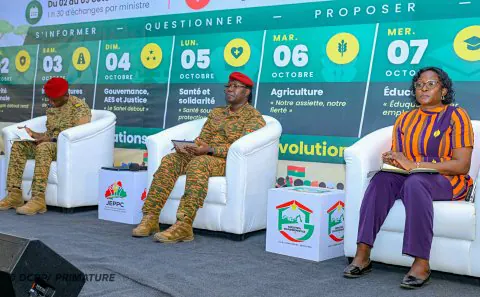
Minister of Family and Solidarity, Pélagie Kaboré, presented these achievements during the second phase of the third edition of the National Days of Patriotic Engagement and Civic Participation (JEPPC) in Ouagadougou. The event served as a platform for the minister to highlight her department's priorities in reinforcing national solidarity and protecting vulnerable persons. Kaboré emphasized that the ministry's actions are aligned with the RELANCE 2026-2030 plan, focusing on security, social cohesion, peace, governance, and human capital development.
The ministry has implemented several programs aimed at facilitating access to social services for citizens. The national digital platform "Deme Sira" allows citizens to submit requests for assistance and contribute to the national solidarity effort. Additionally, the Mobile Social Service, launched in April 2026 in the Kadiogo region, brings support directly to individuals facing difficulties accessing conventional social structures. The Unique Social Registry (RSU) has also been instrumental in targeting interventions more effectively, with over 430,000 households registered and benefiting from humanitarian and development actors' support.
In the humanitarian domain, the ministry has achieved significant results. Besides the return and support of over 1.34 million people, nearly two million vulnerable individuals have received food assistance. The ministry has also bolstered the operational capacities of the National Council for Emergency Relief and Rehabilitation (CONASUR) with 66 humanitarian supply trucks. These trucks are crucial in ensuring that aid reaches various localities.
Protecting children is another critical area of focus for the ministry. Over 2,000 individuals in situations of begging have been removed from the streets and provided with care. Furthermore, more than 13,800 orphans and vulnerable children, including those of individuals who have fallen for the nation, have received support for schooling or training. The ministry also provides care for 1,330 pupils of the Nation and thousands of children victims of violence.
The ministry is also working towards the economic empowerment of women. Nearly 18,500 women have benefited from credits for financing agro-pastoral activities. Displaced and returned women have received equipment and technical support to develop their economic activities. Women survivors of gender-based violence receive integrated care, including protection, psychosocial support, and reintegration assistance.
Despite these achievements, Minister Kaboré acknowledges that significant needs remain unmet. The ministry has identified four main priorities for its future actions, including reinforcing the economic and social empowerment of women and girls through capacity development, financing productive initiatives, and promoting their participation in economic life. The ministry's efforts aim to consolidate social cohesion and ensure a more sustainable and inclusive development trajectory for Burkina Faso.
Key points
- Over 1.34 million people have been returned and supported in 1,055 localities across Burkina Faso.
- The Ministry of Family and Solidarity has provided food assistance to nearly two million vulnerable individuals.
- The ministry is prioritizing the economic empowerment of women and girls through various initiatives and programs.