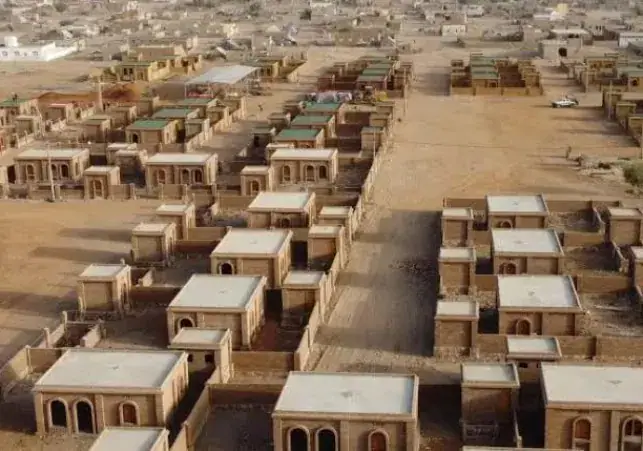
The DARI social housing program in Mauritania, initiated in 2019, aims to modernize infrastructure and eradicate exclusion in historically neglected peripheral neighborhoods. The program has led to the construction of 1,932 social housing units in 10 cities, including Sélibaby, Rosso, Nouadhibou, and Aleg. Although the buildings have been completed for several years, they remain unoccupied. According to program officials, the delay is due to technical issues, including the slow pace of connecting the units to essential services such as water and electricity.
The DARI program has utilized eco-construction technologies adapted to the Sahelian climate. In Sélibaby, 50 social housing units were built using local materials and the technology of compressed and stabilized earth blocks (BTCS). This approach valorizes regional resources and reduces the need for imported materials. The BTCS method involves mixing local clay or soil with a small proportion of dune sand and a binding agent, which is then compacted to eliminate air bubbles and increase density. The result is a natural, climate-regulated dwelling.
The unoccupied housing units have led to additional expenses, including the recruitment of security companies to prevent squatting, theft, or degradation of materials. New markets and connection agreements have been launched to address the issue, particularly in the areas of Aleg, Kaédi, and Sélibaby. However, the units will remain uninhabitable until the negotiations and implementation of electrical and water connections are finalized.
The DARI program has made progress in different cities, with varying degrees of completion. In Kiffa, 368 social housing units are being constructed, with the main works completed and a first tranche of 60 units officially inaugurated. However, the project is still pending finalization and connection to water and electricity. In Néma, the construction site has experienced delays, and a new call for tenders has been launched to complete the 104 social housing units.
In Rosso, the construction of buildings is generally completed, but the site suffers from the same issue of being "empty shells." The project is currently at the stage of controlling and monitoring the connection works for water and electricity. The administrative file for attribution is frozen until technical viability and security measures are in place. Nouadhibou, the economic capital, is benefiting from a large-scale treatment to absorb the proliferation of precarious neighborhoods.
The DARI program aims to allocate the completed and connected housing units to poor families or those from vulnerable groups. A process of administrative and social selection will be carried out by local commissions, crossing demands with the Social Register. This process is expected to take time to formalize after the handover of keys by the construction companies.
The DARI program has allowed for the recruitment and training of young local workers in earth masonry, maintaining the budget envelope within the economy of the targeted wilayas. The program's progress will depend on the finalization of the connection works and the attribution process, ensuring that the housing units benefit the most in need.
Key points
- The DARI social housing program in Mauritania has constructed 1,932 units in 10 cities, but they remain unoccupied due to technical issues.
- The program has utilized eco-construction technologies adapted to the Sahelian climate, valorizing regional resources.
- The attribution process will prioritize poor families or those from vulnerable groups, through a rigorous administrative and social selection process.