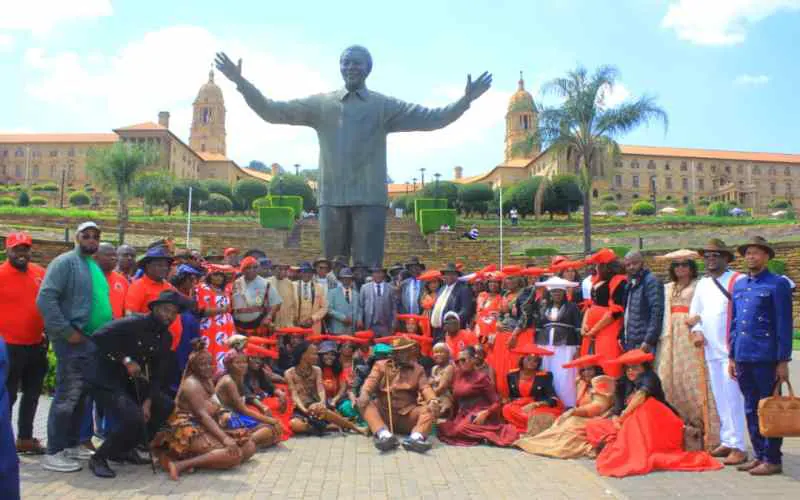
OvaHerero and Nama descendants living in South Africa have petitioned President Cyril Ramaphosa to support their inclusion in negotiations over the 1904-1908 genocide. The petition, submitted on October 2, 2026, argues that the effects of the genocide extend beyond Namibia's borders and continue to affect communities in South Africa and other parts of Southern Africa. The descendants, through the OvaHerero Traditional Authority South Africa Office of the Chief, are seeking greater involvement in discussions on reparations and historical redress.
The petition was submitted on the 122nd anniversary of the extermination order issued by German General Lothar von Trotha. It emphasizes South Africa's historical connection to the OvaHerero struggle, particularly the refuge provided to people who fled German forces during the genocide. Between 1904 and 1908, OvaHerero ancestors crossed the Orange River and found refuge among South African communities and traditional leaders. This historical connection has led the descendants to seek South Africa's support in their quest for justice.
The petition highlights the role played by Paramount Chief Hosea Kutako in 1946, when he appealed to then ANC President-General Dr A.B. Xuma over the proposed incorporation of South-West Africa into South Africa. The appeal resulted in a memorandum to the United Nations opposing the incorporation and helped establish a history of solidarity between South African and OvaHerero communities. This solidarity continued during the struggles against colonialism and apartheid.
The petitioners are now asking Ramaphosa's government to publicly support their quest for justice and acknowledge that the consequences of the genocide continue to affect descendants living in South Africa. They are also calling on South Africa to support their direct participation in negotiations on reparations, encourage the South African parliament to adopt a resolution supporting reparative justice, and use its influence within the African Union, SADC, and the United Nations to advocate for an inclusive process.
A parallel petition was submitted to the German Embassy in Pretoria, addressed to German Ambassador to South Africa Oliver Rentschler. The petition calls for affected OvaHerero and Nama descendants to be included in discussions concerning Germany's responsibility for the genocide and its consequences. The descendants argue that land dispossession, forced displacement, and intergenerational trauma resulting from the genocide continue to affect OvaHerero and Nama communities in Namibia, South Africa, Botswana, Angola, and elsewhere in the diaspora.
The petitions refer to victims' and descendants' rights to truth, acknowledgement, participation, restitution, compensation, and guarantees of non-repetition. The South African petition bears an official stamp from the Presidency's Internal Security division, confirming receipt, while the petition submitted to the German Embassy carries a certified copy stamp from the Chancellery. The petitions were signed by dozens of descendants from Namibia, South Africa, Botswana, and Germany.
The petitioners used the phrase "Nothing About Us, Without Us" to frame their demand for direct participation, arguing that recognition of the genocide must be accompanied by the involvement of communities that continue to live with its consequences. They conclude that delays in addressing the issue should not prevent affected communities from securing justice and meaningful reparative measures.
Key points
- OvaHerero and Nama descendants petition South African President Cyril Ramaphosa for involvement in genocide talks
- The petition argues that the effects of the genocide extend beyond Namibia's borders and continue to affect communities in South Africa and other parts of Southern Africa
- The descendants are seeking greater involvement in discussions on reparations and historical redress