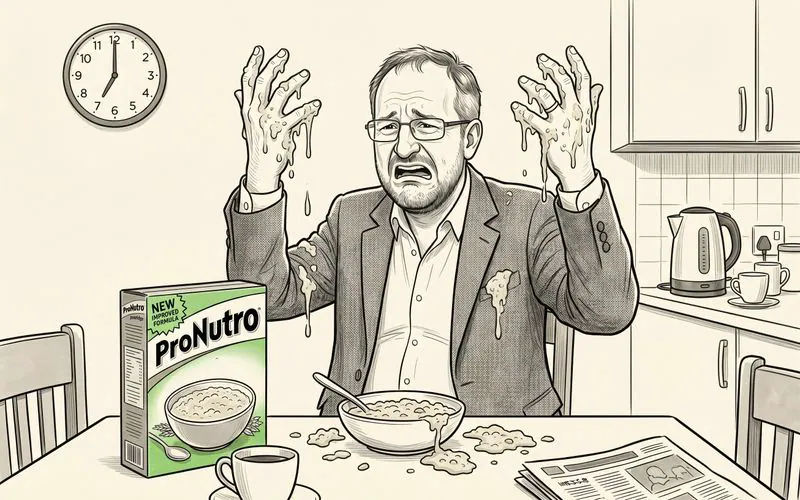
The discontinuation of ProNutro, a popular breakfast cereal in South Africa, has left many consumers outraged and questioning the decision made by its owner, PepsiCo. The cereal, which has been a staple in many South African households for 64 years, was known for its high protein content and unique texture. Many who grew up with the cereal, including the author, are struggling to come to terms with its sudden disappearance from store shelves. ProNutro's history dates back to 1962, and its discontinuation marks the end of an era for many South Africans.
According to PepsiCo, the decision to discontinue ProNutro was due to the high cost of production, specifically the "roller drum drying process" which requires a large amount of water and electricity. However, many consumers are sceptical of this explanation, citing the fact that the cereal was first produced in 1962, a time when such technology may not have been as advanced. The author questions whether it is truly impossible for PepsiCo to replicate the process in a more cost-effective way, given the significant advancements in technology over the past six decades.
The discontinuation of ProNutro has also raised concerns about the tactics used by large corporations to introduce changes to their products without being entirely transparent. PepsiCo had previously tried to introduce a new flavour of ProNutro in packaging that was similar to the original, which some consumers saw as an attempt to smuggle the new product into households without being noticed. This tactic has been used by other companies in the past, including Kellogg's, which introduced a new version of Rice Krispies with added sugar in 2018.
The market is now open for a new company to produce a healthy, protein-rich, sugar-free breakfast cereal that can fill the gap left by ProNutro. The author suggests that if it was possible to produce such a cereal in 1962, it should be possible to do so again today. The discontinuation of ProNutro presents an opportunity for a new company to enter the market and provide consumers with a product that meets their needs and preferences.
In contrast to PepsiCo's decision to discontinue ProNutro, another breakfast staple, Jungle Oats, has seen an increase in sales in recent months. Tiger Brands, the manufacturer of Jungle Oats, reported that they were able to increase sales by promoting the product during the summer months, rather than just during the winter. The company's CEO, Tjaart Kruger, noted that the company's previous marketing strategy had inadvertently created a perception that Jungle Oats was only a winter product.
The discontinuation of ProNutro highlights the importance of understanding consumer behaviour and preferences. Corporations can get caught up in their own internal dynamics and make mistakes that can be seen by outsiders. As Kruger noted, companies can lose focus on what is really important by listening to the wrong people and internalising debates. This can lead to mistakes that can have significant consequences, such as the discontinuation of a beloved brand like ProNutro.
Despite the discontinuation of ProNutro, it is likely that a similar product will reappear on the market in the future. The author suggests that whoever can quickly get a similar product into the family routine will be successful. The legacy of ProNutro lives on, and many consumers will be watching to see what happens next in the breakfast cereal market.
Key points
- PepsiCo cites high production costs as the reason for discontinuing ProNutro.
- Consumers are sceptical of PepsiCo's explanation and question the company's tactics.
- The market is now open for a new company to produce a healthy, protein-rich, sugar-free breakfast cereal.