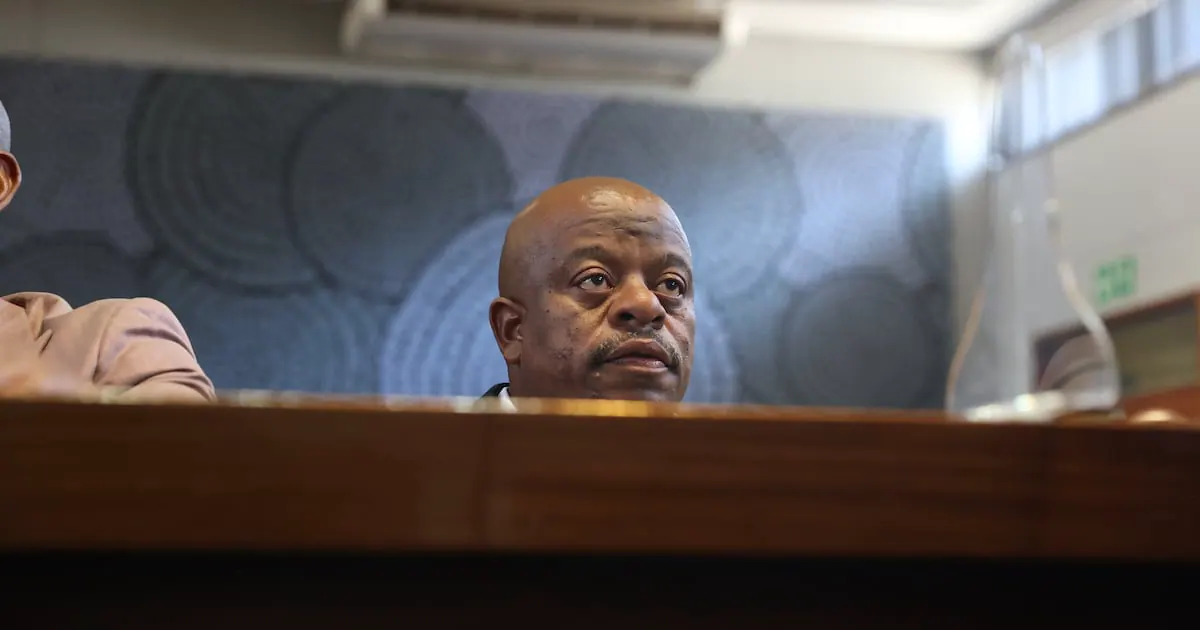
Oupa “Bafana” Sindane, a close associate of taxi boss Joe Sibanyoni, has approached the high court in Pretoria seeking an interim interdict against the Madlanga commission. Sindane fears self-incrimination if he answers questions about discussions on the employment or support of “izinkabi”, commonly referred to as contract killers. The commission's notice directs him to file a statement answering questions posed by the commission, which he argues is beyond its legal powers.
Sindane's founding affidavit reveals that he was asked to provide details of all his discussions with Sibanyoni in relation to the employment, assessment or support of 'izinkabi' over the period 2024 to 2026. He argues that without much information disclosed by the commission to clarify what prompted the question, he finds it difficult to answer. Sindane also mentions that he survived a violent assassination attempt and feels the commission's question puts him in an impossible position.
The commission's question about 'izinkabi' is described by Sindane as "most startling". He wrote a letter to the commission before initiating litigation, expressing his objection to the demand that he address alleged discussions about hiring killers without defining what it means in this specific context. Chats between Sibanyoni and Sindane show the taxi boss inquired in August 2025 about “baobe” (izinkabi), referring to Sfundo Mhlongo and Khanyiseleni Mbatha.
Sindane's litigation will also centre on whether the commission obtained his phone records lawfully. The commission obtained his phone from the Hawks, which had the phone for investigation purposes in relation to an extortion and money-laundering case against him and Sibanyoni in Kwaggafontein, Mpumalanga. Sindane argues the commission should have sought permission to obtain his phone from him.
The commission has argued that it obtained the phone lawfully, using a similar technique to obtain former crime intelligence boss Maj-Gen Feroz Khan when he was arrested in May. However, Sindane disputes this, stating that the commission has not demonstrated any lawful basis for the forensic imaging of his device. The matter has been scheduled for hearing before the high court on October 6.
Sindane's counsel, Matthew Chaskalson, had previously mentioned during a postponement application for Sindane's testimony that the inquiry needed to not disclose evidence to Sindane because it was inquisitive in its nature and sought information from people. This raises questions about the balance between the commission's investigative powers and an individual's right against self-incrimination.
The case has significant implications for the powers of the Madlanga commission and the rights of individuals who are called to testify before it. The commission's ability to obtain phone records and pose questions to individuals without clear evidence will be scrutinized. The court's decision on October 6 will provide clarity on these issues and potentially set a precedent for future cases.
Key points
- Oupa Sindane seeks court interdict over Madlanga commission's query on 'izinkabi' discussions
- Sindane fears self-incrimination if he answers questions about 'izinkabi'
- The case has significant implications for the powers of the Madlanga commission and individual rights