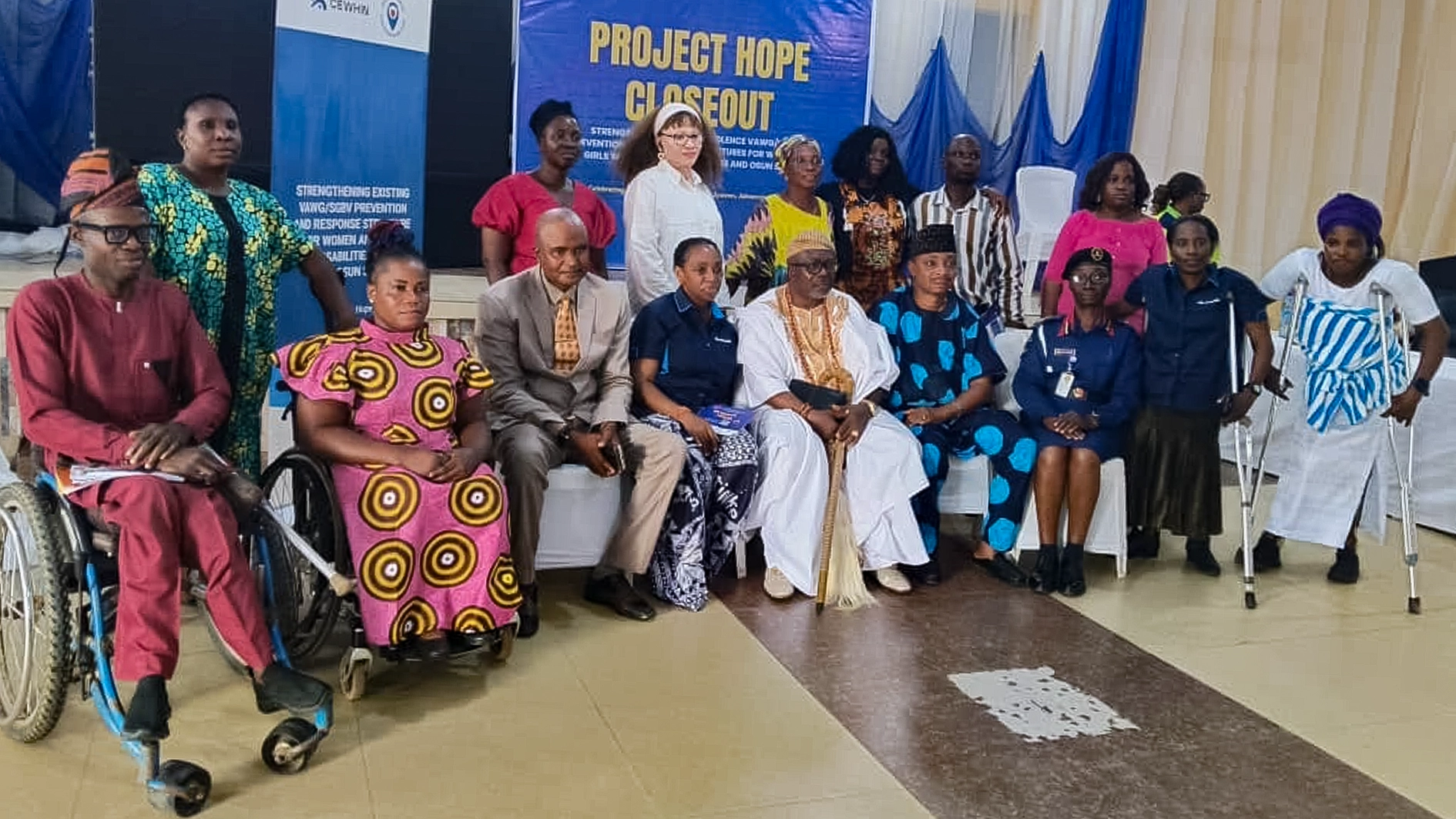
A three-year programme aimed at preventing and responding to gender-based violence against women and girls with disabilities in Osun State has come to a close. The programme, Project Hope, was implemented by the Centre for Women’s Health and Information (CEWHIN) and supported by the UN Trust Fund to End Violence against Women (UNTF). The programme brought together disability clusters, service providers, security agencies, government Ministries, Departments and Agencies, community leaders, and civil society organisations to strengthen existing systems of response.
The programme achieved significant milestones, including the reopening and revitalisation of the Sexual Assault Referral Centre (SARC) in Osun State. The centre's staff and steering committee, comprising Ministries of Justice, Women Affairs, and Health, were also trained to respond to girls and women with disabilities. According to the Executive Director of CEWHIN, Atinuke Odukoya, the programme achieved far beyond its initial goals, strengthening existing systems to respond to and prevent violence against women and girls with disabilities.
The programme also led to the emergence of the Community Task Force in Osun, a group of volunteers responding to cases, writing reports, and following up on abuses without payment. Odukoya noted that the task force was an unexpected but powerful outcome of the project. Additionally, women with disabilities themselves have become agents of change, with the Deaf Associations in both Lagos and Osun stepping down trainings to their members and conducting community sensitization.
The programme reached over one million people in three years through a collaborative, community-based approach. The CEWHIN boss expressed confidence that the structures put in place will outlive the project, citing the inclusion of the School of Special Needs, where young people were trained on psychosocial first aid and self-safeguarding, and their teachers trained on safeguarding protocols.
Partner organizations, such as CAI4SR, have ongoing programmes focusing on women and girls with disabilities as a direct fallout of Project Hope. Women's economic empowerment groups now mandatorily include women and girls with disabilities in all their activities, enabling them to fend for themselves and get something to eat. Odukoya revealed that the impact was particularly visible in the government sector, with several agencies that were previously not responding to women with disabilities now doing so actively.
The Desk Officer for Persons with Disabilities at the Nigeria Security and Civil Defence Corps, NSCDC, Osun State Command, DSC Rita Olaniru, described the three-year journey as eventful and impactful. She said CEWHIN collaborated with the Corps to train its desk officers and facilitated sessions with parents of children with disabilities on gender-based violence.
Stakeholders at the event pledged to sustain the tempo and ensure that the referral pathways already established are not abandoned. The importance of survivor-centred and disability-inclusive approaches to responding to violence was also highlighted, as project partners, stakeholders, and community actors vowed to deepen synergy and ensure that challenges already tackled do not recur.
Key points
- The programme empowered girls and women with disabilities to know their rights and resist abuse.
- The programme strengthened existing systems of response to gender-based violence against women and girls with disabilities.
- Over one million people were reached through the programme in three years.