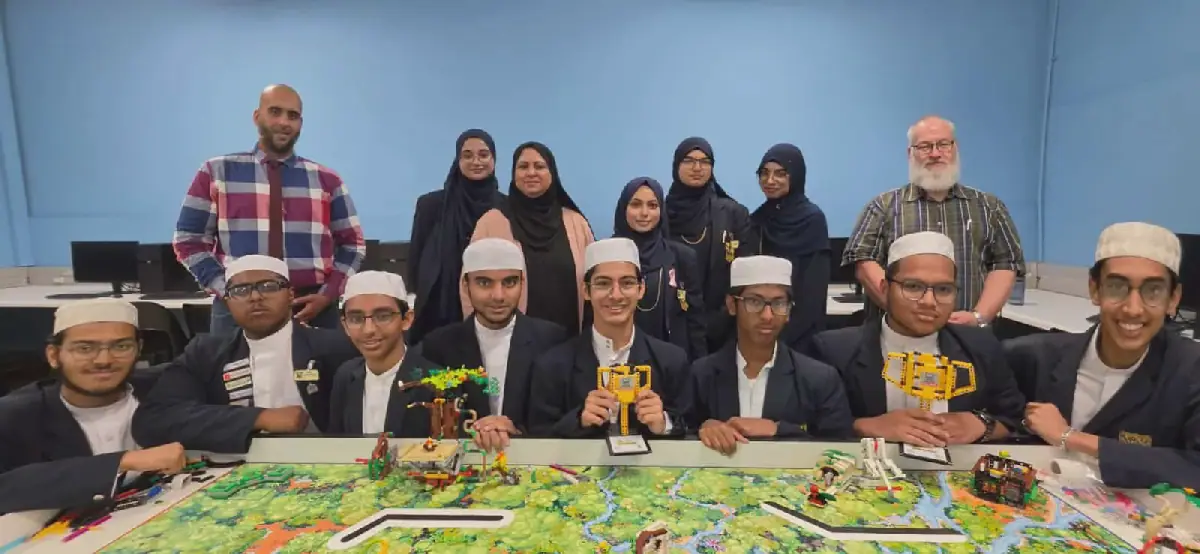
A team of pupils from Orient Islamic School in South Africa has developed an innovative water conservation project that has earned them a place at a national robotics competition. The MegaMindz team impressed judges at the KwaZulu-Natal FIRST LEGO League competition, securing third place overall and first place for Robot Performance among approximately 40 participating schools. Their project focused on a challenge that affects communities across South Africa: the responsible use of water.
The team's Innovation Project, developed under the 2026/ 2027 FIRST LEGO League theme, BIOGLOW, explored biodiversity and the protection of ecosystems. The learners created a rainwater harvesting system linked to automated drip irrigation, which uses soil moisture sensors to determine when plants require water. This system delivers water directly to the roots, reducing unnecessary water consumption. The project combined research, engineering, and programming to demonstrate how simple technological solutions can contribute to more sustainable practices.
Teacher and mentor, Muhammed Minty, said the Innovation Project provided pupils with an opportunity to apply their knowledge to address genuine societal challenges. The FIRST LEGO League encourages pupils to combine technical abilities with creative thinking, allowing them to research problems, develop solutions, and test their ideas. This approach helps pupils look beyond textbooks and consider practical applications of their knowledge.
The team's journey involved developing its robotics performance, including designing and building eight different attachments. After an initial practice score of 240, the pupils refined their programming and mechanical designs, eventually achieving 380 in their final round. Feroza Ismail, MegaMindz FLL team educator, noted that the pupils' willingness to experiment and persevere was particularly rewarding to witness.
The 11 pupils, from grades nine to 11, have been preparing since the beginning of the year, with responsibilities ranging from programming and construction to research, planning, and documenting their work. Mr Ivan Thompson, head of ICT at Orient Islamic School, highlighted the importance of exposing pupils to practical applications of technology, where they can develop confidence through experimentation, troubleshooting, and problem-solving.
Now heading to Johannesburg for the National Championships, MegaMindz hopes to further strengthen its prototype, improve its robot performance, and present its innovation with even greater confidence. The team's achievement represents an encouraging example of young people using education, technology, and creativity to think about the future of their communities and the environment.
The project may have started with a question about water, but the team's journey has opened the door to a much bigger opportunity: representing KwaZulu-Natal on the national stage. The school's achievement demonstrates the potential for young people to make a positive impact through innovative solutions to real-world problems.
Key points
- The MegaMindz team's project combined research, engineering, and programming to develop a rainwater harvesting system linked to automated drip irrigation.
Reporting sources
- Orient Islamic School innovators put water conservation in the spotlight at robotics competition · Rising Sun Chatsworth