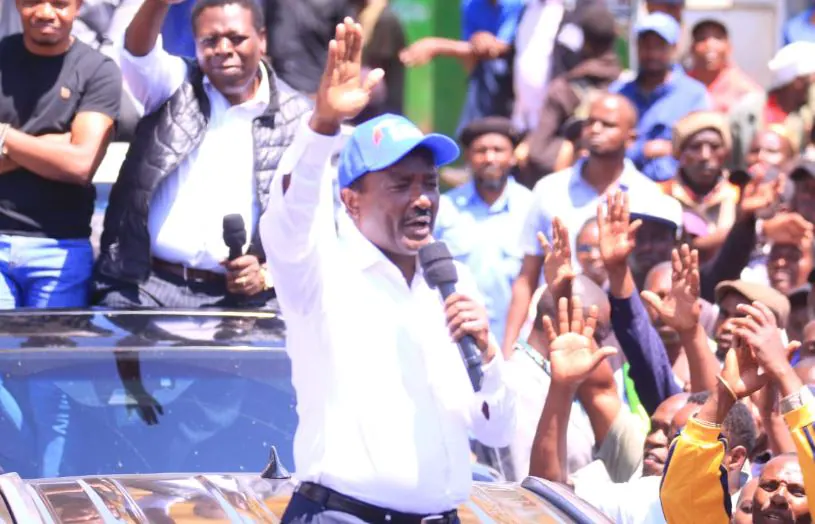
On September 21, Wiper party leader Kalonzo Musyoka announced that the Azimio la Umoja One Kenya Coalition had been rebranded as the Ukombozi Alliance. This move was swiftly rejected by several senior opposition leaders, exposing deep divisions within the coalition ahead of the 2027 elections. The announcement has sparked a mixture of reactions from various political quarters.
Cleophas Malala, deputy party leader of the Democracy for the Citizens Party and an ally of former Deputy President Rigathi Gachagua, stated that his party would not join the rebranded Ukombozi Alliance. Malala emphasized that his party would first unite with Senator Edwin Sifuna before engaging in further negotiations. This stance was echoed by Embakasi North MP James Gakuya, who declared that his party would reject any formation linked to Azimio.
The Linda Mwananchi movement, led by Senator Edwin Sifuna, plans to build its own coalition structure before entering into secondary talks with Kalonzo Musyoka, Rigathi Gachagua, or former Interior Cabinet Secretary Fred Matiang'i. Embakasi East MP Babu Owino highlighted that the movement would not rush into any agreements with the rebranded Ukombozi Alliance. This indicates that the opposition is likely to remain fragmented in the short term.
The name change also faces procedural and legal scrutiny. Augustus Muli, leader of the National Liberal Party, has written to coalition leaders and the Registrar of Political Parties seeking official documentation on the legal basis for the rebranding. This development raises questions about the legitimacy of the Ukombozi Alliance and may lead to further disputes.
The unveiling of the Ukombozi Alliance was attended by Siaya Governor James Orengo and Azimio secretary-general Caroli Omondi. However, several senior council members were noticeably absent, underscoring the internal discord within the coalition. Notably, People's Liberation Party leader Martha Karua and Narc party leader Charity Ngilu skipped the event, further highlighting the fragmented state of the opposition.
Analysts believe that the emerging fault lines will likely trigger a series of negotiations among competing blocs before a unified opposition front can be presented against the Kenya Kwanza government in 2027. The opposition will need to reconcile their differences and present a united front if they hope to challenge the ruling party effectively.
The rejection of the Ukombozi Alliance by senior opposition leaders has significant implications for the 2027 elections. The opposition's inability to present a united front may weaken their chances of challenging the Kenya Kwanza government. However, ongoing negotiations may yet lead to a more cohesive opposition strategy in the coming months.
Key points
- Senior opposition leaders reject Kalonzo Musyoka's rebranded Ukombozi Alliance.
- The opposition's fragmented state may weaken their chances in the 2027 elections.
- Negotiations are expected to continue among competing blocs before a unified opposition front emerges.