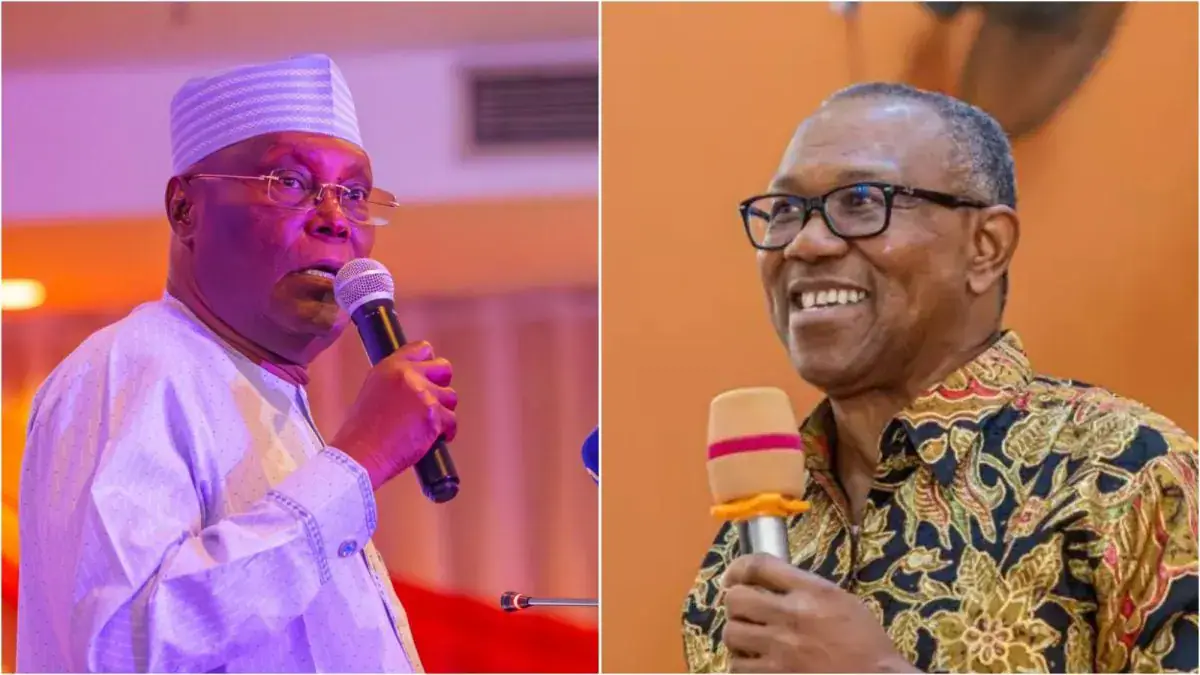
The opposition's plan to present a single presidential candidate against President Bola Tinubu in the 2027 general election has suffered a major setback. Umanu Elijah, a chieftain of the G-100 political pressure group, has declared that the proposal to unite opposition parties behind one presidential candidate is no longer realistic. Elijah cited the reluctance of key politicians to abandon their individual ambitions as the reason for the plan's failure.
Elijah made these comments during a telephone interview, stating that several political actors who were expected to participate in the proposed coalition have continued pursuing their individual presidential ambitions. Their activities have shown little indication that they are prepared to step aside for another candidate, despite the need to build a united opposition against the ruling All Progressives Congress (APC). Elijah described the single-candidacy proposal as "dead and buried".
The G-100 had been working towards bringing major opposition parties and influential politicians together under a common political arrangement. The group's objective was to prevent the opposition vote from being divided among several candidates, which could give the APC an advantage during the election. The group was convened by Salihu Lukman, a former Director-General of the Progressives Governors' Forum.
The G-100 reportedly held consultations with prominent political figures, including former Vice President Atiku Abubakar, former Anambra State Governor Peter Obi, and Oyo State Governor Seyi Makinde. However, the discussions have yet to produce an agreement on who should emerge as the candidate or which political platform should be adopted for the proposed arrangement.
The situation has become more complicated as political parties and their presidential hopefuls continue to strengthen their structures and engage in mobilisation activities ahead of the next general election. Parties such as the African Democratic Congress (ADC) and the Allied Peoples Movement (APM) have attracted attention with their activities.
Prominent politicians whose political ambitions have featured in discussions around the opposition arrangement include Makinde, Adewale Adebayo of the Social Democratic Party (SDP), and Obi, who is associated with the Nigeria Democratic Congress (NDC). Bringing these politicians together would require extensive negotiations, particularly over the presidential ticket, party structures, and distribution of responsibilities.
The failure to reach an understanding on these issues could leave the opposition with multiple presidential candidates in 2027, forcing parties to compete against one another while attempting to defeat the ruling APC. It remains unclear whether the G-100 will completely abandon its coalition efforts or explore other forms of cooperation among opposition parties.
Key points
- Opposition plan for single presidential candidate against President Tinubu falters due to reluctance of key politicians to abandon individual ambitions.
- G-100's coalition-building initiative faces uncertainty after Elijah's comments.
- Opposition parties may field multiple presidential candidates in 2027, potentially weakening their challenge to the APC.
Reporting sources
- 2027: G-100 Chieftain Gives Update on Opposition Consensus Candidate Plan · Politics Nigeria