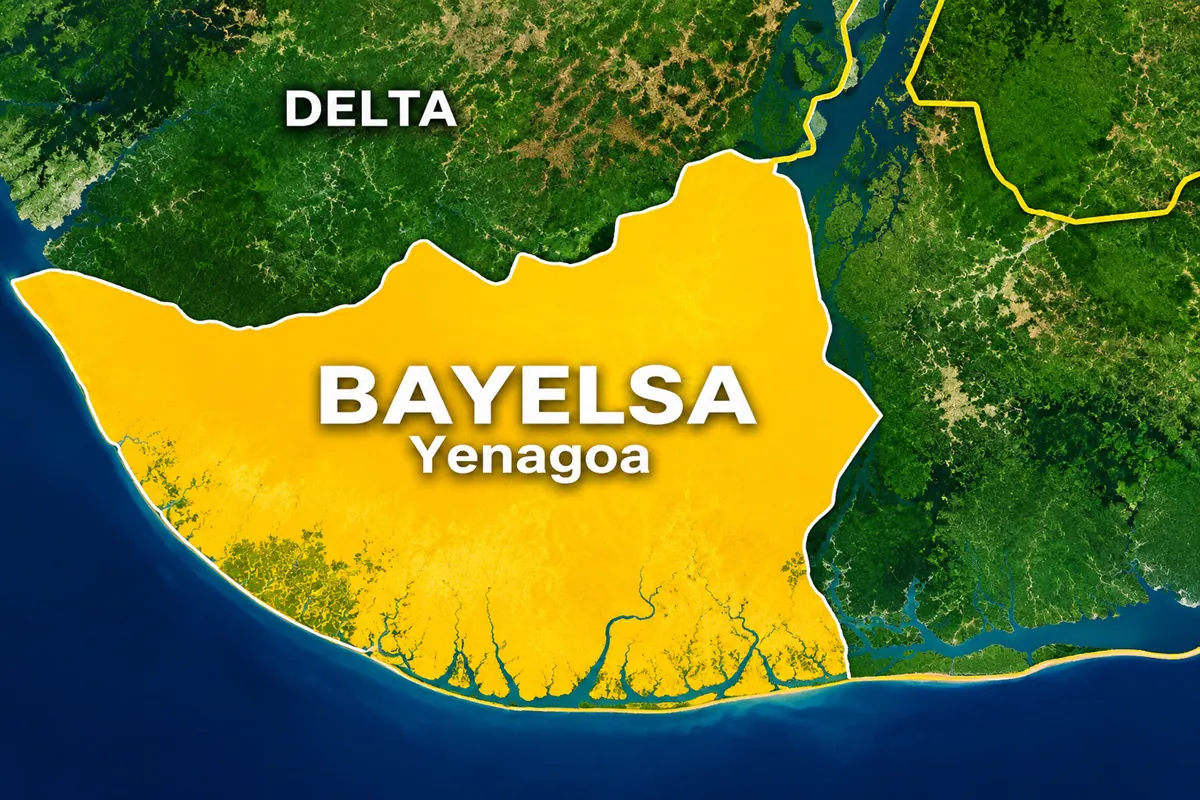
Bayelsa State was created on October 1, 1996, alongside five other states by the late General Sani Abacha led military government. The new state, a homogenous Ijaw state, emerged from the old Rivers State, fulfilling the decades-long desire of its people for greater control over their affairs and a government closer to their communities. This milestone is a significant event in the state's history, marking the beginning of a new era of self-governance and development.
Thirty years later, Bayelsa has made progress, despite facing numerous challenges. The state has developed its institutions, infrastructure, and human capital. Yenagoa Main Town has grown into a functioning state capital, and communities have become more connected. Educational and healthcare opportunities have expanded, and the state has produced professionals, entrepreneurs, academics, public servants, and leaders who are making their mark within Nigeria and beyond.
However, Bayelsa's political history has been turbulent, with leadership changes, political disputes, court cases, impeachments, contested elections, and institutional interruptions periodically distracting the state from long-term development. While acknowledging this complicated story, it is essential to resist the temptation to reduce 30 years of Bayelsa's history to a catalogue of political failures. Every administration has left something behind, and some have built roads, expanded educational opportunities, invested in healthcare, or strengthened institutions.
One of the major challenges facing Bayelsa is the lack of continuity in development. Too often, development in Bayelsa is tied to the personality of the person occupying the governor's office. A new administration arrives with a new vocabulary, new priorities, and new projects, an approach that is expensive and cannot build a sustainable future by continually starting again. To do better, Bayelsa must learn from within and outside Nigeria the lessons on continuity, stability, and development.
Bayelsa can learn from Lagos and Akwa Ibom, which have demonstrated policy continuity, leadership stability, and continuous development over successive administrations. These states have continued to work within longer-term development frameworks while introducing new priorities, developing and sustaining broad development priorities involving infrastructure, transportation, revenue administration, urban planning, institutional reform, and human capital.
Another essential lesson for Bayelsa is from Singapore, which achieved remarkable transformation through disciplined long-term planning, investment in education and infrastructure, development of human capital, institutional capacity, and a willingness to think beyond political cycles. Singapore plans decades ahead, and that is the mindset Bayelsa needs. The state should ask: What should Bayelsa look like in 2056? That is a fundamentally different question, taking the focus away from personalities and towards institutions, and away from four-year political cycles and towards generations.
As Bayelsa celebrates 30 years of existence, it is essential to acknowledge the progress made and the challenges ahead. The state should celebrate with its eyes open, recognising how far it has come and using that as a foundation to decide where it goes next. The leaders of the Bayelsa State creation movement have left behind a legacy that can be looked back on with great pride, and it is now up to the current and future generations to build on that legacy.
Key points
- Bayelsa State was created on October 1, 1996, by the late General Sani Abacha led military government.
- The state has made progress in developing its institutions, infrastructure, and human capital over the past 30 years.
- Bayelsa can learn from Lagos, Akwa Ibom, and Singapore in terms of policy continuity, leadership stability, and long-term planning.