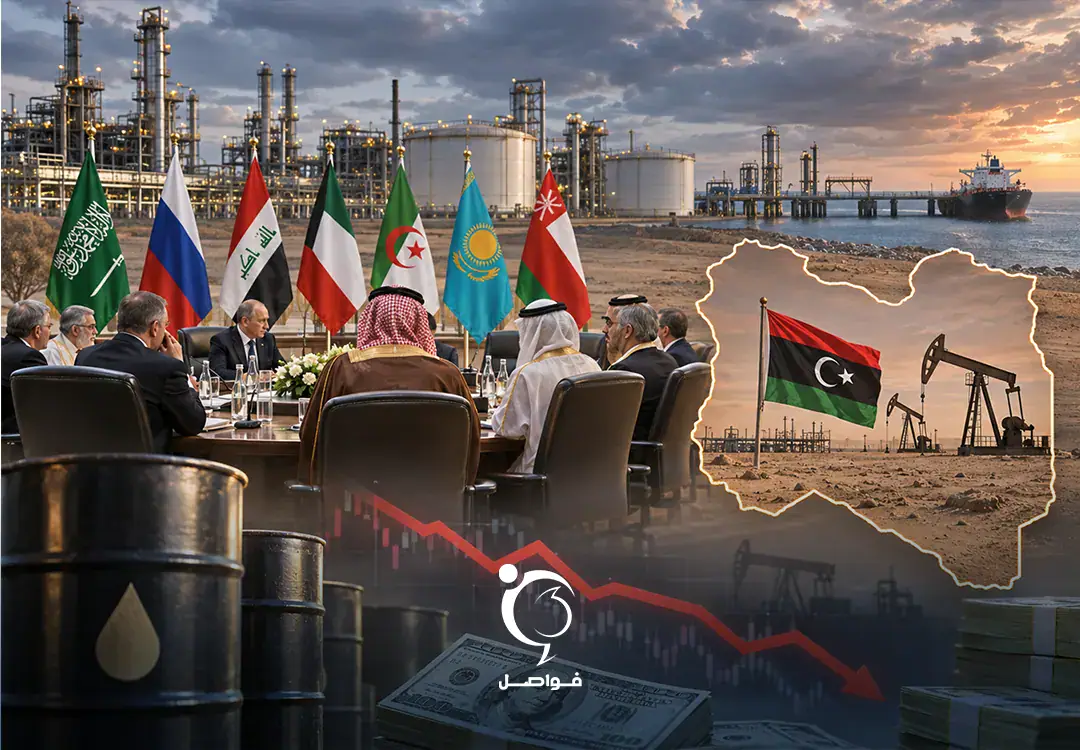
According to sources, seven countries in the OPEC+ alliance have reached a preliminary agreement to maintain their oil production targets without change in December. The countries involved are Saudi Arabia, Russia, Iraq, Kuwait, Algeria, Kazakhstan, and Oman. This decision comes as the global oil market experiences disruptions due to various factors, including the conflict with Iran.
The agreement is pending formal approval at the OPEC+ meeting scheduled for Sunday. The development takes place as the group reviews the production capacities of its member countries, paving the way for determining production quotas for 2027. It is worth noting that Libya, despite being a member of the Organization of the Petroleum Exporting Countries (OPEC), is exempt from the production cuts within the OPEC+ alliance.
As a result, the decision will not directly impact Libya's production levels. However, the country's economy is heavily reliant on oil revenues, which account for over 97% of the state's total revenue. The Libyan economy is likely to be affected by changes in global oil prices. The Central Bank of Libya recently reported a foreign exchange deficit of $4.7 billion during the first nine months of 2026.
The deficit was attributed to oil revenues and royalties totaling $17.6 billion, while the country's foreign exchange usage and commitments amounted to $22.3 billion. Maintaining production levels does not necessarily translate to higher oil prices, but it can contribute to balancing global supply and demand, ultimately affecting Libya's oil exports and dollar-denominated revenues.
The OPEC+ decision may have implications for Libya's ability to cover its foreign exchange needs. The country's reliance on oil revenues underscores the importance of developments in the global oil market. As the OPEC+ meeting approaches, market participants are closely watching the potential impact of the group's decisions on global oil prices and Libya's economy.
The Libyan economy has faced significant challenges in recent years, including the impact of the conflict on oil production and exports. The country's foreign exchange deficit highlights the need for careful management of its oil revenues. The OPEC+ decision is expected to have far-reaching implications for the global oil market and Libya's economy.
In the context of the global oil market, the OPEC+ decision is seen as a move to stabilize prices and balance supply and demand. The impact of the decision on Libya's economy will depend on various factors, including changes in global oil prices and the country's ability to manage its oil revenues effectively.
Key points
- OPEC+ is expected to maintain oil production levels in December, with Libya exempt from the agreement.
- Libya's economy is heavily reliant on oil revenues, which account for over 97% of the state's total revenue.
- The country faces a foreign exchange deficit of $4.7 billion, highlighting the need for careful management of its oil revenues.