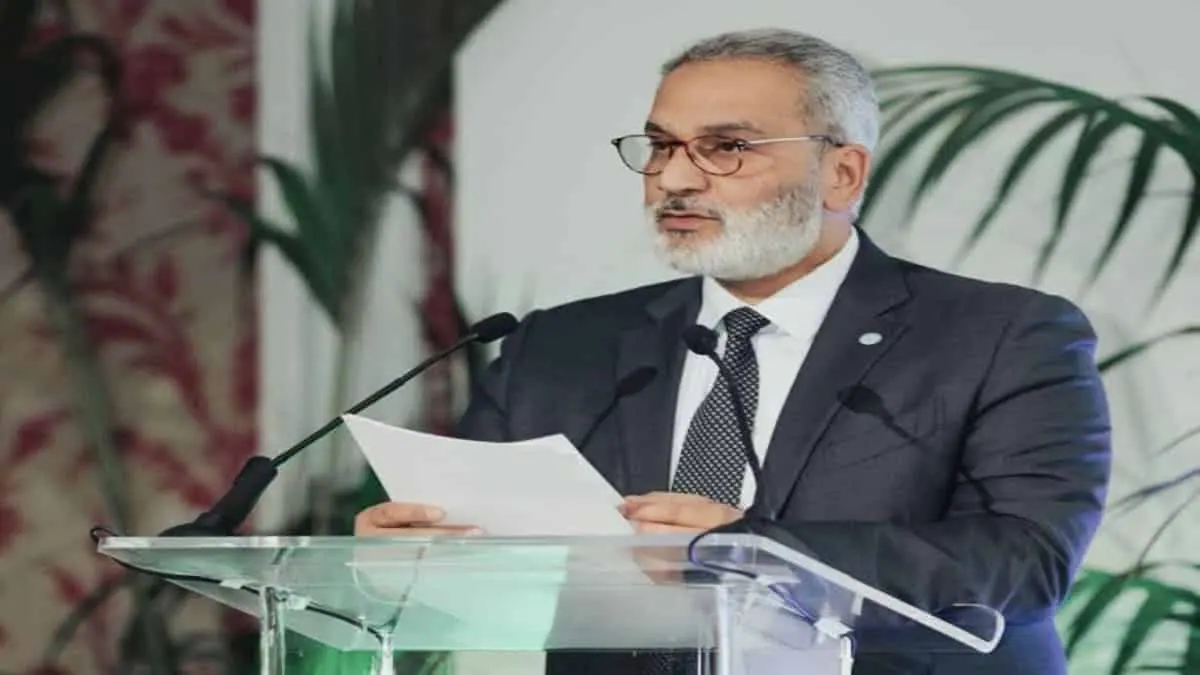
The Organisation of the Petroleum Exporting Countries (OPEC) has expressed a differing view from the predicted decline in oil consumption in the coming decades due to the energy transition and rise of renewable energies. OPEC Secretary General, Haitham Al Ghais, forecasts a significant increase in global demand for oil, which Algeria produces at a rate of one million barrels per day. This projection contradicts the current discourse on the decline of oil.
During his visit to Algeria from September 26 to 29, Al Ghais was received by President Abdelmadjid Tebboune on September 28. In an interview with the Algerian Press Service (APS), Al Ghais shared his estimates on the future of the oil market. He anticipates that the global economy will double in size by 2050, driven by developing countries, leading to an increase in oil demand to 124 million barrels per day, up from around 105 million barrels per day currently.
Al Ghais also made a prediction regarding natural gas, stating that it will become the second most important source of energy by 2050, according to OPEC studies and those of other organizations. This forecast is significant for Algeria, a major producer of natural gas. The country's energy sector is likely to play a crucial role in meeting the increasing global demand for oil and gas.
To meet the growing demand, the global oil industry requires substantial investments. However, the current discourse on energy transition and abandoning fossil fuels may discourage investors. Al Ghais warned that the narrative on declining oil demand sends an "inquieting message" to investors, potentially leading them to halt new investments in the sector, which could hinder efforts to meet future energy needs.
OPEC estimates that the global oil industry will need cumulative investments of $17.7 trillion by 2050 to continue meeting growing demand. The organization has consistently viewed renewable energies as complementary to, rather than a replacement for, fossil fuels. This stance is reflected in Al Ghais' statements, emphasizing the need for continued investment in the oil sector.
Al Ghais' visit to Algeria and his statements highlight the country's importance in the global oil market. Algeria's production of one million barrels of oil per day underscores its significant role in meeting global energy demands. The country's energy sector is likely to be a key area of focus for investors and industry stakeholders in the coming years.
The predictions made by Al Ghais have significant implications for the global energy landscape. As the world navigates the transition to renewable energies, the demand for oil and gas is expected to remain strong. OPEC's forecasts suggest that the industry will need to adapt to meet this demand, with investments in new technologies and infrastructure crucial to ensuring a stable energy supply.
Key points
- OPEC Secretary General Haitham Al Ghais predicts a 23% increase in global oil demand by 2050.
- Al Ghais forecasts that natural gas will become the second most important source of energy by 2050.
- The global oil industry will need $17.7 trillion in investments by 2050 to meet growing demand.