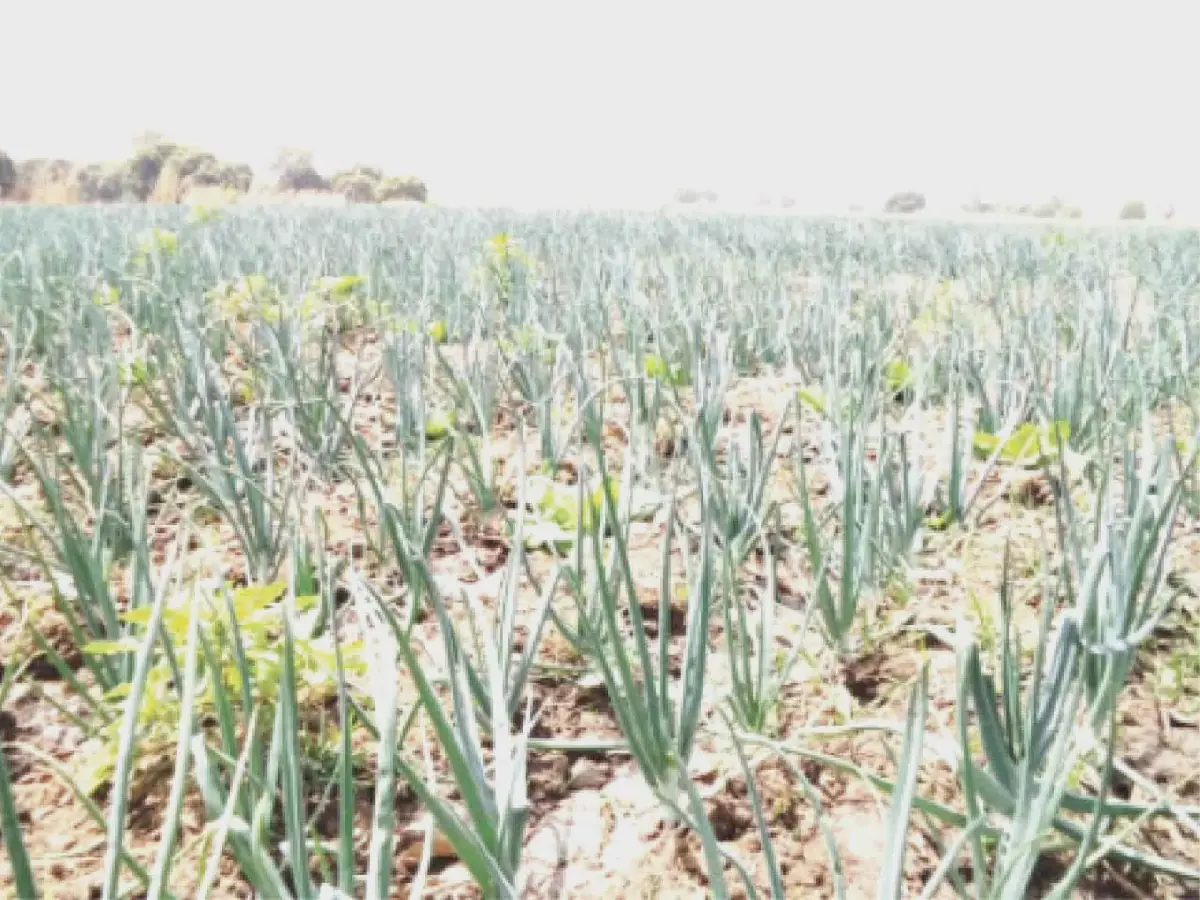
The sharp rise in onion prices has significantly impacted Nigerian households, limiting their ability to purchase the commodity in reasonable quantities. The situation has become a source of concern for households, restaurants, food vendors, and traders. Onions, once a cheap and readily available condiment, are now attracting unusual attention in markets as consumers struggle to cope with the rising cost.
Earlier in the year, onions were available at a relatively affordable price of N25,000 per bag, but in recent times, it has risen to over N200,000 in cities like Jos, Kano, and other states. According to the National Bureau of Statistics (NBS), the average cost of a kilogram of onion bulbs in Nigeria has surged to N3,100 since last month, up from N1,180.01 per kilogram in May 2026.
Nigeria's local demand for onions reaches 2.4 million metric tonnes annually, but the country's annual production hovers around 2.1 million metric tonnes, according to the National Onion Producers, Processors and Marketers Association of Nigeria. However, global data sources suggest a lower output of approximately 1.67 million metric tonnes, creating a shortfall of between 300,000 and 700,000 tonnes.
Despite the production shortfall, Nigeria holds the second-highest position in onion production in Africa, trailing behind Egypt. In 2024, Nigeria exported 1,530 metric tonnes of onion, with a total value of US$103,171. However, Nigeria's export of onion has experienced a significant decline of 75.6 per cent compared to the previous year.
Most onion production activities in Nigeria are concentrated in the northern part of the country, with states such as Sokoto, Kebbi, Kano, Zamfara, Kaduna, and Katsina being particularly influential. Sokoto alone accounts for a substantial portion of the country's onion output, with estimates ranging from approximately 20 per cent to 70 per cent.
The Nigerian onion industry holds an estimated value of N1.17 trillion, according to figures provided by the National Onion Producers, Processors and Marketers Association of Nigeria (NOPPMAN). However, the country faces a critical issue of substantial post-harvest losses, estimated to range between 45 per cent and 50 per cent, primarily attributed to inadequate storage facilities and pest infestations.
Farmers in Kano cited poor harvest and losses recorded during dry season farming as reasons for the scarcity and rise in price. They noted that the price of onions crashed after dry season farming, leading to a lack of enthusiasm to engage in production during the rainy season. As a result, onion merchants who managed to preserve substantial quantities are now benefiting from the price increase.
Key points
- The price of onions has risen to over N200,000 per bag in some cities.
- Nigeria's annual onion production is around 2.1 million metric tonnes.
- The country's onion export has declined by 75.6 per cent compared to the previous year.
Reporting sources
- Onion price surge hits households · Daily Trust